 Skip to content
Water, fire, and mold are the three most common disasters Atlanta homeowners face, and they’re deeply connected. This guide explains how each type of damage unfolds, why the first 24 – 48 hours matter most, how insurance claims typically work for each, and what a full-service restoration company should do differently than a single-trade contractor.
Table of Contents
Water, fire, and mold cause the vast majority of residential property damage claims filed across metro Atlanta each year, and they rarely happen in isolation. A kitchen fire leads to water damage from suppression efforts. A slow roof leak after a storm goes unnoticed until mold sets in. A burst pipe floods a basement, and within 48 hours, a water problem becomes a mold problem too. Understanding how these three disaster types connect and how a qualified restoration company handles all three, can save Atlanta homeowners thousands of dollars and weeks of disruption.
Air Drop Water Restoration has served the Atlanta metro, including Sandy Springs, Marietta, Roswell, Alpharetta, and Johns Creek, for more than a decade, handling everything from single-room water extraction to full-structure fire and smoke restoration.
Why These Three Disasters Are So Closely Linked
Restoration professionals often describe water, fire, and mold as a “damage cascade.” Here’s how that plays out in real Atlanta homes:
- Water leads to mold. Any moisture left unaddressed for more than 24–48 hours creates conditions for mold colonization, per EPA guidance.
- Fire leads to water. Fire suppression: whether from sprinklers or firefighting hoses: saturates structural materials, creating a secondary water damage event that must be dried immediately.
- Storms lead to both. Georgia’s severe spring and summer storms cause roof damage, downed limbs, and power outages that can trigger both water intrusion and, in rare cases, electrical fires.
This is why a single-trade contractor, someone who only does water extraction, or only does fire cleanup, often can’t fully resolve a disaster on their own. A full-service restoration company manages the entire cascade under one coordinated plan.
Water Damage; The Most Common Atlanta Emergency
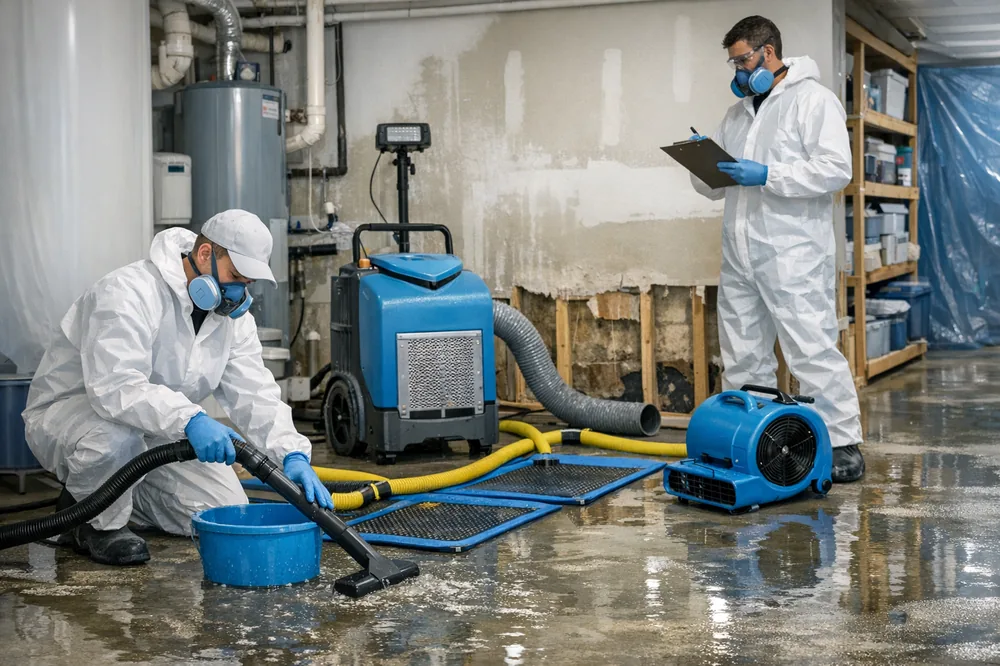
Categories of Water Damage
Restoration professionals classify water damage by contamination level, which determines handling procedures:
| Category | Source | Example |
| Category 1 (Clean) | Clean water source | Supply line break, appliance overflow |
| Category 2 (Grey) | Contains contaminants | Washing machine discharge, dishwasher overflow |
| Category 3 (Black) | Grossly contaminated | Sewage backup, storm floodwater |
Water Damage Classes (Extent of Saturation)
Classes 1–4 describe how much moisture has been absorbed into materials, ranging from minimal absorption (Class 1) to specialty drying situations involving hardwood, plaster, or concrete (Class 4).
The Critical First 24 – 48 Hours
Fast water extraction and structural drying within this window is the single biggest factor in preventing secondary mold damage. Industrial air movers and dehumidifiers, not household fans, are required to properly dry structural materials.
Fire and Smoke Damage
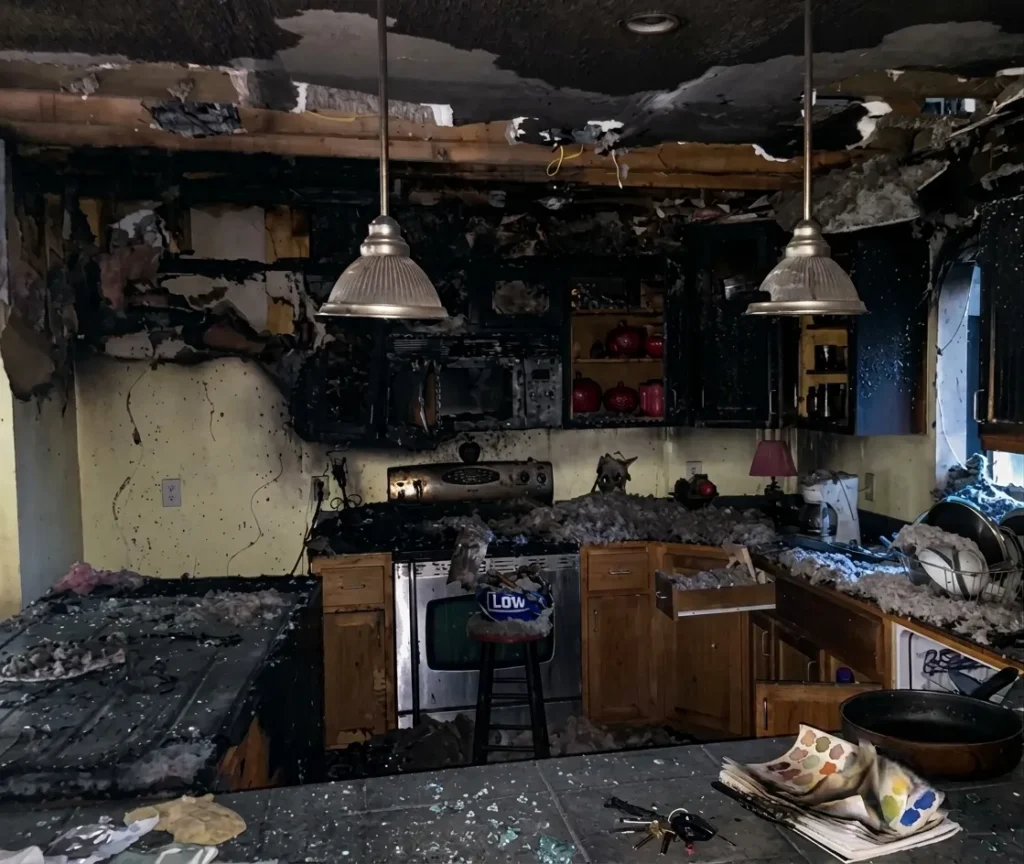
Fire damage restoration involves more than removing burned materials, smoke and soot travel through HVAC systems and settle into porous materials throughout the home, often causing damage far beyond the visible burn area.
Key Steps in Fire Damage Restoration
- Emergency board-up and roof tarping to secure the structure
- Water extraction from firefighting efforts
- Soot and smoke residue removal from walls, ceilings, and contents
- HVAC system cleaning to remove smoke particulates
- Odor removal using thermal fogging or ozone treatment
- Structural repairs and reconstruction.
Mold: The Secondary Disaster
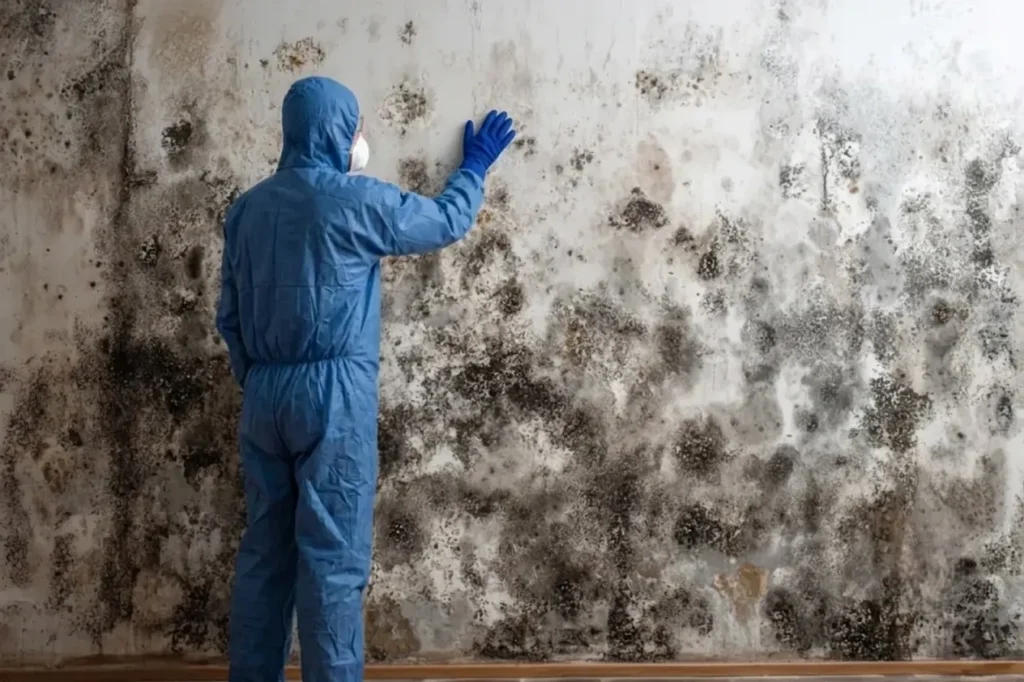
As covered throughout this guide, mold is frequently the aftermath of an unresolved water event. Georgia’s humid subtropical climate accelerates this timeline compared to drier regions. A proper mold response includes:
- Moisture source identification and mapping
- Containment and HEPA air filtration
- Removal of non-salvageable materials
- Antimicrobial treatment
- Structural drying
- Post-remediation clearance testing.
Quick Answer: What Should I Do First in a Water, Fire, or Mold Emergency?
- Ensure everyone’s safety first, evacuate if there’s active fire or structural risk.
- Stop the source if possible (shut off water main, extinguish small fires safely).
- Call a licensed restoration company immediately, don’t wait to “see if it dries out.”
- Document damage with photos and video before cleanup begins.
- Contact your insurance company to begin the claims process.
- Avoid DIY remediation for anything beyond minor, contained situations.
Insurance Considerations Across All Three Disaster Types
| Disaster Type | Typically Covered When | Common Exclusions |
| Water damage | Sudden, accidental events (pipe burst, appliance failure) | Long-term leaks, lack of maintenance |
| Fire damage | Accidental fires, most causes | Arson, code violations contributing to cause |
| Mold damage | Resulting directly from a covered water/fire event | Mold from unresolved humidity or neglect |
Facing a water, fire, or mold emergency right now? Call Air Drop Water Restoration for 24/7 emergency response across metro Atlanta.
Why Atlanta’s Climate and Housing Stock Increase Risk
- Storm frequency: Metro Atlanta averages dozens of severe thunderstorm days annually, with straight-line winds and hail contributing to roof damage.
- Aging infrastructure: Many homes throughout Decatur, East Point, and Tucker were built decades ago with plumbing and roofing nearing the end of their expected service life.
- Humidity: Sustained high humidity accelerates the water-to-mold timeline compared to drier climates.
- Tree coverage: Atlanta’s famously dense tree canopy is beautiful but increases risk of storm-related roof and structural damage from falling limbs.
Expert Tips for Disaster-Ready Homeowners
- Know the location of your main water shutoff valve before an emergency happens.
- Keep working smoke and carbon monoxide detectors on every level of the home.
- Photograph your home’s contents annually for insurance documentation purposes.
- Schedule a roof inspection each spring, ahead of Georgia’s storm season.
- Save your restoration company’s emergency number in your phone, response time matters most in the first hour.
Related Services
Read our Water Damage Restoration Services…. Read our Fire Damage Restoration… Read our Mold Remediation articles.., Emergency Water Extraction Commercial Restoration
Preparation starts before disaster strikes. Ask about our free home risk assessment for Atlanta homeowners.
Frequently Asked Questions About Water Fire and Mold Restoration Services
What’s the connection between water, fire, and mold damage?
Water damage, if not dried within 24 – 48 hours, frequently leads to mold. Fire damage often creates a secondary water damage event from suppression efforts, which can also lead to mold if not addressed quickly, making all three closely interconnected disaster types. Call Airdrop Water Restoration for Water Fire and Mold Remediation Services accross Atlanta Metro
Should I hire separate companies for water, fire, and mold issues?
It’s generally better to work with a full-service restoration company that handles all three, since they can manage the entire damage cascade under one coordinated timeline instead of juggling multiple contractors. Call Airdrop Water Restoration for Water Fire and Mold Remediation Services accross Atlanta Metro
How fast should I respond to a water, fire, or mold emergency in Atlanta?
Immediately. Within the first 24–48 hours, especially for water intrusion, fast action can prevent secondary mold damage and significantly reduce repair costs. Call Airdrop Water Restoration for Water Fire and Mold Remediation Services accross Atlanta Metro
Does insurance cover water, fire, and mold damage together?
Often, yes, if all three resulted from the same covered event, for example, mold that developed after an insurance-covered pipe burst. A detailed restoration report helps document that connection for your claim. Call Airdrop Water Restoration for Water Fire and Mold Remediation Services accross Atlanta Metro
What certifications should a water, fire, and mold restoration company have?
Look for IICRC certifications across multiple disciplines: WRT (Water Damage Restoration Technician), FSRT (Fire and Smoke Restoration Technician), and AMRT (Applied Microbial Remediation Technician). Call Airdrop Water Restoration for Water Fire and Mold Remediation Services accross Atlanta Metro
How long does full restoration typically take after a major water or fire event?
Timelines vary widely, a contained water event might resolve in 3–5 days, while major fire restoration with reconstruction can take several weeks to months depending on scope. Call Airdrop Water Restoration for Water Fire and Mold Remediation Services accross Atlanta Metro
Can mold develop after a house fire, not just after water damage?
Yes. Firefighting water used to extinguish flames often saturates structural materials, and if that moisture isn’t fully extracted and dried, mold can develop within days. Call Airdrop Water Restoration for Water Fire and Mold Remediation Services accross Atlanta Metro
What should I avoid doing before restoration professionals arrive?
Avoid using household fans to “dry it yourself” (they can spread contaminants), avoid disturbing soot or mold growth without protection, and avoid discarding damaged items before documenting them for insurance. Call Airdrop Water Restoration for Water Fire and Mold Remediation Services accross Atlanta Metro
Conclusion
Water, fire, and mold damage rarely stay in their own lanes, one disaster often triggers the next if it isn’t addressed quickly and correctly. Atlanta’s climate, storm exposure, and housing stock make understanding this cascade especially important for local homeowners. Air Drop Water Restoration provides coordinated, IICRC-certified response across all three disciplines, so you’re not left managing multiple contractors during an already stressful situation.
Whatever the emergency, one call handles it all. Contact Air Drop Water Restoration for 24/7 water, fire, and mold restoration across the Atlanta metro.