 Skip to content
Mould remediation services are essential once mold is found in a home or business, but knowing what a legitimate remediation process actually involves can be confusing. This guide explains how mold develops after water intrusion, the IICRC S520 remediation standard, what a professional inspection and containment process looks like, and why Atlanta’s humid subtropical climate makes mold prevention especially important. Air Drop Water Restoration, IICRC-certified since 2012, provides mold inspection, remediation, and post-remediation verification across metro Atlanta.
Table of Contents
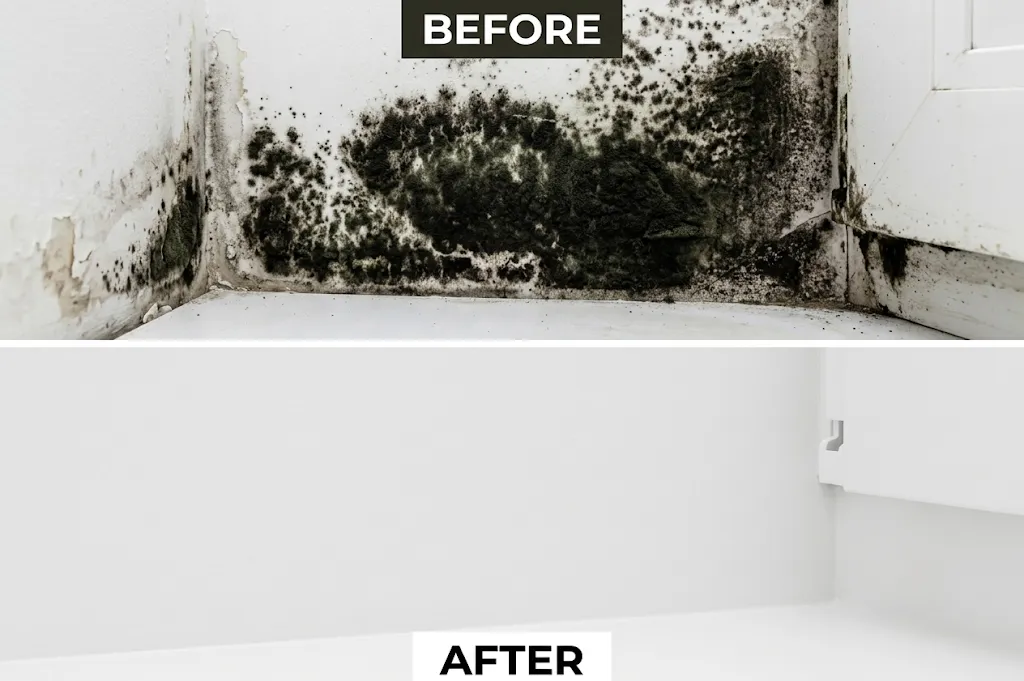
If you’re researching mould remediation services, you’ve likely already spotted a telltale sign, a musty odor, dark spotting on drywall, or a discolored ceiling tile following a water leak. Mold isn’t just an aesthetic problem; it’s a health and structural concern that grows faster in Atlanta’s humid subtropical climate than in most parts of the country.
Metro Atlanta’s combination of high ambient humidity, frequent summer thunderstorms, and older building stock throughout neighborhoods like Grant Park, Decatur, and East Atlanta creates ideal conditions for mold colonization following any unaddressed water intrusion. Measurable mold growth can begin within 24 to 48 hours of moisture exposure, which is why professional remediation, not a DIY bleach-and-scrub approach, matters so much.
Air Drop Water Restoration, an IICRC-certified restoration company serving the Atlanta metro since 2012, follows the IICRC S520 mold remediation standard from initial inspection through post-remediation verification. This guide explains what that process looks like, what causes mold in Atlanta homes and businesses, and how remediation fits into the broader water damage restoration picture.
What Is Mould Remediation, and How Is It Different From Cleaning?
Mould remediation is the professional process of identifying, containing, removing, and preventing the regrowth of mold colonies, following industry standards like IICRC S520, rather than simply wiping visible mold from a surface.
Surface cleaning addresses only what’s visible. Mold spores are microscopic and can be present in HVAC systems, wall cavities, and subflooring long before they’re visible to the naked eye. Professional mould remediation services differ from general cleaning in several key ways:
- Containment: Physical barriers and negative air pressure to prevent spore spread to unaffected areas
- Source correction: Identifying and resolving the underlying moisture problem, since mold will return if the water source isn’t fixed
- HEPA filtration: Air scrubbers with HEPA filters to capture airborne spores during removal
- Material assessment: Determining which porous materials must be removed versus which can be cleaned and preserved
- Post-remediation verification: Testing to confirm the space meets clearance standards after work is complete
Signs You Need Mould Remediation Services
- Musty, earthy odors, especially in basements, crawlspaces, or bathrooms
- Visible black, green, or white spotting on walls, ceilings, or grout
- Discolored or bubbling paint and drywall
- A recent water leak, flood, or plumbing failure that wasn’t fully dried
- Unexplained allergy-like symptoms that improve when away from the property
- Warped flooring or peeling wallpaper
Mould Remediation Services Quick Checklist
How do I know if I need mold remediation?
- You smell a persistent musty odor.
- You see visible discoloration or spotting on surfaces.
- You had a water leak or flood in the past that wasn’t professionally dried.
- A moisture meter or thermal imaging inspection confirms elevated moisture levels.
- Household members experience symptoms that improve away from the property
Why Atlanta’s Climate Makes Mold Growth More Likely
Metro Atlanta’s humid subtropical climate keeps ambient humidity elevated for much of the year, which has two direct effects on mold risk:
- Faster colonization: Elevated humidity accelerates the transition from clean water intrusion to microbial growth, shortening the safe window for mitigation.
- Slower natural drying: Without professional dehumidification, wet materials in Atlanta’s humid air take significantly longer to dry than in drier climates, increasing the window for mold to take hold.
Combine this climate reality with frequent summer thunderstorms, occasional winter freeze events that cause burst pipes, and a mix of historic and newer construction throughout neighborhoods from Buckhead to Stone Mountain, and it’s easy to see why mould remediation services are in consistent demand across the metro.
Expert Insight: “In Atlanta, we don’t get the luxury of ‘it’ll just dry out on its own.’ The humidity works against you. Every water damage job we take on includes a mold prevention assessment, because waiting even a few days can turn a mitigation job into a full remediation job. ;Air Drop Water Restoration remediation team
Related Reading: Water Damage Restoration Services | Water Damage Mitigation | Indoor Air Quality Assessments
Smell something musty?
See discoloration on your walls?
Air Drop Water Restoration offers professional mold inspections across metro Atlanta. Don’t wait for a small problem to spread through your HVAC system.
Mold Categories and Containment Levels
Remediation scope depends on the size of the affected area:
| Condition Level | Affected Area | Typical Approach |
| Condition 1 | Normal ambient mold levels | No remediation needed |
| Condition 2 | Settled spores, small visible growth | Localized cleaning and containment |
| Condition 3 | Actively growing mold, visible colonies | Full containment, material removal, HEPA filtration |
Larger or more contaminated areas require stricter containment protocols, including negative air machines and sealed plastic barriers, to prevent spores from spreading to unaffected parts of the property during remediation.
Related Reading: Water Damage Repair Near Me | Commercial Restoration Services | Fire and Smoke Damage Repair
Already had water damage and worried about mold?
Air Drop Water Restoration provides combined water mitigation and mold prevention, so the moisture problem and the mold risk are addressed together, not separately.
Health Considerations
According to the U.S. Environmental Protection Agency, mold exposure can cause allergic reactions, respiratory irritation, and other symptoms in sensitive individuals, particularly those with asthma or existing allergies. The EPA notes that the key to mold control is moisture control, reinforcing why addressing the underlying water source is central to any legitimate remediation plan.
Air Drop Water Restoration does not diagnose or treat health conditions; if you or a household member is experiencing symptoms you believe may be related to mold exposure, consult a physician in addition to scheduling a professional mold inspection.
Insurance and Mould Remediation
Whether mold remediation is covered by your homeowners policy often depends on the cause. Mold resulting from a sudden, covered water damage event, like a burst pipe, may be covered, while mold resulting from long-term neglect or unaddressed maintenance issues typically is not.
To support a mold-related insurance claim:
- Document the original water event that led to mold growth
- Keep photos and moisture readings from the initial mitigation, if performed
- Request a detailed scope-of-work report from your remediation contractor
- Retain post-remediation verification results as proof the issue was resolved
Air Drop Water Restoration provides the documentation adjusters typically require, connecting the original water damage event to the remediation scope of work.
External Link Opportunity: Georgia Environmental Protection Division – indoor air quality resources
Preventing Mold Regrowth
Expert prevention tips:
- Address any water leak or intrusion within 24–48 hours, before mold has a chance to establish
- Maintain indoor humidity below 60%, ideally between 30–50%, using dehumidifiers where needed
- Ensure bathrooms, kitchens, and laundry rooms are properly ventilated
- Inspect crawlspaces and basements seasonally for signs of moisture intrusion
- Clean and maintain HVAC systems, including regular filter changes
- Grade landscaping and maintain gutters so water drains away from the foundation
Prevent mold before it starts. Ask Air Drop Water Restoration about a preventive moisture inspection for your Atlanta home or business, especially before Georgia’s humid summer season.
Frequently Asked Questions About Mould Remediation Services in Atlanta
What do professional mould remediation services actually include?
A complete process includes inspection, containment, source correction, material removal, HEPA air scrubbing, structural drying, and post-remediation verification testing, following the IICRC S520 standard.
How much do mould remediation services cost in Atlanta?
Cost depends on the size of the affected area, the extent of material removal needed, and whether structural drying is also required. A professional on-site inspection provides the most accurate estimate.
Can I just clean mold myself instead of hiring mould remediation services?
Small, isolated surface mold on non-porous materials may be manageable with basic cleaning, but any mold covering more than roughly 10 square feet, or mold following a water event, generally requires professional remediation to fully address hidden growth and prevent recurrence.
How long does mold remediation take?
A small, contained job may take 1–3 days, while larger remediation projects involving significant material removal and drying can take a week or longer.
Will mold come back after remediation?
Mold will return if the underlying moisture source isn’t corrected. Professional remediation, including source correction and post-verification, significantly reduces the likelihood of regrowth.
Does homeowners insurance cover mould remediation services?
Coverage often depends on whether the mold resulted from a sudden, covered event like a burst pipe, versus long-term neglect. Review your specific policy and consult your insurer or agent.
Is black mold more dangerous than other types?
Any mold growth can pose health concerns for sensitive individuals regardless of color, and the EPA advises addressing all indoor mold growth rather than focusing only on specific species.
How do I choose the right company for mould remediation services in Atlanta?
Look for IICRC certification, a documented S520-based process, experience with Atlanta’s humid climate conditions, and a company that also understands the water mitigation that often precedes mold growth.
Conclusion: Mould Remediation Services in Atlanta
Mold problems in metro Atlanta rarely stay small, thanks to the region’s humid subtropical climate and the speed at which mold can colonize after water exposure. Professional mould remediation services address not just the visible growth but the underlying moisture source, using industry-standard containment, removal, and verification protocols. Air Drop Water Restoration has provided IICRC-certified mold inspection and remediation across metro Atlanta since 2012, connecting the dots between water damage and mold prevention under one experienced team.
Notice signs of mold in your Atlanta property? Contact Air Drop Water Restoration today for a professional mold inspection and remediation plan.