 Skip to content
Searching for a certified mold inspector near me in Atlanta? This guide explains exactly what “certified” should mean (IICRC-trained technicians, not a self-issued label), what’s included in a professional mold inspection, how much it typically costs, and how to tell a thorough inspection from a rushed one. You’ll also learn when a mold inspection is legally or practically necessary, such as before a home sale, after a water damage event, or when symptoms point to a hidden problem, plus the exact questions to ask any inspector before you hire them across metro Atlanta.
Table of Contents
When you search for a certified mold inspector near you in Atlanta, you’re usually in one of a few situations: you smell or see something suspicious, you’re buying or selling a home, you’ve had a past water damage event, or someone in your household is dealing with unexplained respiratory symptoms. In every one of these cases, the word “certified” matters more than most homeowners realize, because mold inspection is a largely unregulated field in Georgia, and not every company advertising “mold testing” has actual training behind it.
Call Air Drop Water Restoration for “Certified Mold Inspector Near Me in Atlanta“
Atlanta’s humid subtropical climate, combined with a housing stock that ranges from century-old homes in Decatur and East Atlanta to newer construction in Alpharetta and Suwanee, means mold inspection is one of the most consistently requested services across the metro. But the quality of that inspection varies enormously depending on who you hire.
This guide explains what genuine certification means, what a thorough inspection actually includes, typical costs, and the specific questions to ask before booking, so you can find a certified mold inspector near you who does the job right the first time.
Call Air Drop Water Restoration for “Certified Mold Inspector Near Me in Atlanta”
Need a certified mold inspector near you in Atlanta? Air Drop Water Restoration’s IICRC-certified technicians provide thorough, documented inspections across the metro.
What “Certified Mold Inspector” Actually Means
Unlike general contractors or plumbers, mold inspectors in Georgia are not required to hold a state-issued license. This makes third-party certification the main indicator of legitimate training. The most recognized credential in the restoration and inspection industry is issued by the IICRC (Institute of Inspection, Cleaning and Restoration Certification), the same organization that sets the S500 water damage and S520 mold remediation standards referenced by insurance adjusters nationwide.
A genuinely certified mold inspector has completed structured training in mold biology, moisture dynamics, sampling protocols, and remediation standards, not simply purchased a moisture meter and started marketing “mold testing” services. When you’re comparing options, this distinction is the difference between an inspection that finds the actual problem and one that produces a generic checklist.
A certified mold inspector near you should hold IICRC certification (or equivalent recognized training), use professional-grade moisture meters and thermal imaging equipment, follow a documented inspection protocol, and provide a written report with findings, not just a verbal opinion.
What’s Included in a Professional Mold Inspection
Visual Inspection
A thorough walkthrough of accessible areas, bathrooms, kitchens, basements, crawlspaces, attics, and any area with a musty odor or history of moisture, looking for visible growth, staining, and conditions conducive to mold.
Moisture Mapping
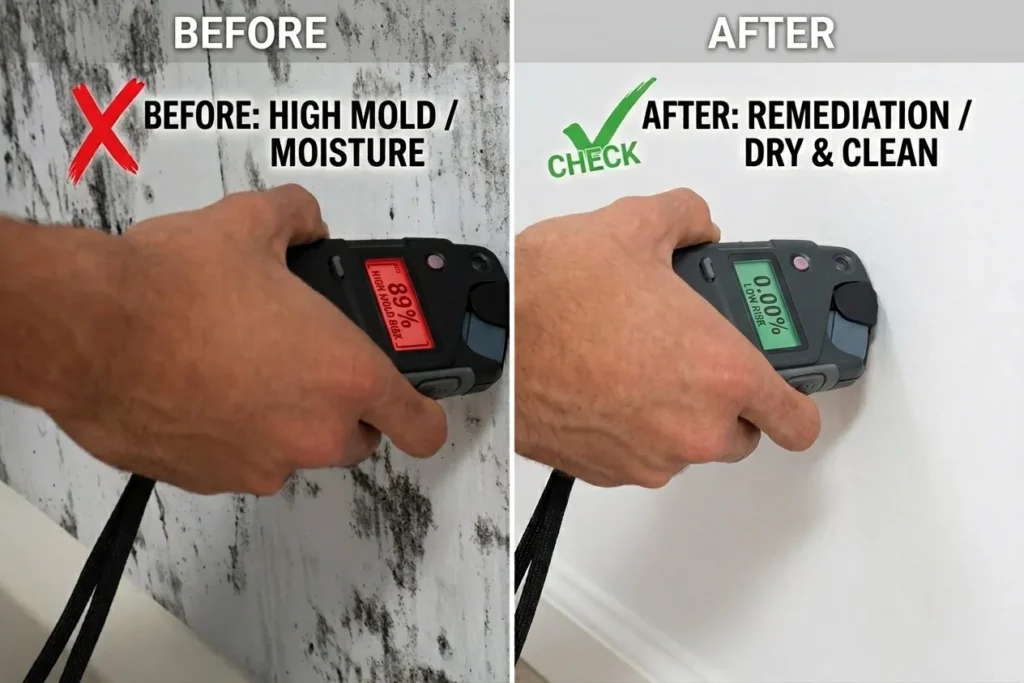
Non-invasive and penetrating moisture meters, along with thermal imaging cameras, are used to identify elevated moisture behind walls, under flooring, and around plumbing fixtures, often revealing the underlying cause even where no mold is yet visible.
Air and Surface Sampling
When appropriate, air samples are collected to measure spore concentration and compared against an outdoor control sample, since outdoor mold spore levels are the baseline used to determine whether indoor levels are elevated. Surface swabs or tape lifts may also be taken from suspect areas.
Laboratory Analysis
Samples are sent to an accredited third-party laboratory, not analyzed in-house, which protects the objectivity of the results, especially if the same company might later perform remediation.
Written Report
A complete report should include photos, moisture readings, lab results if sampling was performed, the likely source of any moisture problem, and a clear recommendation, whether that’s no action needed, monitoring, or remediation.
Don’t settle for a basic visual check. Schedule a certified inspection with independent lab-verified results from Air Drop Water Restoration.
Certified Inspection vs. Basic Mold Testing: Comparison Table
| Feature | Basic / Uncertified Testing | Certified Professional Inspection |
| Technician training | Minimal or none; may rely on a home test kit | IICRC-certified, trained in moisture dynamics and sampling protocols |
| Equipment used | Visual check only, sometimes a basic moisture meter | Thermal imaging, professional moisture meters, calibrated sampling pumps |
| Lab analysis | Often skipped or done in-house | Sent to an independent accredited laboratory |
| Documentation | Verbal opinion or minimal notes | Detailed written report with photos and readings |
| Real estate/insurance use | Rarely accepted as documentation | Recognized documentation for transactions and claims |
When You Actually Need a Certified Mold Inspector Near You
- You smell a persistent musty odor but can’t locate visible growth
- You’re buying a home and want mold assessed as part of due diligence
- You’re selling a home and want documentation ahead of a buyer’s inspection
- Your property had a past water damage event, even one that seemed fully dried
- A household member has unexplained respiratory or allergy symptoms tied to time spent at home
- You’re settling an insurance claim that involves a mold-related dispute
- You’ve completed mold remediation and need post-remediation verification testing
How Much Does a Certified Mold Inspection Cost in Atlanta?
Pricing depends on square footage, whether air and surface sampling are included, and how many areas of concern need investigation. A visual-only assessment is typically less expensive than a full inspection with lab-analyzed sampling. Post-remediation verification testing, confirming a remediation job actually worked, is usually priced separately from the initial inspection. Because scope varies so much between properties, the most accurate way to get pricing is a direct conversation about your specific situation rather than a generic flat rate.
Questions to Ask Before Hiring a Mold Inspector
- Are your technicians IICRC-certified, and can you provide certification numbers?
- Do you send samples to an independent, accredited laboratory?
- Will I receive a written report with photos and readings, not just a verbal summary?
- If you also perform remediation, how do you ensure the inspection findings aren’t inflated to sell additional work?
- How soon can you schedule the inspection, and how long does it take on-site?
- Do you provide post-remediation verification testing if remediation is needed?
Expert Insight
One red flag I always tell Atlanta homeowners to watch for: a company that performs both your mold inspection and your mold remediation with no independent lab verification creates a built-in conflict of interest. That doesn’t mean it’s never appropriate, many reputable restoration companies do both, but it does mean you should insist on third-party lab-analyzed samples and a clear written report, regardless of who performs the work.
Get a clear, straightforward quote for your mold inspection, no guesswork, no inflated add-ons. Contact Air Drop Water Restoration today.
What Happens After the Inspection
If mold is found, your report should outline a remediation scope of work based on the IICRC S520 mold remediation standard, which sets protocols based on the size of the affected area and type of contamination. Small, isolated areas may be handled with more limited containment, while larger or more contaminated areas require full containment, negative air pressure, and specialized PPE. If no mold is found but conditions are favorable for future growth, elevated humidity, poor ventilation, a certified inspector should also flag those risk factors so you can address them proactively.
Expert Tips for Choosing a Local Atlanta Mold Inspector
- Verify IICRC certification directly rather than taking a website claim at face value
- Choose a company with local Atlanta experience, since local humidity, construction styles, and common problem areas (crawlspaces, basements) vary by region
- Ask whether the report will be accepted by your insurance company or real estate transaction, if that’s your purpose
- Avoid inspectors who diagnose mold or recommend remediation before any testing is performed
- Confirm turnaround time for lab results, especially if you’re under a real estate deadline
Frequently Asked Questions About Certified Mold Inspector Near Me
What does a certified mold inspector near me actually check?
A certified inspector checks for visible mold growth, conducts moisture mapping with meters and thermal imaging, and, when appropriate, collects air and surface samples for laboratory analysis, covering areas like bathrooms, basements, crawlspaces, attics, and HVAC systems.
Call Air Drop Water Restoration for “Certified Mold Inspector Near Me in Atlanta”
Is IICRC certification required to be a mold inspector in Atlanta?
Georgia does not require a state license for mold inspectors, which makes third-party certification like IICRC training the most reliable indicator of a technician’s actual qualifications.
Call Air Drop Water Restoration for “Certified Mold Inspector Near Me in Atlanta”
How long does a certified mold inspection take?
A standard residential inspection typically takes one to two hours on-site, depending on home size and the number of areas being investigated, with lab results for any samples following within a few business days.
Call Air Drop Water Restoration for “Certified Mold Inspector Near Me in Atlanta”
Can I get a mold inspection before buying a house in Atlanta?
Yes, and it’s a common and worthwhile step in Atlanta’s humid climate, especially for homes with basements, crawlspaces, or any history of water damage. A certified inspection can be arranged as part of your due diligence period.
Call Air Drop Water Restoration for “Certified Mold Inspector Near Me in Atlanta”
Do I need a mold inspection if I already see visible mold?
The EPA notes that visible mold generally warrants remediation regardless of species, so testing isn’t strictly required to justify cleanup. However, an inspection is still valuable to determine the extent of the problem, identify the moisture source, and provide documentation.
Call Air Drop Water Restoration for “Certified Mold Inspector Near Me in Atlanta”
What’s the difference between a mold inspector and a mold remediation company?
A mold inspector assesses and documents the presence, extent, and cause of mold growth. A remediation company performs the actual removal and cleanup. Some companies, like Air Drop Water Restoration, offer both, always with independent lab verification to avoid conflicts of interest.
Call Air Drop Water Restoration for “Certified Mold Inspector Near Me in Atlanta”
Will my homeowners insurance cover a mold inspection?
Coverage depends on your specific policy and the cause of the mold. Mold resulting from a sudden, covered event like a burst pipe is more likely to be covered than mold from long-term neglect. A certified inspection report helps clarify the cause for your claim.
Call Air Drop Water Restoration for “Certified Mold Inspector Near Me in Atlanta”
How quickly can I book a certified mold inspector near me in Atlanta?
Air Drop Water Restoration prioritizes prompt scheduling for mold inspection requests across metro Atlanta, particularly when a musty odor, health symptoms, or a real estate deadline make timing important.
Call Air Drop Water Restoration for “Certified Mold Inspector Near Me in Atlanta”
Conclusion
Finding a certified mold inspector near you in Atlanta isn’t just about proximity, it’s about verifying real training, proper equipment, independent lab analysis, and a written report you can actually use, whether that’s for peace of mind, an insurance claim, or a real estate transaction. Not every company advertising mold testing meets that bar, which is exactly why the questions in this guide matter.
Air Drop Water Restoration’s IICRC-certified inspectors have spent over a decade identifying hidden mold problems across metro Atlanta homes and businesses, backed by accredited lab testing and detailed documentation every time. If you’re ready to get a straight answer about mold in your property, contact Air Drop Water Restoration today to schedule your certified inspection.
Whether you’re investigating a musty smell, preparing for a home sale, or verifying remediation results, Air Drop Water Restoration’s certified mold inspectors serve homeowners and businesses across Fulton, DeKalb, Cobb, and Gwinnett counties. Contact us today to schedule your inspection.