 Skip to content
Mould Remediation Atlanta: Metro Atlanta’s humidity, storm exposure, and aging housing stock make professional mould remediation a necessity, not a luxury. This guide breaks down what certified mould remediation services in Atlanta actually involve, how much they cost, how to evaluate a remediation contractor, and what steps homeowners and property managers should take before and after treatment.
Table of Contents
If you’re comparing mould remediation services in Atlanta, you’re probably past the point of a quick DIY fix. Whether it’s a rental property with a tenant complaint, a home inspection that flagged microbial growth, or a musty smell coming from your crawl space, Atlanta’s climate turns small moisture problems into full remediation projects faster than most homeowners expect. Air Drop Water Restoration has spent more than a decade providing certified mould remediation across Atlanta, Marietta, Roswell, Sandy Springs, and the wider metro region, and this guide walks through exactly what the process should look like.
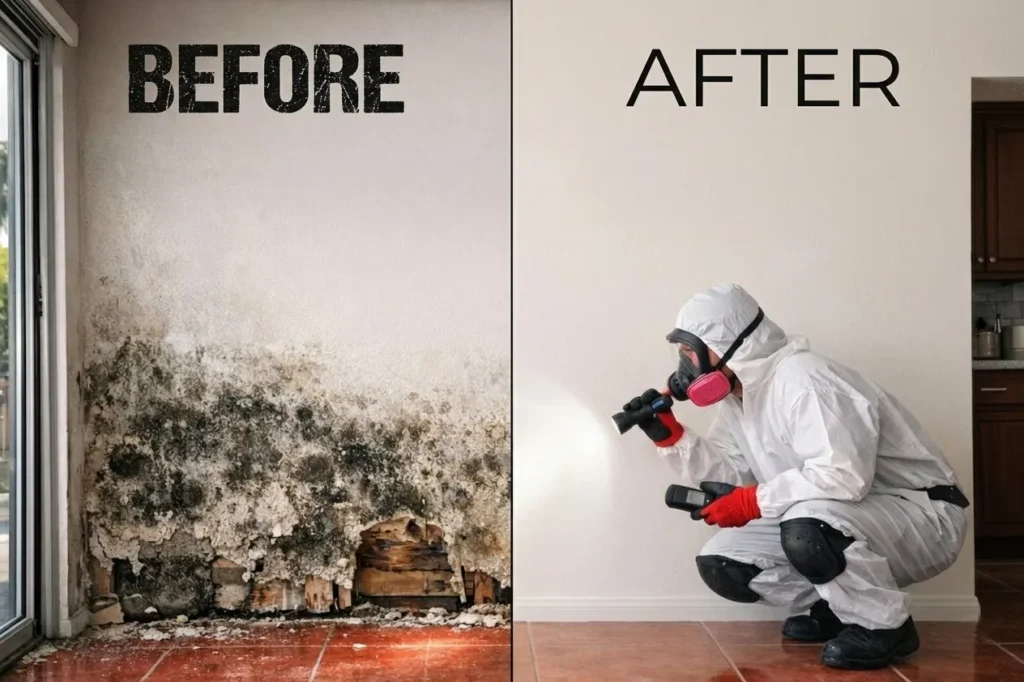
Mould vs. Mold: Same Problem, Different Spelling
“Mould” is the British/international spelling of the same fungal growth Americans call “mold.” Whether you search “mould remediation” or “mold remediation,” you’re looking for the same certified process: identifying moisture sources, containing contamination, removing affected materials, and restoring healthy indoor air quality.
Mould Remediation Atlanta: Why Remediation, Not Just Cleaning
Atlanta sits in a humid subtropical climate zone, with average summer humidity often exceeding 70% and frequent, heavy rainfall from spring through early fall. According to the EPA, mold can begin growing within 24–48 hours of sustained moisture exposure. That rapid growth window is why surface cleaning alone often fails, if the underlying moisture source and hidden colonies behind walls or under flooring aren’t addressed, growth returns within weeks.
Common Sources of Moisture Behind Atlanta Mould Problems
- Crawl space humidity and poor ventilation (extremely common in older Decatur, East Point, and Brookhaven homes)
- Roof leaks following Georgia’s severe spring thunderstorms
- HVAC condensation drain line clogs
- Basement seepage from clay soil after heavy rain
- Plumbing leaks behind walls or under slab foundations
- Poorly sealed windows and improperly installed vapor barriers in newer builds.
Quick Comparison: Mould Cleaning vs. Full Remediation
| Factor | Surface Cleaning | Certified Remediation |
| Scope | Under 10 sq ft, no hidden moisture | 10+ sq ft or recurring growth |
| Containment | Rarely used | Required |
| Materials removed | Minimal | Drywall, insulation, flooring as needed |
| Verification testing | Not typically included | Standard practice |
| Insurance documentation | Limited | Full photo/moisture report |
What Does Mould Remediation Cost in Atlanta?
Pricing depends on square footage, accessibility (crawl space vs. open room), and whether structural drying is required.
- Small localized jobs: $500–$1,500
- Mid-size remediation (10–100 sq ft): $1,500–$3,500
- Large-scale or crawl space remediation: $3,500–$7,000+
Always request an itemized, written scope of work before authorizing repairs.
Get an accurate, written estimate before you commit. Request a free inspection from Air Drop Water Restoration.
Insurance Considerations for Atlanta Homeowners
Georgia homeowners insurance typically covers mould remediation when it results from a sudden and accidental covered event, such as a burst pipe or storm-related roof leak. Damage from long-term humidity, unresolved leaks, or lack of maintenance is generally excluded. That’s why thorough documentation, moisture readings, timestamped photos, and a written cause-of-loss narrative, is critical from the first inspection visit.
Choosing a Mould Remediation Company in Atlanta
- IICRC certification for mold remediation specialists
- Local experience with Atlanta’s specific housing stock, brick ranch homes, slab foundations, crawl spaces, and post-war construction common throughout the metro
- Written, itemized estimates with no vague “labor and materials” line items
- Before/after documentation including photos and clearance test results
- Clear communication about EPA-registered products used and drying timelines.
Expert Tips for Preventing Recurrence
- Maintain indoor relative humidity between 30–50%, especially in basements and crawl spaces.
- Install a vapor barrier and dehumidification system in unconditioned crawl spaces, a common upgrade for older Atlanta homes.
- Inspect and clean HVAC condensate lines twice a year.
- Grade landscaping away from the foundation to reduce water intrusion after heavy rain.
- Address any water intrusion within 24–48 hours to stay ahead of the mold growth window.
Related Services
Read our Mold Remediation Guide Read our Water Damage Restoration Services Crawl Space Moisture Control Commercial Restoration Emergency Water Extraction
Property managers and landlords: ask about our mould remediation program for multi-unit buildings across metro Atlanta.
Frequently Asked Questions About Mould Remediation in Atlanta
What exactly do mould remediation Atlanta include?
A full-service remediation includes inspection, moisture mapping, containment, HEPA air filtration, removal of contaminated materials, antimicrobial treatment, structural drying, and post-remediation clearance testing. Call Air Drop Water Restoration for Mould Remediation Atlanta Ga
How long does mould remediation take in Atlanta homes?
Small jobs can finish in a day; larger remediation projects involving drywall removal and structural drying typically take 3–7 days. Call Air Drop Water Restoration for Mould Remediation Atlanta Ga.
Is mould remediation covered by homeowners insurance in Georgia?
Generally yes, if the mould resulted from a sudden covered event like a pipe burst. Damage from long-term neglect or unaddressed humidity is usually excluded, always confirm with your carrier. Call Air Drop Water Restoration for Mould Remediation Atlanta Ga.
How do I know if I need remediation instead of basic cleaning?
If the affected area exceeds roughly 10 square feet, if growth has recurred after cleaning, or if it’s tied to a water damage event, certified remediation is the appropriate path. Call Air Drop Water Restoration for Mould Remediation Atlanta Ga.
Can mould remediation be done while I’m still living in the house?
In most cases, yes, containment isolates the work area so the rest of the home remains accessible, though larger jobs may require temporary relocation for sensitive individuals.
What certifications should an Atlanta mould remediation company have?
Look for IICRC certification (Applied Microbial Remediation Technician, or AMRT) and, where required, Georgia state mold assessment or remediation licensure.
Does crawl space mould require a different remediation approach?
Yes. Crawl spaces need dedicated ventilation or encapsulation solutions alongside remediation to prevent recurring moisture buildup, which is extremely common in older Atlanta-area homes.
How soon can Air Drop Water Restoration start remediation work?
We typically schedule inspections within 24 hours across Atlanta and surrounding communities, with emergency response available for active leaks or health-sensitive situations.
Conclusion
Choosing the right mould remediation services in Atlanta comes down to certification, documentation, and local expertise in the specific moisture challenges Georgia homes face. Air Drop Water Restoration combines IICRC-certified technicians, insurance-ready reporting, and a proven S520-aligned process to restore your property’s air quality and structural integrity, the first time.
Ready to solve your mould problem for good? Contact Air Drop Water Restoration today for a free inspection anywhere in the Atlanta metro area.