 Skip to content
Mold clean up services go far beyond wiping down a visible patch on a wall, proper remediation requires containment, source moisture correction, and specialized removal protocols to prevent regrowth. This guide explains how professional mold clean up services work, what separates DIY cleaning from certified remediation, the health risks of untreated mold, and why Atlanta’s humid climate makes moisture control an ongoing priority for homeowners. Written by the IICRC-certified restoration team at Air Drop Water Restoration, serving Atlanta, Decatur, Stone Mountain, and the surrounding metro.
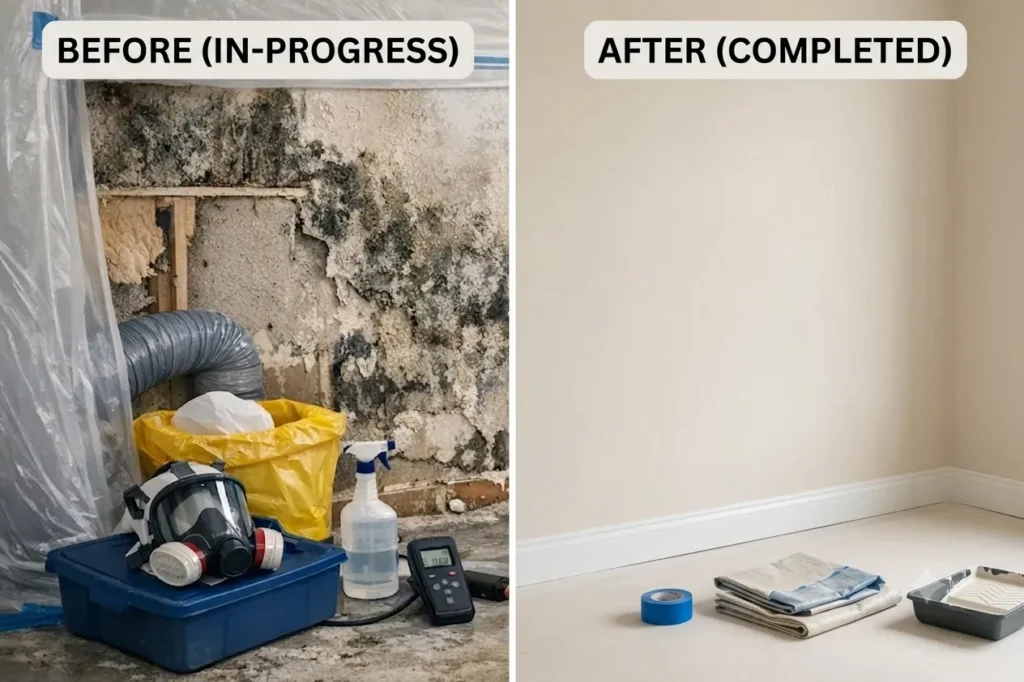
Table of Contents
Searching for reliable mold clean up services usually starts the same way, a musty smell in a bathroom, a dark patch spreading across a basement ceiling, or a family member with unexplained allergy symptoms that only flare up at home. Atlanta’s humid subtropical climate, combined with older housing stock, crawlspace construction, and frequent summer thunderstorms, makes the metro area one of the more mold-prone regions in the country. Understanding what real mold clean up services involve, versus what a bottle of bleach and a sponge can actually accomplish, is the difference between a permanent fix and a recurring problem.
As IICRC-certified restoration contractors who’ve handled mold clean up projects across Atlanta, Decatur, Stone Mountain, and the surrounding counties, we’ve seen the costly mistakes homeowners make when they treat mold as a surface-cleaning issue rather than a moisture problem with a biological symptom. This guide breaks down exactly what professional mold clean up services include, and how to prevent mold from coming back.
What Is Mold, and Why Does It Grow?
Mold is a naturally occurring fungus that reproduces through airborne spores and requires three conditions to colonize a surface: moisture, an organic food source (drywall paper, wood, dust, insulation), and a temperature range roughly between 60–80°F, conditions Atlanta homes provide for most of the year.
According to the Environmental Protection Agency, mold can begin growing on damp surfaces within 24 to 48 hours, which is why any water intrusion, a roof leak, a slow plumbing drip, high humidity in a crawlspace, needs to be addressed immediately, not just cleaned once symptoms appear.
Mold Clean Up Services: What’s Actually Included
Professional mold clean up services follow a structured process, not a single-visit wipe-down. A proper remediation project typically includes:
- Inspection and moisture source identification: locating the water source feeding the mold growth
- Containment setup: plastic sheeting and negative air pressure to prevent spore spread to unaffected areas
- Air filtration: HEPA-filtered air scrubbers running throughout the containment period
- Removal of contaminated materials: drywall, insulation, and flooring that cannot be sanitized
- HEPA vacuuming and antimicrobial treatment: of all remaining surfaces
- Structural drying: to eliminate the moisture source that allowed mold to grow in the first place
- Post-remediation verification: visual inspection and, when requested, third-party clearance testing.
DIY Mold Cleaning vs. Professional Mold Clean Up Services
| Factor | DIY Cleaning | Professional Mold Clean Up Services |
| Surface Area | Small, isolated spots under 10 sq. ft. | Any size, especially widespread growth |
| Containment | None: risk of spreading spores | Full negative-pressure containment |
| Root Cause | Rarely addressed | Moisture source identified and corrected |
| Health Protections | Minimal PPE | Respirators, gloves, full protective suits |
| Verification | None | Post-remediation inspection/testing available |
| Recurrence Risk | High if moisture isn’t fixed | Low when protocol is followed correctly |
Signs You Need Professional Mold Clean Up Services
- Visible mold growth larger than a small patch (roughly the size of a piece of paper)
- Persistent musty odor even after surface cleaning
- Mold returning repeatedly in the same location
- Mold following any water damage event, burst pipe, roof leak, flooding
- Unexplained allergy or respiratory symptoms that improve when away from home
- Visible water stains or discoloration on ceilings, walls, or baseboards
- Mold in HVAC ductwork or discovered during a home inspection
Health Considerations Homeowners Should Know
While reactions vary by individual, the Centers for Disease Control and Prevention notes that exposure to mold can trigger symptoms such as nasal congestion, throat irritation, coughing, and eye or skin irritation in sensitive individuals, with those who have asthma or mold allergies at higher risk of more severe reactions. This is one of several reasons professional mold clean up services use containment and HEPA filtration, to protect both occupants and remediation technicians from unnecessary spore exposure during the removal process.
Why Atlanta Homes Are Especially Prone to Mold
- Humid subtropical climate keeps indoor relative humidity elevated much of the year, especially without proper HVAC dehumidification
- Crawlspace foundations, common throughout Atlanta and Marietta, trap ground moisture if not properly vented or encapsulated
- Heavy summer rainfall increases the risk of roof leaks, foundation seepage, and basement moisture
- Older homes in neighborhoods like Grant Park, Virginia-Highland, and East Atlanta often have original plumbing and less effective vapor barriers
- Poorly ventilated bathrooms trap steam and moisture, creating ideal conditions in one of the most common mold locations in any home.
The Mold Clean Up Process, Step by Step
Free Visual Inspection
A technician assesses visible growth, checks for musty odors, and uses a moisture meter to identify hidden dampness behind walls or under flooring.
Scope of Work and Containment Plan
Based on the affected square footage, the team develops a containment plan and, if needed, coordinates with a certified industrial hygienist for testing.
Remediation
Contaminated materials are removed, surfaces are HEPA-vacuumed and treated with EPA-registered antimicrobial solutions, and air scrubbers run throughout the process.
Structural Drying
Since mold is a symptom of moisture, the underlying water source, a leak, high humidity, poor ventilation, must be corrected. This often overlaps directly with our Water Damage Restoration Services.
Verification and Prevention Recommendations
The area is inspected for remaining growth, and homeowners receive prevention guidance specific to their property.
Mold Prevention Checklist for Atlanta Homeowners
- Keep indoor humidity below 50% using a dehumidifier or properly sized HVAC system
- Ensure bathroom and kitchen exhaust fans vent directly outside, not into the attic
- Inspect crawlspaces annually for standing water or vapor barrier damage
- Fix roof, plumbing, and window leaks within 24–48 hours of discovery
- Clean gutters regularly to prevent water intrusion at the roofline and foundation
- Grade landscaping away from the foundation to prevent basement moisture
- Consider crawlspace encapsulation in older homes with persistent humidity issues
Expert Tip: If you smell mold but can’t see it, check behind large furniture against exterior walls, under sinks, and inside HVAC supply vents, these are the most commonly overlooked hiding spots in Atlanta homes.
Frequently Asked Questions About Mold Clean Up Services
How much do professional mold clean up services cost?
Cost depends on the extent of the contamination, the materials that need to be removed, and whether structural drying is also required. A free inspection is the best way to get an accurate scope and estimate.
How long does mold clean up take?
Most residential mold clean up projects take between one and five days, depending on the size of the affected area and whether containment and material removal are required.
Can mold come back after professional remediation?
Mold will not return if the underlying moisture source has been properly corrected. This is why legitimate mold clean up services always address moisture control, not just visible growth removal.
Do I need mold testing before clean up services begin?
Testing isn’t always required, visible mold with an identifiable moisture source can typically proceed straight to remediation. Testing is more useful for hidden mold behind walls or for post-remediation clearance verification.
Is mold covered by homeowners insurance?
Coverage varies by policy and cause. Mold resulting from a sudden covered event, like a burst pipe, is often covered, while mold from long-term neglect or humidity is typically excluded, reviewing your specific policy is recommended.
What’s the difference between mold remediation and mold removal?
“Mold removal” implies eliminating all mold, which isn’t realistic since mold spores exist naturally in outdoor and indoor air everywhere. “Mold remediation” is the accurate industry term, it means returning mold levels to a normal, healthy range and correcting the moisture source.
Can I stay in my home during mold clean up services?
In most cases, yes, especially with proper containment isolating the work area. For large-scale contamination or homes with immunocompromised residents, temporary relocation may be recommended.
How do I know if it’s mold or just mildew?
Mildew typically appears as a surface-level white or gray powdery growth, while mold is often darker, fuzzy, or slimy in texture and can penetrate porous materials. When in doubt, a professional inspection can confirm which you’re dealing with.
Conclusion: Trust Certified Mold Clean Up Services, Not Guesswork
Mold isn’t just a cosmetic problem, it’s a signal that moisture has found its way into your home and hasn’t been properly addressed. Professional mold clean up services combine containment, safe removal, and moisture correction to make sure the problem doesn’t return. Air Drop Water Restoration has spent over a decade helping homeowners across Atlanta, Decatur, Stone Mountain, and the metro area get ahead of mold before it becomes a health or structural issue.
Notice mold or a musty smell in your home? Contact Air Drop Water Restoration today for a free mold inspection and expert mold clean up services across metro Atlanta.