 Skip to content
Atlanta is a city built on hills, red clay, and an aging patchwork of infrastructure that dates back decades in some neighborhoods and mere months in others. It’s a city of contrasts, historic bungalows in Grant Park sitting a few miles from glass-and-steel towers in Midtown, decades-old plumbing in East Atlanta coexisting with brand-new construction in Alpharetta. What all these properties share, regardless of age or architecture, is exposure to the same regional risk factor: water damage Atlanta homeowners cannot fully avoid, but can absolutely prepare for.
Table of Contents
This is the story Air Drop Water Restoration tells every single day, not a story of disaster, but a story of what happens when preparation meets fast, professional response.
Why Water Damage Is So Common in the Atlanta Metro
Several factors converge to make water damage an outsized concern for Atlanta property owners compared to drier regions of the country:
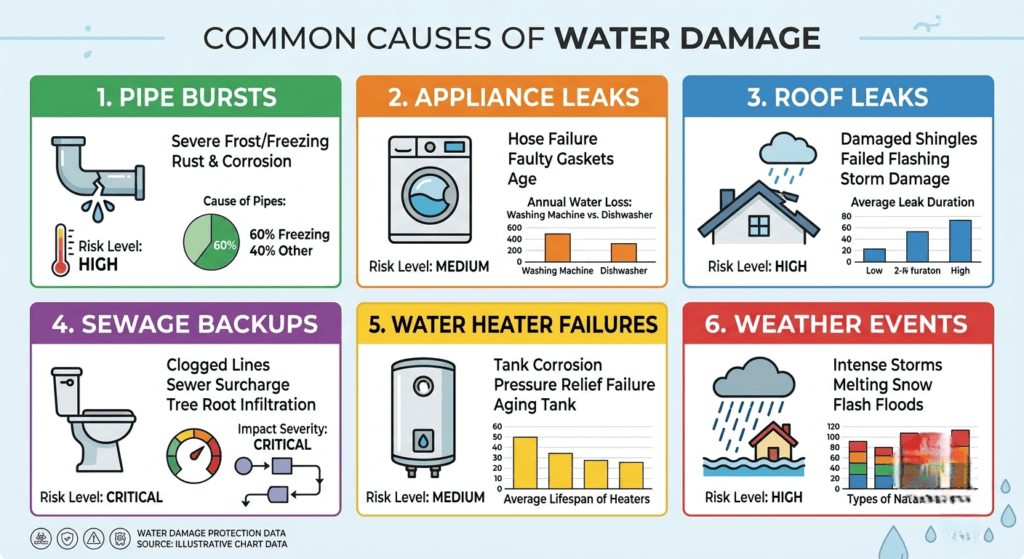
1. Climate and Storm Patterns
Atlanta’s humid subtropical climate brings frequent, intense summer thunderstorms capable of dropping significant rainfall in short windows. Combined with the region’s clay-heavy soil, which drains more slowly than sandy or loamy soil, this creates elevated risk of basement seepage, foundation water intrusion, and localized flooding, especially in low-lying neighborhoods and older subdivisions.
2. Aging Infrastructure
Many neighborhoods across Fulton, DeKalb, and Cobb counties feature homes built decades ago with plumbing systems approaching or exceeding their expected service life. Galvanized steel pipes, in particular, are prone to internal corrosion that can lead to sudden, significant failures.
3. Rapid Regional Growth
Metro Atlanta has consistently ranked among the fastest-growing metro areas in the country, with the 11-county region’s population continuing to climb year over year. Rapid development means more impervious surfaces (driveways, parking lots, rooftops), which increases stormwater runoff and strains drainage systems not originally designed for current density levels.
4. HVAC and Appliance Density
As homes across the metro have modernized with larger HVAC systems, tankless water heaters, and additional bathrooms, the number of potential point-of-failure sources for water damage has grown alongside them.
Understanding Your Risk by Neighborhood Type
Historic and Established Neighborhoods (Grant Park, Virginia-Highland, Decatur, Marietta’s historic district): Older plumbing and foundation systems increase risk of gradual leaks and slow-developing basement moisture issues.
Suburban Growth Corridors (Alpharetta, Johns Creek, Lawrenceville, Suwanee): Newer construction generally means updated plumbing, but rapid development can strain local stormwater infrastructure during major storm events.
Commercial and Industrial Zones (Downtown, Midtown, the airport corridor in Clayton County): Larger-scale HVAC and plumbing systems mean water damage events, when they occur, often affect greater square footage and require faster commercial-grade response.
Flood-Prone and Low-Lying Areas: Certain pockets across DeKalb, Clayton, and South Fulton counties sit in lower elevations relative to nearby creeks and drainage systems, increasing susceptibility to storm-driven water intrusion.
The Air Drop Water Restoration Approach to Water Damage in Atlanta
Regardless of neighborhood or property type, our response follows a consistent, standards-informed methodology rooted in the ANSI/IICRC S500 framework:
- Rapid Assessment: determining water Category (contamination level) and Class (volume/drying difficulty) immediately upon arrival
- Extraction: removing standing water before it can migrate further or degrade in contamination level
- Drying: calibrated air movement and dehumidification based on psychrometric principles suited to Atlanta’s humidity
- Antimicrobial Treatment: proactive mold prevention given the region’s climate
- Repair and Reconstruction: full restoration of affected materials to pre-loss condition
- Insurance Coordination: documentation and communication support throughout the claims process
Concerned About Water Damage Risk at Your Atlanta Property? Schedule a Free Assessment.
Prevention: Reducing Water Damage Risk Before It Happens
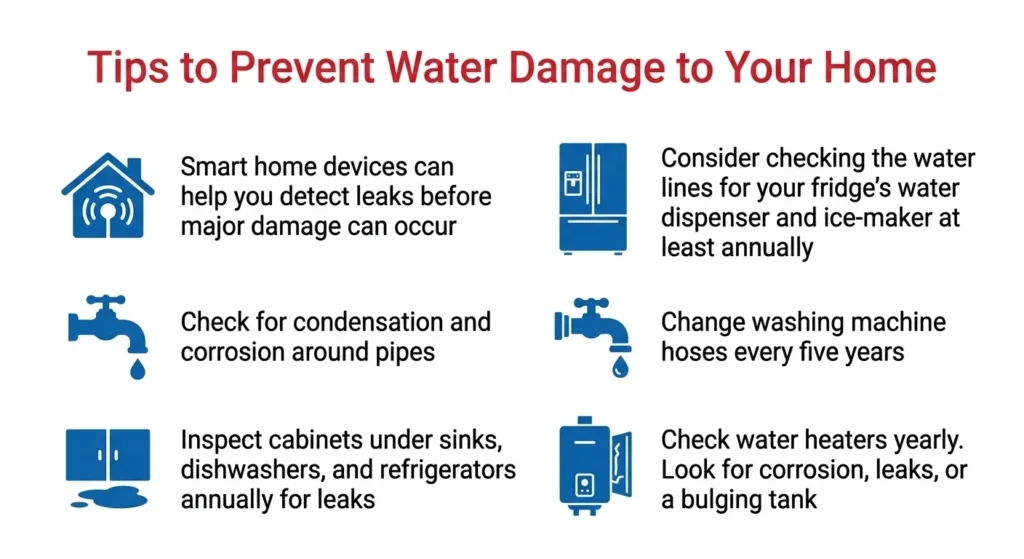
While Air Drop Water Restoration is built for emergency response, we also believe in helping metro Atlanta property owners reduce risk proactively:
- Schedule regular plumbing inspections, particularly for homes with galvanized or original-to-construction pipes
- Ensure gutters and downspouts direct water well away from the foundation
- Install a battery-backup sump pump for basements in flood-prone areas
- Monitor water heater age, most units have a functional lifespan of 8–12 years
- Know the location of your main water shutoff valve before an emergency occurs
Full Metro Atlanta Service Coverage
Air Drop Water Restoration responds to water damage throughout Fulton County (Atlanta, Alpharetta, Roswell, Sandy Springs, Johns Creek, Milton, College Park, East Point, South Fulton), DeKalb County (Decatur, Brookhaven, Dunwoody, Stone Mountain, Tucker, Clarkston, Avondale Estates), Cobb County (Marietta, Smyrna, Kennesaw, Acworth, Powder Springs), Gwinnett County (Lawrenceville, Duluth, Norcross, Snellville, Buford, Suwanee), and Clayton County (Jonesboro, Forest Park, Riverdale, Lake City), with extended service to Henry, Rockdale, Douglas, Cherokee, Fayette, and Coweta counties.
Frequently Asked Questions About Water Damage Atlanta
What are the most common causes of water damage in Atlanta homes?
Common causes include burst or leaking pipes (especially in homes with aging galvanized plumbing), water heater failures, HVAC condensate line clogs, sump pump failures during heavy storms, and roof leaks following severe weather.
Water Damage Atlanta
Is Atlanta at high risk for flood-related water damage?
While Atlanta is not a coastal flood zone, its clay-heavy soil, hilly terrain, and intense summer thunderstorms create localized flooding risk, particularly in low-lying neighborhoods and areas near creeks or inadequate stormwater drainage.
Water Damage Atlanta
How does Atlanta’s humidity affect water damage recovery?
High ambient humidity slows natural evaporation, meaning wet materials take longer to dry without professional dehumidification, which increases the risk of mold growth if drying is delayed.
Water Damage Atlanta
What is the average cost of water damage restoration in Atlanta?
Costs vary significantly based on water category, class, and affected square footage. A professional on-site assessment provides the most accurate estimate, and many restoration companies, including Air Drop Water Restoration, offer this free of charge.
Water Damage Atlanta
Does homeowner’s insurance typically cover water damage in Georgia?
Standard homeowner policies generally cover sudden, accidental water damage, such as a burst pipe, but typically exclude flood damage unless a separate flood insurance policy is in place.
How can I tell if my Atlanta home has hidden water damage?
Signs include musty odors, discolored or bubbling paint and drywall, warped flooring, unexplained increases in water bills, and visible mold growth. Professional moisture meters and thermal imaging can detect hidden moisture not visible to the naked eye.
Which Atlanta-area counties are most prone to water damage from storms?
Low-lying areas across DeKalb, Clayton, and South Fulton counties, along with parts of Cobb and Gwinnett near creeks and older stormwater infrastructure, tend to see elevated risk during significant storm events.
How often should Atlanta homeowners have their plumbing inspected to prevent water damage?
For homes with original or aging plumbing systems, an inspection every 1–2 years is a reasonable preventive measure, particularly for galvanized pipe systems approaching or exceeding their typical service life.
Protect Your Atlanta Property. Partner With Air Drop Water Restoration Today.