 Skip to content

Can mold in your house make you sick? For many people, yes.
You might wake up congested every morning. Your child might cough at night. Your eyes itch only when you are home. You blame pollen. You blame the weather. Then you smell something damp in the hall closet.
That moment matters. Mold and moisture problems are often the hidden reason behind symptoms that never quite go away.
This article explains what the science says, what we see in real homes, and what you should do next. We write as restoration contractors who work in Stone Mountain, Tucker, Lithonia, Decatur, Smyrna, and across the Atlanta Metro. We are not doctors. We are the people who find the moisture, remove the mold, and dry the structure.
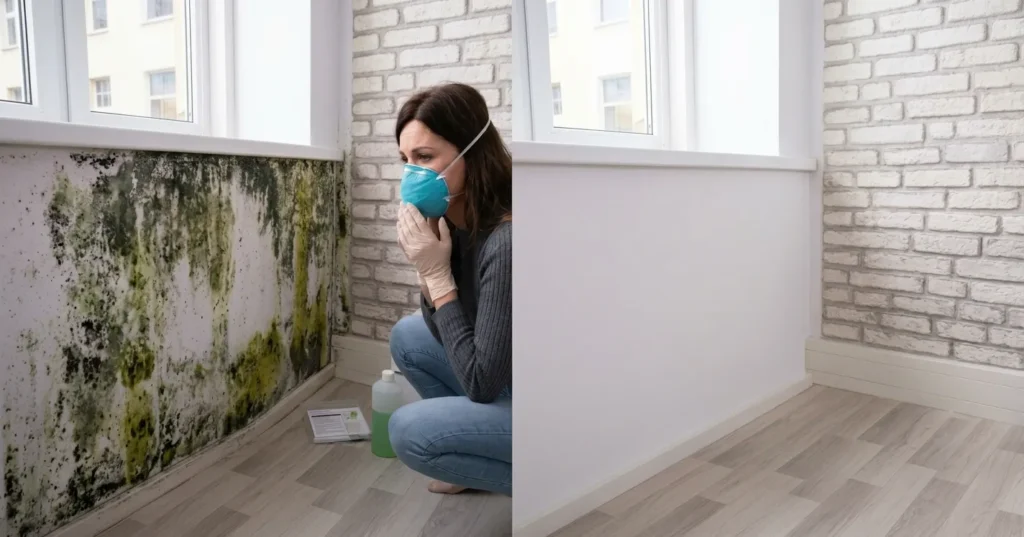
Worried About Mold in Your Home Right Now?
Do not guess. Air Drop Water Restoration provides fast mold inspection and remediation across Stone Mountain and the Atlanta Metro.
Can Mold in Your House Make You Sick? The Short Answer
Can mold in your house make you sick? Yes, it can. Mold exposure can cause nasal stuffiness, coughing, wheezing, throat irritation, eye irritation, and skin irritation in some people. The effect depends on the amount of mold, the length of exposure, and each person’s sensitivity.
The Centers for Disease Control and Prevention says people with asthma, allergies, or weakened immune systems can have stronger reactions. You can review the details on the CDC mold health page.
Quick Facts
- Mold is a type of fungus found indoors and outdoors.
- It reproduces by releasing tiny spores.
- It grows when spores land on a wet surface and stay wet.
- Not everyone reacts to mold in the same way.
- The most reliable fix is to find the moisture and remove the growth.
What Mold Does Not Do
Mold is not a guaranteed illness. Many people live near small amounts with no symptoms. Mold also is not the answer to every health complaint. Persistent symptoms deserve a conversation with your physician.
Can Mold in Your House Make You Sick? Symptoms to Watch For
Symptoms vary. Here is how they usually show up.
Common Mold Exposure Symptoms
- Stuffy or runny nose
- Sneezing
- Cough and throat irritation
- Wheezing or shortness of breath
- Itchy, red, or watery eyes
- Skin rash or irritation
- Headache or a “foggy” feeling reported by some occupants
Symptoms That Suggest a Home Connection
- Symptoms improve when you leave the house for several days
- Symptoms worsen after rain or a plumbing leak
- Symptoms are stronger in one room, such as a bedroom or basement
- Several family members feel similar symptoms
- You also smell mustiness or see stains
Mold Allergy or Mold Infection?
Most mold-related problems indoors are allergic or irritant reactions. Serious fungal infections are rare in healthy people and are mainly a concern for those with severely weakened immune systems. If you have a medical condition that affects immunity, tell your doctor about any mold exposure at home.
When to Seek Medical Care
Seek medical care for trouble breathing, chest tightness, high fever, or symptoms that do not improve. A physician can diagnose. We can only fix the building.
Who Is Most at Risk When Mold Grows in Your House?
Some people feel mold earlier and harder than others.
Higher-Risk Groups
| Group | Why Mold Exposure May Be a Bigger Concern |
| Infants and children | Developing lungs and higher breathing rates |
| Older adults | Reduced lung reserve and other health conditions |
| People with asthma | Mold can trigger attacks and flare-ups |
| People with allergies | Spores can cause allergic reactions |
| People with weakened immune systems | Greater vulnerability to infections |
| People with chronic lung disease | Symptoms can worsen with exposure |
What the Research Says
The U.S. Institute of Medicine reviewed the evidence on damp indoor spaces and health. It found enough evidence to link indoor mold and dampness to upper respiratory symptoms, cough, and wheeze in otherwise healthy people, and to asthma symptoms in people who already have asthma. The World Health Organization has also reviewed dampness and mold and reached similar conclusions about respiratory risks.
The EPA’s mold and indoor air quality resources also point to moisture control as the foundation of mold prevention.
A Note on Pregnant Women and Newborns
If someone in your home is pregnant or if you have a newborn, take mold problems seriously and speak with your healthcare provider. Remove the moisture and the mold quickly.
How Mold Gets Into Your Body: Exposure Routes in a House
Can mold in your house make you sick without you touching it? Yes. Most exposure happens through the air.
The Three Main Exposure Routes
- Inhalation. You breathe spores and tiny mold fragments floating in indoor air.
- Skin contact. Touching moldy materials can irritate sensitive skin.
- Ingestion. Rare, but possible if food is stored near contaminated areas or spoiled.
Why Disturbance Raises Exposure
Mold that sits still releases few spores. Mold that is scrubbed, sanded, or ripped out of a wall releases a lot. That is why professional crews use containment, negative air, and HEPA filtration. It is also why we tell homeowners not to demolish wet drywall without a plan.
Mold, Cold, Allergies, or Something Else?
| Symptom Pattern | May Point To | What To Do |
| Short illness with fever and body aches | A cold or flu | Rest. Talk to your doctor if severe |
| Seasonal sneezing and itchy eyes outdoors | Pollen allergy | Track the season and see an allergist |
| Year-round congestion that improves away from home | Indoor allergens such as mold, dust, or pet dander | Inspect for moisture and mold. See a physician |
| Wheezing that spikes after leaks or heavy rain | Mold or damp-related irritation | Medical visit plus professional moisture inspection |
| Chest tightness or trouble breathing | Possible medical emergency | Seek care immediately |
This table is only a starting point. Symptoms overlap. Your doctor is the right person to sort them out.
What Moisture Tells You
Mold does not appear in a dry house. Whenever you find mold, ask one question first: where is the water coming from? A leak, a flood, condensation, or humidity is always behind it.
Can Mold in Your House Make You Sick? Understanding Black Mold
“Black mold” is the term most people search. It usually refers to Stachybotrys chartarum, a dark fungus that grows on materials that stay wet for long periods, such as drywall paper and ceiling tile.
What Is Black Mold?
Black mold is a common name for dark-colored mold, often Stachybotrys, that grows on constantly wet cellulose materials like drywall paper, wood, and ceiling tile. Not all black mold is Stachybotrys. Color alone cannot confirm the species.
Is Black Mold More Dangerous?
The CDC states that reports linking “toxic mold” to specific severe illnesses have not been proven. That does not mean black mold is harmless. It means we should treat all indoor mold growth as a problem to remove, regardless of color.
What Black Mold Tells You About Your Home
Heavy black growth often signals a long-term moisture problem. It usually means:
- A slow leak
- A past flood that was never fully dried
- Persistent humidity
- Water trapped behind finishes
Find the water. Fix the source. Then remove the mold.
Read our: Black Mold Remediation After Household Floods for a deeper look at removal after flooding.
Why Mold Grows So Easily in Atlanta Metro Houses
Can mold in your house make you sick in Georgia more often than elsewhere? The climate makes it easier for mold to appear, so exposure risks can be higher.
Georgia’s Humid Subtropical Climate
Atlanta has long, humid summers and frequent heavy storms. Indoor humidity can climb quickly if cooling systems are oversized, leaky, or poorly maintained.
Red Clay and Drainage Problems
Dense clay soil common in the Piedmont holds water. After heavy rain, hydrostatic pressure pushes moisture into basements, crawl spaces, and slab seams.
Aging Homes and Plumbing
Many homes in Stone Mountain, Tucker, Lithonia, and Decatur were built decades ago. Older supply lines, aging water heaters, and outdated roofing details increase leak risk.
Crawl Spaces and Basements
Humid outdoor air entering a cooler crawl space condenses on ducts and framing. Over months, that moisture feeds mold under the floor. You may never see it. You may still breathe the air it affects.
Storm and Flood Seasons
Spring thunderstorms, summer downpours, and occasional tropical remnants test gutters, grading, and roofs. For regional weather updates, check the National Weather Service Peachtree City office.
Room-by-Room Mold Hot Spots in Stone Mountain and Metro Atlanta Homes
Can mold in your house make you sick if it is only in one room? It can, because air moves through the whole home. Check these places first.
Basement
Look for white or gray powder on masonry, damp odor, peeling paint, and wet carpet edges. Clay soil and storm runoff push water through walls and floor cracks.
Crawl Space
Check for sagging insulation, fuzzy growth on joists, standing water, and torn vapor barriers. Humid air condenses on cold surfaces. Mold follows.
Attic
Roof leaks, poor ventilation, and bathroom fans that vent into the attic cause damp insulation and dark decking. A summer attic can be hot and humid at the same time.
Kitchen
Look under the sink, behind the dishwasher, and around the refrigerator water line. Slow leaks here soak cabinets and flooring unseen.
Bathrooms
Check caulk lines, shower surrounds, and the ceiling near the fan. Poor ventilation keeps surfaces wet.
Laundry Room
Washing machine hoses fail. A small drip can soak the subfloor for weeks.
HVAC Closet and Air Handler
A clogged condensate line can overflow into the closet floor. Rust, stains, or musty air at the vents are warning signs.
Windows and Exterior Walls
Condensation and failed flashing allow water into the wall cavity. Look for staining below windows and bubbling paint.
Read our: Emergency Water Extraction Service if you find standing water in any of these areas.
How to Tell If Mold in Your House Might Be Making You Sick
You do not need to guess. Use this checklist.
Step-by-Step: Check Your Home for Mold and Moisture
- Use your nose. A musty or earthy smell means hidden moisture.
- Look for stains. Check ceilings, baseboards, window corners, and under sinks.
- Inspect the high-risk rooms. Bathrooms, kitchens, laundry rooms, basements, attics, and crawl spaces.
- Check humidity. A simple hygrometer shows relative humidity. Aim for 30 to 50 percent.
- Look at HVAC components. Check registers, drain pans, and condensate lines.
- Feel walls and floors. Cool, damp surfaces may indicate a leak.
- Review your water bills. Unexplained spikes may point to a hidden leak.
- Call a professional. Moisture meters and thermal imaging find what the eye misses.
Do Mold Test Kits Work?
Home test kits can detect spores, but spores exist everywhere. A positive kit does not tell you the source, extent, or required fix. A professional inspection focuses on moisture, visible growth, and building conditions.
Quick Checklist: Signs It Is Time to Call a Pro
- Mold larger than a small patch
- Repeated mold after cleaning
- Water damage from a flood or burst pipe
- Musty odor with no visible source
- Health symptoms that track with time spent at home
- HVAC involvement
Let Our Team Find the Moisture Behind the Mold
Our technicians use moisture meters, thermal imaging, and air movement analysis to find where water is hiding.
What to Do in the First 48 Hours If You Find Mold in Your House
Can mold in your house make you sick faster if you disturb it? It can. Careless cleanup spreads spores. Follow these steps.
Safe First Steps
- Stop the water. Shut off the supply if a pipe or appliance is leaking.
- Limit exposure. Keep children, pets, and vulnerable family members out of the affected area.
- Do not run the HVAC if you believe mold is inside the system or the home’s air is circulating from the affected area.
- Do not disturb the mold. Avoid scrubbing, sanding, or dry brushing.
- Photograph everything. Document stains, damage, and water sources for insurance.
- Dry what is safe to dry. Remove standing water. Move furniture off wet floors.
- Call a restoration company. A fast inspection can save materials.
What Not to Do
- Do not mix bleach with other chemicals. Dangerous gases can form.
- Do not paint over mold.
- Do not use a regular household vacuum on mold.
- Do not ignore a small leak because “it will dry.”
Protect Your Insurance Claim
Keep records of dates, photos, repair invoices, and moisture readings. If a sudden event such as a burst pipe caused the water loss, your homeowners policy may respond. Flooding from outside typically requires a separate flood policy. Learn more at FEMA’s flood insurance page.
Can Mold in Your House Make You Sick? How Professionals Remove It Safely
DIY cleanup can make things worse when it releases spores into the air. A professional remediation process uses control and verification.
The Professional Mold Remediation Process
- Assessment and moisture mapping. We find the water source and measure moisture.
- Source correction. Leaks are repaired or stopped. Standing water is extracted.
- Containment. Plastic sheeting and negative air machines isolate the area.
- Air filtration. HEPA air scrubbers clean the air during removal.
- Removal of contaminated materials. Wet or colonized drywall, insulation, and flooring are bagged and removed.
- HEPA vacuuming and cleaning. Surfaces are cleaned using approved methods.
- Structural drying. Air movers and dehumidifiers bring materials to dry standards.
- Verification. Moisture readings and visual checks confirm results. Clearance testing may be recommended.
- Repair and rebuild. Surfaces are replaced and finished.
We follow industry standards from the Institute of Inspection, Cleaning and Restoration Certification (IICRC) for water damage and mold work. Learn about the standards at IICRC.
Why Drying Matters as Much as Removal
If the structure stays wet, mold returns. Monitoring moisture content in framing and subfloors is how we know the job is finished.
Read our: Water Damage Restoration Services if your mold began with a leak, flood, or burst pipe.
DIY Cleanup vs Professional Help: Can Mold in Your House Make You Sick During Cleanup?
Yes, cleanup itself can expose you. Here is a fair comparison.
| Factor | DIY | Professional |
| Small, dry, non-porous surface spot | Often manageable with proper protection | Not usually needed |
| Large or hidden growth | Risky and often incomplete | Recommended |
| Porous materials (drywall, insulation, carpet) | Hard to fully clean | Removed under containment |
| Source detection | Visual only | Moisture meters and thermal imaging |
| Respiratory protection | Usually inadequate | Proper PPE and training |
| Air quality control | None | HEPA filtration and negative air |
| Documentation | Minimal | Photos, moisture logs, scope |
| Long-term result | Often recurs | Source corrected and verified |
The EPA notes that mold patches larger than about 10 square feet generally call for professional help. See the EPA mold page for standards.
A Contractor’s Honest Advice
If it is a small spot on a tile surface in a well-ventilated bathroom, you may be fine. If it is on drywall, in a basement, after a flood, or inside your HVAC, call a pro.
Protect Your Family. Remove It the Right Way.
Air Drop Water Restoration handles mold removal, structural drying, and rebuild coordination so you do not have to expose yourself or your family.
Preventing Mold in Your House So It Cannot Make You Sick
Can mold in your house make you sick again after cleanup? Only if moisture returns. Prevention is about control.
Expert Prevention Checklist
- Keep indoor humidity between 30 and 50 percent
- Fix leaks within 24 to 48 hours
- Run bathroom fans for 20 minutes after showers
- Vent dryers to the outdoors
- Clean gutters and extend downspouts
- Service your HVAC system annually
- Clear the condensate drain line
- Use a dehumidifier in basements and crawl spaces
- Replace aging washing machine hoses
- Inspect water heaters and supply lines yearly
- Seal crawl space vents and add vapor barriers where appropriate
Seasonal Maintenance for Georgia Homes
Spring: Inspect roof, gutters, windows, and basement walls after storms.
Summer: Monitor humidity. Check AC condensate lines.
Fall: Clean gutters and review exterior caulking.
Winter: Insulate pipes. Know your shutoff valve. Prevent frozen pipe bursts.
Install Water Leak Sensors
Cheap sensors near the water heater, washing machine, and under sinks provide early alerts. Early alerts prevent mold.
Expert Tips From Our Crew
- Buy a hygrometer. It costs little and pays off.
- Replace damp carpet instead of trying to save it after a flood.
- Keep furniture a few inches from exterior walls so air can move.
- Do not store cardboard boxes directly on a basement floor.
- Fix the cause before you fix the cosmetics.
Why Stone Mountain and Metro Atlanta Families Call Air Drop Water Restoration
Air Drop Water Restoration provides water damage restoration, mold remediation, fire damage restoration, and emergency plumbing support. We build our business on quality and integrity.
What You Get When You Call
- 24/7 emergency response. Moisture problems do not wait.
- Clear communication. You know what we find and what we recommend.
- Advanced detection and drying equipment. We locate water and remove it.
- Insurance claim support. We document the work and help you navigate the process.
- A complete plan. Mitigation, remediation, and rebuild coordination.
Related Services
Service Area
We serve Stone Mountain and the Atlanta Metro, including Atlanta, Sandy Springs, Marietta, Roswell, Alpharetta, Johns Creek, Dunwoody, Brookhaven, Decatur, Smyrna, Kennesaw, East Point, College Park, Union City, Douglasville, Mableton, Tucker, Lithonia, Conyers, Covington, Stockbridge, McDonough, Lawrenceville, Duluth, Suwanee, Peachtree City, Fayetteville, and Newnan.
For Georgia preparedness resources, visit Georgia Emergency Management and Homeland Security.
Frequently Asked Questions: Can Mold in Your House Make You Sick?
Can mold in your house make you sick even if you cannot see it?
Yes, it can. Hidden mold behind walls, under floors, or in crawl spaces may release spores or odors that reach living areas. A musty smell and a history of leaks are important clues. A professional moisture inspection can find hidden mold.
Can mold in your house make you sick with a cough or sore throat?
It can. Mold exposure may cause coughing, throat irritation, and wheezing in some people. These symptoms have many causes, so talk to your doctor. If symptoms improve when you leave home, ask a restoration professional to inspect for moisture and mold.
How long does it take for mold in your house to make you sick?
There is no fixed timeline. Some sensitive people react within minutes or hours of exposure. Others notice symptoms after weeks. Reactions depend on the person and the level of exposure.
Can mold in your house make you sick after a flood or burst pipe?
Yes, the risk goes up after a flood or burst pipe. Wet materials can grow mold within 24 to 48 hours. Fast water extraction and structural drying lower the chance of mold and the health concerns that follow.
Can black mold in your house make you sick more than other mold?
Black mold is commonly feared, but the CDC notes that “toxic mold” claims are not well supported. All indoor mold growth should be removed. Color does not tell you how risky it is.
Can mold in your house make you sick if you have asthma?
Mold can trigger asthma symptoms in people who already have asthma. If you have asthma and suspect mold, tell your doctor and schedule a mold inspection quickly.
Can mold in your house make you sick when the HVAC is running?
If mold is in or near HVAC components, the system can spread spores through the house. Persistent odor when the system runs is a sign to have the ductwork and moisture sources inspected.
Does homeowners insurance pay for mold that makes you sick in your house?
Insurance typically responds to the cause of loss. Sudden, accidental water damage may be covered. Mold coverage is often limited, and outside flooding usually requires flood insurance. Read your policy and speak with your agent.
Who should I call if mold in my house is making me sick in Stone Mountain?
Call a physician for health concerns. For the mold itself, call Air Drop Water Restoration at +1 (678)-374-9247. We inspect, remove, dry, and restore homes across Stone Mountain and the Atlanta Metro.
Do Not Ignore the Question “Can Mold in Your House Make You Sick?”
Can mold in your house make you sick? Yes, it can, especially if you have asthma, allergies, a weakened immune system, or young children at home. The best protection is to remove moisture quickly and remove mold safely.
Here is the short version:
- Mold needs moisture. Georgia’s climate provides plenty.
- Symptoms include congestion, cough, wheeze, and irritation.
- Color does not tell you how risky mold is.
- DIY cleanup can spread spores.
- Professional containment, removal, and structural drying are the safest route.
- Prevention comes from humidity control and fast leak response.
Air Drop Water Restoration is ready when you are. We bring clear answers, trained crews, and 24/7 emergency response to Stone Mountain and the entire metro.
Get Mold Out of Your House Before It Makes Your Family Sick
Call Air Drop Water Restoration now. We answer 24/7 and serve Stone Mountain, Tucker, Lithonia, Decatur, Smyrna, and the Atlanta Metro.