 Skip to content

Water mitigation Atlanta Georgia homeowners rely on begins the second water hits your floor, not the next morning, not after you’ve called around for quotes. It begins with a phone call to a crew that can extract, dry, and stabilize your property before a plumbing failure or storm event turns into a full-blown structural loss.
If you’re searching for water mitigation Atlanta Georgia services right now, chances are you already have water where it should not be. This guide from Air Drop Water Restoration explains exactly what water mitigation is, how it works, and why our 24/7 emergency response team is built specifically for the storm patterns, soil conditions, and aging infrastructure found throughout Stone Mountain and the greater Atlanta metro.
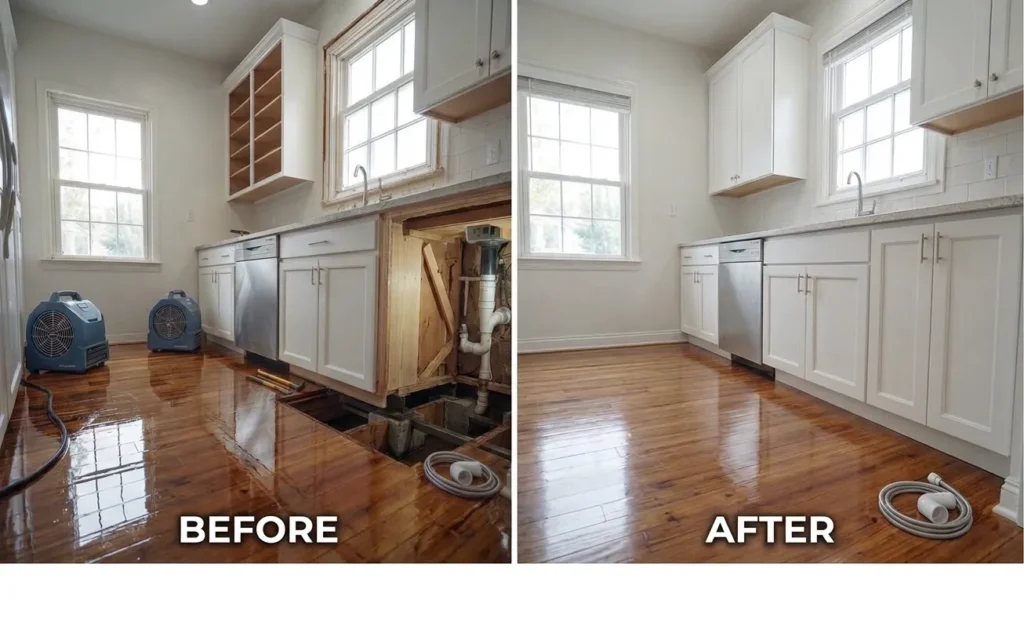
What Is Water Mitigation? A Clear Definition for Atlanta Homeowners
Quick Answer: Water mitigation is the emergency process of stopping ongoing water damage, extracting standing water, and drying a structure to prevent further loss. It is the critical first phase that happens before full water damage restoration and reconstruction.
Water mitigation Atlanta Georgia companies perform typically includes:
- Locating and stopping the source of water intrusion
- Extracting standing water with industrial pumps and extractors
- Removing unsalvageable materials (soaked carpet padding, insulation)
- Setting structural drying equipment (air movers, dehumidifiers)
- Applying antimicrobial treatments to prevent mold growth
- Monitoring moisture levels until the structure reaches a dry standard.
Mitigation is distinct from restoration. Mitigation stops the damage from getting worse; restoration rebuilds what was lost. Most jobs require both, in that order.
Why Water Mitigation Atlanta Georgia Properties Need Happens on a Different Timeline Than Other Regions
Atlanta’s combination of humidity, storm frequency, and clay soil makes water mitigation more time-sensitive here than in drier climates.
High Humidity Slows Natural Drying
Georgia’s average relative humidity keeps materials damp far longer without mechanical intervention, which is exactly why professional water mitigation Atlanta Georgia teams rely on commercial dehumidification rather than open windows and fans.
Storm Frequency Raises Repeat-Loss Risk
According to the National Oceanic and Atmospheric Administration (NOAA), the Southeast experiences a high volume of severe thunderstorm and flash flood events annually, meaning many Atlanta homes face more than one water mitigation event over their lifespan.
Clay Soil Increases Foundation and Crawl Space Exposure
Poorly draining clay soil throughout DeKalb, Gwinnett, Cobb, and Fulton counties pushes rainwater toward foundations, making crawl space and basement water mitigation one of our most frequent service calls.
The Water Mitigation Atlanta Georgia Process: Step by Step
1. Emergency Call and Dispatch
Our team answers 24/7, gathers details about the water source and affected areas, and dispatches a crew immediately, often arriving within the hour throughout Stone Mountain and nearby communities.
2. Safety and Source Control
Before anything else, technicians shut off the water source if it’s still active and check for electrical hazards, especially in basements and crawl spaces.
3. Water Category and Class Assessment
Technicians classify the water (clean, gray, or black) and assess the extent of saturation to determine the right water mitigation approach.
| Water Category | Source Examples | Mitigation Approach |
| Category 1 (Clean) | Supply line break, appliance overflow | Standard extraction and drying |
| Category 2 (Gray) | Washing machine discharge, sump pump failure | Extraction, drying, antimicrobial treatment |
| Category 3 (Black) | Sewage backup, storm/flood water | Full removal of contaminated materials, sanitization, PPE-protected extraction |
4. Water Extraction
Industrial-grade pumps and truck-mounted extractors remove standing water quickly, minimizing how long materials stay saturated.
5. Structural Drying and Dehumidification
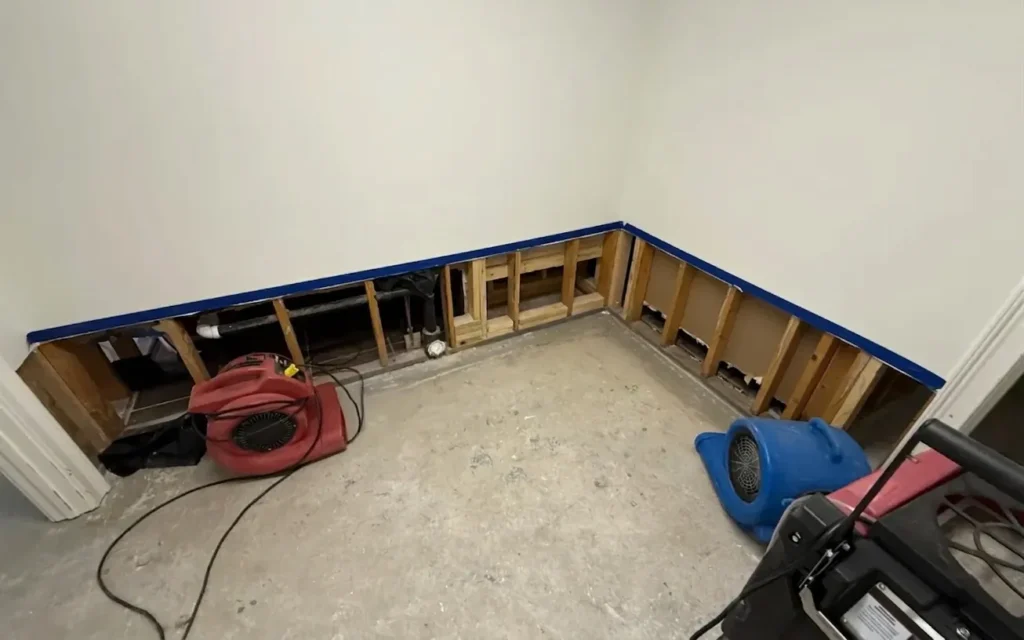
High-velocity air movers and commercial dehumidifiers are placed strategically, targeting walls, subfloors, and framing, not just visible surfaces.
6. Moisture Monitoring
Daily readings with moisture meters and thermal imaging confirm progress and determine when equipment can safely be removed.
7. Antimicrobial Application
Affected surfaces are treated to inhibit mold growth, a critical step given how quickly Georgia’s humidity can accelerate colonization.
8. Documentation for Insurance
Every stage is photographed and logged, giving your insurance adjuster the evidence needed to process your water mitigation claim smoothly.
How Long Does Water Mitigation Take?
Most water mitigation Atlanta Georgia projects follow this general timeline:
- Day 1: Emergency extraction, equipment setup, and initial assessment
- Days 2–4: Active structural drying and daily moisture monitoring
- Day 3–5: Drying goals typically reached for Class 1–2 losses (longer for Class 3–4)
- Final day: Equipment removal and dry-standard confirmation
Larger losses, Category 3 water, or homes with extensive crawl space saturation can take longer. Your technician will give you a project-specific timeline after the initial assessment.
Active Water Emergency Right Now?
Every minute counts once water starts spreading through your home. Call Air Drop Water Restoration at +1 (678) 374-9247 for immediate 24/7 water mitigation Atlanta Georgia dispatch, we serve Stone Mountain and the entire Metro Atlanta region around the clock.
Common Causes That Trigger Water Mitigation Calls Across Metro Atlanta
- Burst or frozen pipes during sudden winter cold snaps
- Water heater tank failures
- Washing machine and dishwasher supply line ruptures
- Sump pump failures during heavy rainfall
- Roof leaks following severe thunderstorms.
- Sewage backups from aging municipal lines or tree root intrusion
- Foundation seepage through Georgia’s clay soil after prolonged rain
- HVAC condensate line clogs, especially during humid summer months
Read our Emergency Water Extraction Service page for more on how we respond to each of these scenarios.
Water Mitigation vs. Water Damage Restoration: What is the Difference?
| Water Mitigation | Water Damage Restoration |
| Emergency, time-sensitive response | Follows mitigation, less time-pressured |
| Stops active water spread | Repairs and rebuilds affected areas |
| Extraction, drying, antimicrobial treatment | Drywall, flooring, paint, trim replacement |
| Typically, 1–5 days | It can take days to weeks depending on scope |
| Often billed directly to insurance as an emergency service | Scoped and billed as a repair/reconstruction project |
Air Drop Water Restoration manages both phases under one roof, so homeowners across Stone Mountain, Decatur, Tucker, and the wider metro don’t have to coordinate multiple contractors.
Local Spotlight: Water Mitigation Needs Across Metro Atlanta Communities
Water mitigation Atlanta Georgia demand varies slightly by community, based on housing age, terrain, and storm exposure:
- Stone Mountain & Lithonia: Older housing stock, frequent crawl space and slab-related mitigation calls
- Decatur & Tucker: Mature tree canopy raises risk of roof and gutter-related water intrusion.
- Marietta, Smyrna & Kennesaw: Mix of older and newer construction, frequent basement mitigation needs
- Sandy Springs, Dunwoody & Roswell: Higher concentration of finished basements requiring specialized mitigation
- Alpharetta, Johns Creek, Duluth & Suwanee: Newer developments still exposed to storm-driven roof and window leaks
- Conyers, Covington, Stockbridge & McDonough: Rural and suburban properties with well-and-septic systems needing specialized sewage backup mitigation
- Lawrenceville: A frequent source of burst pipe and slab leak mitigation calls due to a mix of home ages
Wherever you’re located across this footprint, our teams already know the terrain, the storm patterns, and the housing stock, which means faster, more accurate water mitigation response.
Expert Tips for Homeowners Awaiting a Water Mitigation Crew
If you’re waiting for our team to arrive, here’s what our technicians recommend:
- Shut off the water source at the main valve if it is safe to do so.
- Turn off electricity to the affected area if outlets or fixtures are near standing water.
- Move furniture, electronics, and valuables away from the wet area.
- Avoid walking through standing water if there is any chance it’s contaminated.
- Take photos and video of the damage for your records before cleanup begins.
- Do not attempt to run your own fans or dehumidifiers as a substitute for professional drying, it can mask moisture that is still trapped inside walls.
Expert Insight
“The biggest mistake we see is homeowners trying to dry things out themselves with box fans and a shop vac. It might look dry on the surface within a day, but moisture readings inside the wall cavity often tell a completely different story. That’s exactly why professional water mitigation Atlanta Georgia homes need relies on calibrated equipment, not guesswork.” Air Drop Water Restoration Restoration Team
Schedule a Water Mitigation Assessment Before Small Problems Grow
Even if your situation isn’t a full emergency yet, a professional water mitigation assessment can catch hidden moisture before it becomes a bigger issue. Call Air Drop Water Restoration at +1 (678) 374-9247 to schedule yours today.
Insurance and Water Mitigation Atlanta Georgia Claims
Most homeowners insurance policies cover water mitigation costs when the damage results from a sudden, accidental event, a burst pipe, appliance failure, or storm-driven leak. Coverage typically does not extend to:
- Gradual, long-term leaks tied to lack of maintenance.
- Flood damage from rising exterior water without separate flood coverage.
- Damage from neglected repairs after a known issue was identified.
Air Drop Water Restoration works directly with your insurance adjuster, providing:
- Detailed moisture logs and drying reports
- Time-stamped photo and video documentation
- Itemized scope of mitigation work performed.
- Direct communication to speed up claim approval.
For homeowners in flood-prone areas, additional protection is available through the FEMA National Flood Insurance Program. You can also review general preparedness guidance through Georgia Emergency Management and Homeland Security Agency.
Checklist, What to Expect From a Professional Water Mitigation Company
A qualified water mitigation Atlanta Georgia company should:
- Answer emergency calls 24/7, including weekends and holidays.
- Arrive on-site promptly, typically within a few hours.
- Use IICRC-standard water categorization and classification!
- Provide upfront explanation of the mitigation process and timeline!
- Use calibrated moisture meters and thermal imaging, not guesswork!
- Document every stage for insurance purposes.
- Communicate directly with your insurance adjuster
- Confirm dry-standard readings before removing equipment.
If a company skips these steps, your water mitigation may be incomplete, leaving hidden moisture behind to fuel future mold growth.
Why Choose Air Drop Water Restoration for Water Mitigation Atlanta Georgia
- 24/7 emergency availability across Stone Mountain and the full Metro Atlanta footprint
- IICRC-informed mitigation practices for accurate, standards-based drying
- Direct insurance coordination to reduce homeowner stress and claim delays
- Locally based crews who understand Georgia’s soil, storm patterns, and housing stock
- One company for the full journey, from emergency mitigation through complete restoration
Read our Water Damage Restoration Services page to see the full scope of what happens after mitigation is complete, and our 24/7 Mold Remediation Service page if mold has already developed.
Serving Stone Mountain and All of Metro Atlanta
From Stone Mountain to Atlanta, Sandy Springs, Marietta, Roswell, Alpharetta, Johns Creek, Dunwoody, Brookhaven, Decatur, Smyrna, Kennesaw, East Point, College Park, Union City, Douglasville, Mableton, Tucker, Lithonia, Conyers, Covington, Stockbridge, McDonough, Lawrenceville, Duluth, Suwanee, Peachtree City, and Fayetteville, Air Drop Water Restoration is ready to respond. Call +1 (678) 374-9247 now for immediate water mitigation Atlanta Georgia service.
People Also Ask
What does water mitigation mean exactly?
Water mitigation is the emergency process of removing standing water and drying a structure to stop further damage, performed before repairs and reconstruction begin.
How much does water mitigation cost in Atlanta, Georgia?
Cost depends on the water category, extent of saturation, and square footage affected. Many water mitigation costs are covered by homeowners insurance when the damage is sudden and accidental, Air Drop Water Restoration provides a clear estimate after an on-site assessment.
Is water mitigation covered by insurance in Georgia?
In most cases, yes, when the water source is sudden and accidental, such as a burst pipe or appliance failure. Flood-related water mitigation typically requires separate flood insurance.
How fast does a water mitigation company need to respond?
Ideally within a few hours. The first 24–48 hours after water exposure are critical for preventing mold growth and minimizing structural damage.
Can I do water mitigation myself?
Minor spills can sometimes be managed with basic drying, but any significant water intrusion should be handled by professionals with calibrated moisture equipment to ensure hidden moisture doesn’t get left behind.
Frequently Asked Questions On Water Mitigation Atlanta Georgia
What is the difference between water mitigation and water remediation?
The terms are often used interchangeably, though “mitigation” typically refers specifically to stopping ongoing damage and drying the structure, while “remediation” can also include mold treatment and material removal.
Do I need to leave my home during water mitigation?
Not usually, unless contamination levels (Category 3 water), electrical hazards, or extensive equipment placement make certain areas unsafe or inaccessible. Your technician will advise based on your specific situation.
How do I know if water mitigation was done correctly?
Ask for documented moisture readings showing materials reached an accepted dry standard, not just a visual inspection. A reputable water mitigation Atlanta Georgia company will provide this documentation as part of the job close-out.
Will water mitigation prevent mold growth completely?
Prompt, thorough water mitigation significantly reduces mold risk by removing moisture before spores can colonize, though monitoring is still recommended in humid climates like Atlanta’s.
What happens if I wait too long to call for water mitigation?
Delayed mitigation increases the likelihood of mold growth, structural material replacement, and higher overall repair costs, and it can also complicate your insurance claim.
Does Air Drop Water Restoration handle both residential and commercial water mitigation in Atlanta?
Yes. Our crews are equipped to handle water mitigation for single-family homes, multi-family properties, and commercial buildings throughout Stone Mountain and Metro Atlanta.
Can water mitigation address crawl space flooding specifically?
Yes. Crawl space water mitigation includes water extraction, targeted drying, and often recommendations for long-term moisture control like encapsulation or improved drainage.
What certifications should a water mitigation technician have?
Look for IICRC-trained technicians, as this certification body sets the industry standard for water damage restoration and mitigation practices. Learn more through the IICRC.
Is a musty smell after water mitigation normal?
A faint smell during the drying process can be normal, but a persistent musty odor after mitigation is complete may indicate residual moisture or early mold growth and should be inspected.
How soon after a storm should I call for water mitigation in Atlanta?
As soon as you notice water intrusion. Given Georgia’s humidity, waiting even a day or two significantly raises the risk of secondary mold damage.
Does Air Drop Water Restoration provide free estimates for water mitigation?
Yes, we provide on-site assessments and clear estimates, and we work directly with your insurance company when applicable to minimize your out-of-pocket steps.
Can water mitigation save hardwood floors after a leak?
Often, yes, if addressed quickly. Specialized drying mats and controlled dehumidification can sometimes save hardwood that would otherwise need full replacement, but timing is critical.
What areas of Metro Atlanta does Air Drop Water Restoration cover for water mitigation?
We serve Stone Mountain, Atlanta, Sandy Springs, Marietta, Roswell, Alpharetta, Johns Creek, Dunwoody, Brookhaven, Decatur, Smyrna, Kennesaw, East Point, College Park, Union City, Douglasville, Mableton, Tucker, Lithonia, Conyers, Covington, Stockbridge, McDonough, Lawrenceville, Duluth, Suwanee, Peachtree City, and Fayetteville.
Conclusion: Fast, Professional Water Mitigation Atlanta Georgia Homeowners Can Trust
Water mitigation Atlanta Georgia properties need isn’t something to shop around for while water is actively spreading through your home. It requires a team that can respond immediately, assess accurately, and dry your structure to a verified standard, not just a surface-level guess.
Air Drop Water Restoration has built our reputation across Stone Mountain and the wider Metro Atlanta region on exactly that: fast 24/7 response, IICRC-informed methods, and direct insurance coordination that takes the guesswork off your shoulders. Whether it’s a burst pipe at 2 a.m. or a flooded crawl space after a summer storm, our team is ready.
Water spreading through your home right now? Don’t wait. Call Air Drop Water Restoration at +1 (678) 374-9247 for immediate water mitigation Atlanta Georgia service, available 24 hours a day, 7 days a week, across Stone Mountain and the entire Metro Atlanta area.