 Skip to content
Mold remediation near me in Stone Mountain, Georgia is what homeowners search for once testing confirms, or visible growth makes obvious, that mold has taken hold.
This guide walks through the full IICRC-informed remediation process, from containment and negative air pressure to physical removal, HEPA filtration, and clearance testing.
Learn how much mold remediation typically costs in the Stone Mountain and metro Atlanta area, what separates DIY mold removal from certified remediation, how Georgia’s humidity affects the timeline, and how Air Drop Water Restoration coordinates insurance documentation throughout.
Whether you’re dealing with a small bathroom mold patch or extensive growth following a water damage event, this article gives you a clear, expert-backed roadmap.
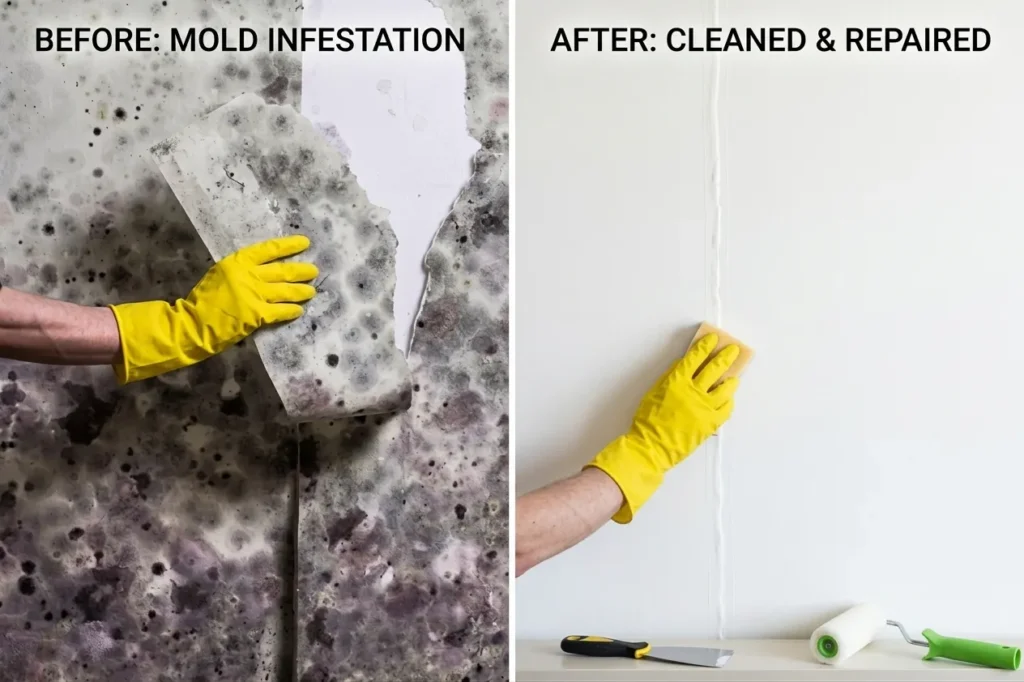
Already have a confirmed mold problem? Call for mold testing and assesemnt if you haven’t tested yet, or call Air Drop Water Restoration now at +1 (678)-374-9247 for mold remediation service.
What Is Mold Remediation?
Mold remediation is the professional process of removing mold growth from a structure, containing the work area to prevent cross-contamination, filtering airborne spores, and correcting the underlying moisture source, with the goal of returning indoor mold levels to a normal, safe range rather than attempting to eliminate every spore, which is not realistically possible since mold spores exist naturally in outdoor and indoor air everywhere.
How Much Does Mold Remediation Cost in Stone Mountain, Georgia?
Mold remediation in Stone Mountain, Georgia typically costs between $1,500 and $6,000 for moderate residential jobs, and can exceed $10,000 for extensive whole-home or structural mold contamination. Cost depends on the affected square footage, materials requiring removal, and accessibility of the contaminated area.
The Certified Mold Remediation Process in Stone Mountain, Georgia
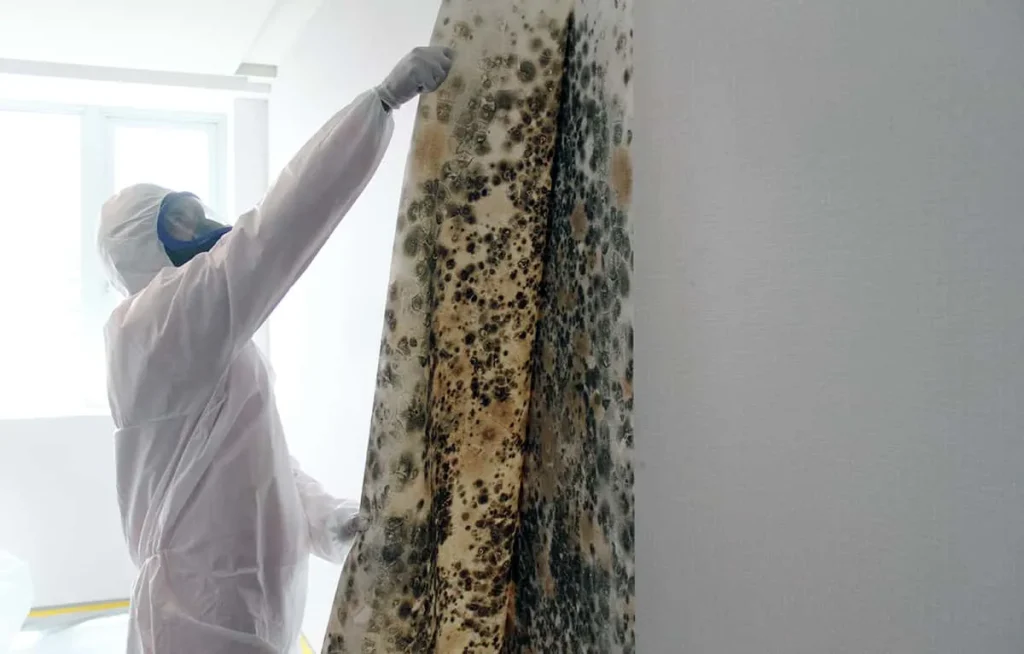
Air Drop Water Restoration follows an IICRC-informed remediation process for every job across Stone Mountain and the surrounding metro Atlanta area.
Step 1: Assessment and Containment Planning
Technicians assess the extent of mold growth, identify the moisture source, and determine the containment strategy needed to prevent spores from spreading to unaffected areas of the home during the remediation process.
Step 2: Containment and Negative Air Pressure
Plastic sheeting and physical barriers isolate the work area, while negative air machines create pressure differentials that pull air out through HEPA filtration rather than allowing contaminated air to escape into the rest of the home.
Step 3: Removal of Contaminated Materials
Porous materials that have absorbed mold growth, such as drywall, insulation, and in some cases carpet or subflooring, are removed and disposed of according to industry guidelines, since these materials generally cannot be fully cleaned once contaminated.
Step 4: HEPA Vacuuming and Antimicrobial Treatment
Remaining structural surfaces are HEPA vacuumed and treated with EPA-registered antimicrobial solutions to eliminate remaining mold spores and inhibit regrowth.
Step 5: Structural Drying and Moisture Source Correction
Since mold cannot regrow without a moisture source, technicians address the underlying issue, whether it’s a leak, poor ventilation, or elevated humidity, and confirm the area is fully dried using moisture meters.
Step 6: Clearance Testing
A follow-up air or surface test confirms that mold spore levels have returned to a normal range before the containment barriers are removed and the space is cleared for reconstruction or reoccupation.
Step 7: Reconstruction
Removed drywall, insulation, and flooring are replaced, returning the space to pre-remediation condition.
Table: Mold Remediation Timeline by Severity
| Severity Level | Affected Area | Typical Timeline |
| Minor | Under 10 sq. ft., single surface | 1 to 2 days |
| Moderate | 10–100 sq. ft., single room | 3 to 5 days |
| Extensive | Over 100 sq. ft. or multiple rooms | 1 to 3 weeks |
| Structural/Whole-Home | HVAC contamination, structural framing affected | 3 to 6+ weeks |
Not sure how severe your mold situation is? Contact Air Drop Water Restoration or call +1 (678)-374-9247 for a free assessment across Stone Mountain and metro Atlanta.
DIY Mold Removal vs. Professional Mold Remediation
| Factor | DIY Mold Removal | Professional Mold Remediation |
| Containment | Rarely used, risking cross-contamination | Physical barriers and negative air pressure isolate the work area |
| Material Removal | Often cleaned rather than removed, leaving spores in porous materials | Contaminated porous materials are properly removed and disposed of |
| Moisture Source | Frequently overlooked | Identified and corrected as part of the process |
| Air Filtration | Not typically used | HEPA air scrubbers filter airborne spores |
| Verification | No formal confirmation of success | Clearance testing confirms remediation was effective |
| Best Suited For | Very small, surface-level mold on non-porous surfaces | Any mold on porous materials, larger areas, or recurring growth |
The EPA notes that mold on hard, non-porous surfaces covering less than about 10 square feet can often be cleaned by a homeowner using proper precautions, but anything beyond that, or mold on porous materials, is generally recommended for professional remediation.
Local Factors Affecting Mold Remediation in Stone Mountain, Georgia
- Humid subtropical climate means remediated areas must be properly dried and monitored to prevent quick regrowth, especially during Georgia’s hot, humid summer months.
- Crawl space and basement construction, common across DeKalb and Rockdale counties, often require specialized encapsulation as part of remediation to prevent recurring ground moisture issues.
- Older homes in Stone Mountain Village, Tucker, and Decatur may have outdated ventilation systems that contributed to the original mold growth and need addressing alongside remediation.
- Storm-related water damage from summer thunderstorms is one of the most common triggers for mold remediation calls across metro Atlanta.
- HVAC contamination is more common in older systems, requiring duct cleaning or component replacement as part of a full remediation scope.
Insurance Coverage for Mold Remediation
Whether mold remediation is covered by Georgia homeowners insurance largely depends on the cause. Mold resulting from a sudden, covered event, such as a burst pipe that’s addressed promptly, is more likely to be covered than mold resulting from long-term neglect, humidity, or maintenance issues.
Checklist: Supporting Your Mold Remediation Insurance Claim
- Document the original water event that led to mold growth, if applicable
- Get a professional mold test and remediation scope in writing
- Keep all receipts related to remediation, containment, and reconstruction
- Request clearance testing documentation once remediation is complete
- Work with a remediation company experienced in direct adjuster communication
Air Drop Water Restoration documents every remediation project with photos, moisture logs, and clearance testing results, and communicates directly with your insurance adjuster to help reduce disputes and delays.
Confused about your mold remediation insurance claim? Contact Air Drop Water Restoration or call +1 (678)-374-9247 we coordinate directly with your adjuster.
Expert Tips: Preventing Mold From Returning After Remediation
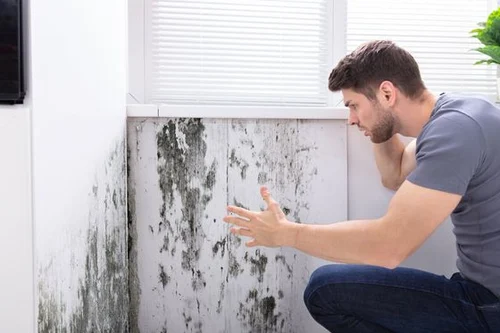
- Maintain indoor humidity below 50%, particularly in basements and crawl spaces, using a dehumidifier during Georgia’s humid months.
- Fix leaks immediately. Even small, slow leaks can create the moisture conditions mold needs within 24 to 48 hours.
- Improve ventilation in bathrooms and kitchens with properly functioning exhaust fans vented to the outside.
- Schedule annual crawl space and attic inspections, especially in older Stone Mountain homes with less modern vapor barriers.
- Address condensation on windows, pipes, or ductwork promptly, since it’s a frequently overlooked mold trigger.
- Keep gutters and downspouts clear to prevent water from pooling near the foundation, a common contributor to basement and crawl space mold in metro Atlanta.
Already have a confirmed mold problem? Call for mold testing and assesemnt if you haven’t tested yet, or call Air Drop Water Restoration now at +1 (678)-374-9247 for mold remediation service.
Frequently Asked Questions About Mold Remediation in Stone Mountain, Georgia
How much does mold remediation near me in Stone Mountain, Georgia cost?
Costs typically range from $1,500 to $6,000 for moderate residential mold remediation, with extensive or structural cases exceeding $10,000. A professional assessment provides an accurate, itemized estimate for your specific situation.
Get Certified Mold Remediation Near Me in Stone Mountain, Georgia, Atlanta call Air Drop Water Restoration Call +1 (678)-374-9247, Now
How long does mold remediation take?
Minor cases can be resolved in 1 to 2 days, while moderate cases typically take 3 to 5 days. Extensive or structural mold contamination can take several weeks to fully remediate.
Get Certified Mold Remediation Near Me in Stone Mountain, Georgia, Atlanta call Air Drop Water Restoration Call +1 (678)-374-9247, Now
Is mold remediation covered by homeowners insurance in Georgia?
Coverage depends on the cause of the mold. Mold resulting from a sudden, covered water event is more likely to be covered than mold caused by long-term humidity or maintenance neglect. Review your specific policy for details.
Get Certified Mold Remediation Near Me in Stone Mountain, Georgia, Atlanta call Air Drop Water Restoration Call +1 (678)-374-9247, Now
What’s the difference between mold remediation and mold removal?
“Mold removal” often refers to surface cleaning, while “mold remediation” is a comprehensive process involving containment, removal of contaminated materials, air filtration, moisture source correction, and clearance testing to confirm success.
Get Certified Mold Remediation Near Me in Stone Mountain, Georgia, Atlanta call Air Drop Water Restoration Call +1 (678)-374-9247, Now
Can I stay in my home during mold remediation?
For contained, localized remediation, it’s often possible to remain in unaffected areas of the home. For extensive whole-home or HVAC contamination, temporary relocation may be recommended for safety and comfort.
Get Certified Mold Remediation Near Me in Stone Mountain, Georgia, Atlanta call Air Drop Water Restoration Call +1 (678)-374-9247, Now
How do I know if mold remediation was successful?
Clearance testing, an air or surface sample taken after remediation is complete, confirms whether mold spore levels have returned to a normal range before the project is considered finished.
Get Certified Mold Remediation Near Me in Stone Mountain, Georgia, Atlanta call Air Drop Water Restoration Call +1 (678)-374-9247, Now
Will mold come back after remediation if the moisture source isn’t fixed?
Yes. Mold remediation without correcting the underlying moisture source significantly increases the risk of regrowth, which is why addressing the moisture problem is a required part of any thorough remediation process.
Get Certified Mold Remediation Near Me in Stone Mountain, Georgia, Atlanta call Air Drop Water Restoration Call +1 (678)-374-9247, Now
Do I need mold testing before scheduling remediation?
If mold is clearly visible, testing is optional, though it can help confirm species and guide the remediation scope. If mold isn’t visible but symptoms or odors are present, testing is typically recommended first to confirm the problem and locate the source.
Get Certified Mold Remediation Near Me in Stone Mountain, Georgia, Atlanta call Air Drop Water Restoration Call +1 (678)-374-9247, Now
Conclusion: Trusted Mold Remediation Near Me in Stone Mountain, Georgia
Mold remediation near me in Stone Mountain, Georgia isn’t just about cleaning a visible patch on the wall, it’s about proper containment, removal of contaminated materials, air filtration, and fixing the moisture source that let mold take hold in the first place.
Air Drop Water Restoration has been helping Stone Mountain and metro Atlanta homeowners fully resolve mold problems with certified, IICRC-informed remediation since 2012, backed by direct insurance coordination and clearance testing on every job.
Mold doesn’t resolve itself, and delaying remediation only gives it more time to spread through porous materials and HVAC systems. Air Drop Water Restoration’s certified team is ready to contain it, remove it, and confirm it’s gone for good.
Don’t let mold spread further. Call Air Drop Water Restoration today at +1 (678)-374-9247 for professional mold remediation service in Stone Mountain, Georgia.