 Skip to content
An emergency plumber for water damage does two jobs: stop the water, then make sure the water you already have does not ruin your home.
Most homeowners only think about the first job. They shut off the valve, a plumber patches the pipe, and everyone breathes out. But the story is not over. Water is already in your drywall, your insulation, your subfloor, and maybe your ceiling below.
That hidden moisture is what creates mold, rot, warping, and rebuild bills.
If you live in Stone Mountain or anywhere in Metro Atlanta, you need a plan that covers the leak and the damage together. This guide shows you how. You will learn who to call, what to do in the first ten minutes, how professionals stop and repair the source, and how structural drying protects your property.
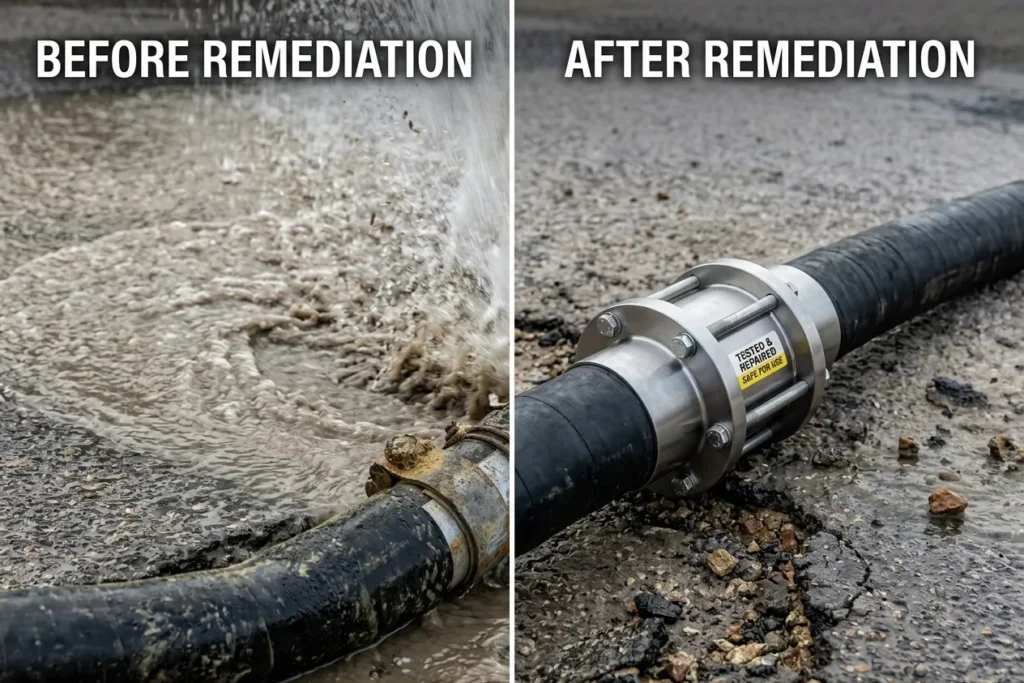
If water is flowing right now, call Air Drop Water Restoration at +1 (678)-374-9247. We provide emergency plumbing services and water damage restoration so one team handles it all.
What Is an Emergency Plumber for Water Damage? A Clear Definition
An emergency plumber for water damage is a plumbing professional who responds immediately to leaks, burst pipes, failed water heaters, sewer backups, and other plumbing failures, stops the water source, repairs the system, and coordinates with water damage mitigation to prevent further loss.
An emergency plumber differs from a routine plumber in three ways:
- Availability: Responds 24 hours a day, including nights, weekends, and holidays
- Urgency: Prioritizes shutting off water and limiting damage
- Coordination: Works with restoration teams and insurance carriers when damage is present
Common emergencies include:
- Burst or frozen pipes
- Failed water heaters
- Supply line or hose failures
- Slab leaks
- Sewer and drain backups
- Overflowing toilets
- Broken fixtures and valves
Read other helpful resources: Emergency Plumbing Services in Atlanta.
Emergency Plumber for Water Damage: What To Do Before Help Arrives
You can reduce damage dramatically in the first ten minutes.
Step 1: Shut Off the Main Water Valve
Locate it quickly. It may be near the meter, in a garage, in a utility closet, or in a crawl space. Close it fully.
Step 2: Turn Off the Water Heater
If the water heater is involved, turn off the power or gas and close the cold water inlet.
Step 3: Check Electrical Safety
- Do not touch outlets or electronics in wet areas.
- Shut off the breaker only if the panel is dry and reachable.
- If water is near the panel, call 911 or your electric utility.
Step 4: Relieve Pressure
Open the lowest faucet to help drain the lines.
Step 5: Contain the Water
Use buckets and towels. Move furniture and valuables out of the wet area.
Step 6: Document Everything
Take photos and videos of the leak, the damage, and damaged belongings.
Step 7: Call an Emergency Plumber for Water Damage
Call right away. Tell the dispatcher what happened, where the water is, and whether any safety hazards exist.
Water is moving. Time matters. Shut off the main valve and call Air Drop Water Restoration. We provide an emergency plumber for water damage and full restoration across Stone Mountain and Metro Atlanta. Call +1 (678)-374-9247 now.
Emergency Plumber for Water Damage vs. Water Damage Restoration Company: Who Do You Need?
This is the question every homeowner asks. The honest answer is often both.
What an Emergency Plumber Does
- Finds the source of the leak
- Shuts off and isolates the failed line
- Repairs or replaces pipes, fittings, valves, and fixtures
- Replaces or repairs water heaters
- Clears drain and sewer blockages
- Tests the system after repair
What a Water Damage Restoration Company Does
- Extracts standing water
- Maps moisture in walls, floors, and ceilings
- Removes materials that cannot be dried
- Runs air movers and dehumidifiers
- Applies antimicrobial treatments
- Monitors drying until it reaches the target
- Rebuilds damaged areas
Side-by-Side Comparison
| Task | Emergency Plumber | Restoration Company |
| Stop the water source | Yes | Not typically |
| Repair broken pipe | Yes | No |
| Extract standing water | Limited | Yes |
| Dry wet walls and floors | No | Yes |
| Prevent mold | No | Yes |
| Document for insurance | Repair invoices | Moisture logs and scope |
| Rebuild drywall and flooring | No | Yes |
Why One Team Is Better
When a plumber and a restorer work for different companies, handoffs can be slow. Details get lost. Water sits.
When one company provides both, the process is faster and easier. That is the Air Drop approach.
Read other helpful resources: Water Damage Restoration Services .
Emergency Plumber for Water Damage: Common Plumbing Failures in Atlanta Metro Homes
Here are the failures behind most emergency calls in Stone Mountain and across Georgia.
Burst and Frozen Pipes
Georgia homes are not built for hard freezes. Pipes in crawl spaces, attics, garages, and exterior walls are vulnerable. When temperatures fall, pipes can freeze and split.
Water Heater Failures
Tanks corrode. Pressure relief valves fail. Fittings leak. Older water heaters are a leading source of sudden flooding.
Washing Machine and Dishwasher Hose Failures
Rubber hoses crack and burst. A hose failure can release a large volume of water in a short time.
Slab Leaks
Pipes inside or beneath the slab can corrode or shift. Signs include warm spots on the floor, rising water bills, and the sound of running water.
Toilet and Fixture Leaks
Supply connectors, wax rings, and valves fail. Overflow can saturate floors and ceilings below.
Sewer and Drain Backups
Tree roots, grease, and aging lines cause blockages. Heavy rain can overwhelm systems and push wastewater back into homes.
Aging Pipes
Many Stone Mountain area homes were built decades ago. Galvanized steel, older copper, polybutylene in some homes of the late 1970s to mid-1990s, and cast iron drain lines can all reach the end of their service lives.
Failure Frequency and Risk Table
| Failure | Typical Warning Sign | Damage Potential |
| Burst pipe | Sudden spray, loss of pressure | Very high |
| Water heater rupture | Pooling at tank base | High |
| Appliance hose failure | Water around appliance | High |
| Slab leak | Warm floor, high bill | High, often hidden |
| Drain backup | Gurgling, slow drains | High, contamination risk |
| Toilet supply leak | Dampness near base | Medium to high |
Emergency Plumber for Water Damage: How the Process Works From Call to Completion
Here is what a coordinated response looks like.
- You call and describe the emergency. The dispatcher asks about the source, location, and safety hazards.
- A technician is dispatched. The crew arrives with plumbing tools, detection equipment, and mitigation gear.
- Water is shut off and the source is isolated. This stops further damage.
- Leak detection and diagnosis. The plumber confirms the failure point and the extent of damage to the plumbing.
- Repair. The failed pipe, fitting, valve, or fixture is repaired or replaced.
- Water extraction. Pumps and extractors remove standing water.
- Moisture mapping. Meters and thermal imaging locate wet materials.
- Controlled demolition. Saturated materials that cannot dry are removed.
- Structural drying. Air movers and dehumidifiers run with daily monitoring.
- Antimicrobial treatment. Surfaces are treated to limit mold and bacteria.
- Documentation. Photos, logs, and scope are prepared for your insurer.
- Reconstruction. Drywall, flooring, paint, and trim are repaired.
Why Documentation Matters
Insurance carriers want proof. Moisture readings, photos, and itemized scopes make approval smoother.
Emergency Plumber for Water Damage: Water Categories and Why They Matter
The industry standard, ANSI/IICRC S500, classifies water by contamination level. The IICRC publishes the standard that professionals follow.
| Category | Description | Typical Plumbing Source | Cleanup Approach |
| Category 1 | Clean water | Supply line, faucet, ice maker line | Extraction and drying |
| Category 2 | Gray water | Dishwasher, washing machine | Extraction, cleaning, antimicrobial |
| Category 3 | Black water | Sewer backup, toilet with feces, floodwater | Containment, removal, disinfection |
Water Can Get Worse
Category 1 water can become Category 2 or 3 if left too long. Bacteria multiply. Materials absorb contaminants. That is why speed is critical.
Water Damage Classes
| Class | Description | Example |
| Class 1 | Minimal absorption | Small leak in a limited area |
| Class 2 | Significant absorption | Entire room with wet carpet and walls |
| Class 3 | Water from above | Ceiling leak saturating walls and flooring |
| Class 4 | Deep saturation in dense materials | Hardwood, concrete, plaster |
Categories and classes determine your equipment, labor, safety steps, and timeline.
How Fast Does Water Damage Spread After a Plumbing Failure?
Time is the biggest cost driver. Here is a rough timeline.
| Time | What Happens |
| Minutes | Water spreads across floors and into cabinets |
| 1 to 24 hours | Drywall, carpet, and wood absorb water; wicking begins |
| 24 to 48 hours | Mold can begin to grow, according to EPA guidance |
| 48 to 72 hours | Odors, warping, and swelling become visible |
| One week or more | Structural damage, widespread mold, and deterioration |
The EPA emphasizes that moisture control is key to mold control.
Why Georgia Makes It Harder
Atlanta humidity slows drying. Fans alone rarely meet drying goals. Professional dehumidification is often essential.
Emergency Plumber for Water Damage and Mold Prevention in Georgia
Mold is the most common long-term consequence of plumbing leaks.
What Mold Needs
- Moisture
- A food source such as drywall paper or wood
- Moderate temperatures
Georgia provides all three, especially in humid months.
How Professionals Prevent Mold
- Fast water extraction
- Moisture mapping and verification
- Controlled demolition of wet materials
- Dehumidification and air movement
- Antimicrobial treatment
- Daily monitoring and documentation
When Mold Remediation Is Needed
If mold is visible, odors persist, or drying was delayed, remediation may be required. That includes containment, HEPA air filtration, removal of contaminated materials, and cleaning.
The CDC explains potential health effects of mold exposure, and the EPA provides mold cleanup guidance.
Read other helpful resources: 24/7 Mold Remediation Service.
One call. Plumbing fixed. Moisture removed, Air Drop Water Restoration is the emergency plumber for water damage that also dries, cleans, and restores your home. Call +1 (678)-374-9247 for fast, professional help.
Emergency Plumber for Water Damage: What Atlanta Metro Weather Means for Your Pipes
Local conditions shape your risk.
Heavy Rain and Saturated Soil
Clay soil holds water and shifts. Underground lines can crack or separate. Sewer laterals can fill with groundwater.
Cold Snaps
Georgia may see sudden freezes in late fall and winter. Unprotected pipes can burst. Water damage from a burst pipe can be extreme if no one is home.
Hot, Humid Summers
Condensation drips from pipes and HVAC components. Moisture lingers in crawl spaces.
Storm Seasons
Power outages can disable sump pumps. Flooding can overwhelm sewer systems. Tropical remnants can stress drainage.
For forecasts and alerts, visit the National Weather Service in Peachtree City. For preparedness guidance, see Ready.gov and the Georgia Emergency Management and Homeland Security Agency.
Emergency Plumber for Water Damage and Insurance: What Georgia Homeowners Should Know
Insurance depends on the cause of the loss.
Often Covered
- Sudden and accidental pipe bursts
- Sudden water heater failures
- Appliance failures that release water suddenly
- Resulting damage to walls, floors, and belongings
Often Not Covered
- Gradual leaks and long-term seepage
- Damage from neglected maintenance
- Flood from surface water or storms, which requires separate coverage
- Sewer or drain backup unless an endorsement is added
- The cost to repair the failed pipe itself, depending on the policy
Learn more about flood coverage at FloodSmart.gov.
Smart Claim Steps
- Shut off the water and prevent further damage.
- Call your insurance carrier.
- Photograph and video all damage.
- Keep damaged items until approved for disposal.
- Keep receipts for emergency repairs and mitigation.
- Ask for moisture logs and a written scope from your restoration provider.
Mitigation is generally expected. Delays can complicate claims.
For consumer help, see the Georgia Office of Insurance and Safety Fire Commissioner.
How to Choose an Emergency Plumber for Water Damage in Atlanta Metro
In a crisis, it is tempting to call the first number you find. Slow down for a minute.
Look For
- True 24/7 service
- Experience with water damage, not only plumbing
- Plumbing and restoration under one roof
- Clear communication and upfront scope
- Modern detection and drying equipment
- Insurance documentation support
- Local knowledge of Stone Mountain and Metro Atlanta
- Respect for your property
Questions To Ask
- Can you come right now?
- Do you handle both the plumbing repair and the water damage?
- How will you find the source of the leak?
- How will you document moisture and drying progress?
- Do you follow IICRC standards?
- Can you help with my insurance claim?
- Do you provide a written scope before starting?
Red Flags
- Unwillingness to explain the plan
- Pressure to sign immediately
- Large up-front payments
- No moisture meters or drying logs
- Claims that fans alone will dry everything
- Out-of-area dispatchers with no local crew
The Air Drop Water Restoration Difference
Air Drop Water Restoration offers water damage restoration, fire damage repair, mold remediation, and emergency plumbing services. We prioritize direct communication and thorough work so you understand each step.
Read other helpful resources: Emergency Water Extraction Service.
Emergency Plumber for Water Damage: Cost Factors to Expect
Prices vary. Understanding the factors helps you evaluate estimates.
Plumbing Repair Cost Factors
- Type and location of the leak
- Pipe material and accessibility
- Parts needed
- Time of day and urgency
- Complexity of the repair, such as slab or sewer lines
- Permit or code requirements
Water Damage Restoration Cost Factors
- Water category and class
- Square footage affected
- Types of materials
- Equipment and duration of drying
- Demolition and disposal needs
- Reconstruction scope
How To Keep Costs Down
- Act immediately
- Shut off the water yourself
- Document everything
- Choose a coordinated team
- Fix the cause, not just the symptom
A fast response generally reduces total cost by limiting how far water spreads.
Emergency Plumber for Water Damage: Mistakes To Avoid
- Waiting until morning when water is still flowing
- Patching without diagnosing the source
- Using a household vacuum on water
- Running HVAC over a wet structure
- Ignoring musty odors or stains
- Painting over stains before the area is dry
- Throwing away items before documenting them
- Skipping professional drying after the leak is fixed
- Choosing the cheapest bid without comparing scopes
Prevention Checklist: Avoid Needing an Emergency Plumber for Water Damage
Plumbing Checklist
- Know where your main water shutoff is and test it
- Inspect supply lines under sinks and behind toilets
- Replace rubber washing machine hoses with braided stainless steel
- Flush and inspect the water heater
- Insulate exposed pipes in crawl spaces, attics, and garages
- Disconnect garden hoses before freezes
- Monitor your water meter and water bill
- Schedule periodic plumbing inspections for older homes
Home Protection Checklist
Install water leak sensors near water heaters, sinks, and washers
- Consider an automatic shutoff valve
- Clean gutters and extend downspouts
- Keep indoor humidity under control
- Test and maintain your sump pump if you have one
- Review your insurance policy and coverage options
Expert Tips From a Plumbing and Restoration Contractor
- Shutoff first. Questions later.
- Do not trust dry-looking drywall. Meters tell the truth.
- Act within 24 hours. It is the best investment you can make.
- Replace aging components proactively. Hoses and supply stops are low-cost insurance.
- Keep the paperwork. Invoices, photos, and logs matter.
- Ask for drying goals. Moisture targets prove the job is done.
- Fix the cause. Otherwise, the next emergency is only a matter of time.
Do not let a plumbing emergency become a rebuild, Call Air Drop Water Restoration at +1 (678)-374-9247 for an emergency plumber for water damage who also handles extraction, drying, and mold prevention.
Emergency Plumber for Water Damage Service Areas: Stone Mountain and Metro Atlanta
We respond across:
- Stone Mountain, Tucker, Lithonia, Conyers, and Covington
- Atlanta, Decatur, Brookhaven, Dunwoody, and Sandy Springs
- East Point, College Park, Union City, and Mableton
- Marietta, Smyrna, Kennesaw, Roswell, Alpharetta, and Johns Creek
- Lawrenceville, Duluth, and Suwanee
- Stockbridge, McDonough, Peachtree City, Fayetteville, Douglasville, and Newnan
For city and watershed information, visit the City of Atlanta Department of Watershed Management.
Emergency Plumber for Water Damage After a Sewer or Drain Backup
Sewer backups are among the most unpleasant and hazardous plumbing emergencies. They need a different response from a clean-water leak.
Why Sewer Backups Happen in Atlanta Metro
- Tree roots entering lateral lines
- Grease and debris buildup
- Aging or collapsed clay and cast iron pipes
- Heavy rain overwhelming municipal systems
- Blockages from wipes and other items that should never be flushed
Signs of a Developing Backup
- Gurgling drains or toilets
- Multiple fixtures draining slowly at once
- Sewage odors indoors
- Water backing up in floor drains or tubs
What To Do
- Stop using water in the home.
- Stay out of affected areas.
- Keep children and pets away.
- Call an emergency plumber to clear the blockage and inspect the line.
- Call a restoration company that handles Category 3 water.
- Contact your insurance carrier and ask about sewer backup coverage.
Why Professional Cleanup Is Essential
Sewage can contain bacteria, viruses, and parasites. Porous materials that contact it, such as carpet, pad, and drywall, generally cannot be safely cleaned and are removed. Hard surfaces are disinfected. Air quality is monitored and filtered during the process.
The CDC offers health guidance after flooding and contaminated water events.
Emergency Plumber for Water Damage: Renters, Landlords and Commercial Properties
Plumbing emergencies are not limited to homeowners.
For Renters
- Notify your landlord or property manager immediately.
- Shut off the water if you can do so safely.
- Document everything with photos and video.
- Contact your renters insurance carrier about belongings.
For Landlords and Property Managers
- Provide tenants with shutoff locations and emergency contacts.
- Respond quickly. Delays increase damage and liability.
- Keep maintenance records for hoses, water heaters, and supply lines.
- Coordinate plumbing and mitigation under one contractor to reduce handoffs.
For Businesses
Water damage can interrupt operations, ruin inventory, and damage electronics. Restaurants, retail suites, offices, and medical practices all need rapid response.
Look for a team that can:
- Respond after hours
- Work around business needs
- Provide documentation for insurers
- Handle plumbing, drying, and repairs under one plan
Protect your property and your business, Air Drop Water Restoration serves homeowners, landlords, and commercial clients across Metro Atlanta. Call +1 (678)-374-9247 for emergency plumbing and water damage response.
Emergency Plumber for Water Damage at Night, on Weekends and During Storms
Plumbing emergencies rarely happen at convenient times. Here is how to handle them after hours.
Before You Call
- Shut off the main water valve.
- Turn off the water heater if involved.
- Move valuables away from the water.
- Take quick photos.
What To Tell the Dispatcher
- Your address and nearest cross street
- What happened and when
- Where the water is coming from
- Whether electricity or sewage is involved
- Whether anyone is at risk
During Storms
Storms bring extra challenges: power outages, flooded roads, and demand for service. Stay safe, avoid driving through flooded areas, and be patient with response times. Follow guidance from the National Weather Service in Peachtree City and local officials.
Keep This Information Handy
| Item | Where To Keep It |
| Main water shutoff location | Written on a label near the valve and saved in your phone |
| Water heater shutoff | Same as above |
| Electrical panel location | Phone note and household instructions |
| Insurance policy number and claims line | Phone and a printed copy |
| Air Drop Water Restoration: +1 (678)-374-9247 | Saved as a favorite contact |
A few minutes of preparation can make a midnight emergency far less stressful.
Frequently Asked Questions About an Emergency Plumber for Water Damage
What does an emergency plumber for water damage do?
An emergency plumber for water damage stops the water source, repairs the failed pipe, fixture, or water heater, and coordinates with mitigation to extract and dry the water. The goal is to stop the leak and limit damage.
Should I call a plumber or a water damage restoration company first?
If water is still flowing, shut off the main valve and call an emergency plumber immediately. Then call a restoration company for extraction and drying. A company that offers both, like Air Drop Water Restoration, can streamline the process.
How fast should I call an emergency plumber for water damage?
Immediately. Mold can begin within 24 to 48 hours, and water spreads quickly into walls and floors. Early response reduces damage and cost.
Does homeowners insurance cover an emergency plumber for water damage?
Coverage varies. Sudden and accidental pipe bursts and appliance failures are often covered for resulting damage. The repair of the pipe itself and gradual leaks may not be. Review your policy and contact your carrier.
How do I know if I have a hidden leak?
Watch for rising water bills, a moving water meter with all fixtures off, musty odors, stains, warped flooring, or the sound of running water. A professional can use moisture meters, thermal imaging, and acoustic detection to locate it.
Can a plumbing leak cause mold?
Yes. Wet drywall, insulation, and wood can support mold within 24 to 48 hours. Professional drying and moisture control are the best prevention.
How long does it take to repair water damage after a plumbing failure?
Plumbing repair may take hours. Drying typically takes several days. Reconstruction depends on the extent of damage and may take days to weeks.
Do I need an emergency plumber for water damage if the leak already stopped?
You still need a professional inspection. Hidden moisture can remain inside walls and ceilings. A moisture assessment tells you whether drying or repair is needed.
What should I do if the water is sewage?
Stay out of the water, avoid contact, and call a professional immediately. Sewage is Category 3 water and requires specialized handling.
Do you serve areas outside Stone Mountain?
Yes. Air Drop Water Restoration serves Metro Atlanta and many nearby communities. Call +1 (678)-374-9247 to confirm availability.
Conclusion: Emergency Plumber for Water Damage You Can Count On
An emergency plumber for water damage is the first line of defense when pipes fail. But true protection comes from pairing fast plumbing repair with professional water extraction, structural drying, and mold prevention.
Remember the essentials:
- Shut off the water immediately.
- Protect electrical safety.
- Document the damage.
- Call a coordinated plumbing and restoration team.
- Dry the structure fully to prevent mold.
- Fix the cause so the problem does not return.
Air Drop Water Restoration delivers emergency plumbing services, water damage restoration, mold remediation, and fire damage repair for Stone Mountain and Metro Atlanta.
Water emergency? Call now, Call Air Drop Water Restoration at +1 (678)-374-9247. One team to stop the leak, dry your home, and help with your claim. Learn more at airdropatlanta.com.