 Skip to content
The most common restoration damages in fall hit Stone Mountain homes quietly, then all at once.
One week it is a damp smell in the hallway. The next week it is a soft spot in the drywall. By Thanksgiving, you are staring at a ceiling stain, a musty basement, or a furnace that will not stop clicking.
Sound familiar? You are not alone.
Every autumn, Air Drop Water Restoration answers calls from homeowners across Stone Mountain, Tucker, Lithonia, Decatur, and Metro Atlanta who thought the worst of the weather was behind them. Summer humidity fades. Leaves pile up. Tropical remnants roll through. Then the first cold snap arrives and exposes every weakness in the building envelope.
This garticle breaks down the five most common restoration damages that happen in fall. You will learn how to spot them early, what they cost when ignored, and how professional water damage restoration, mold remediation, and fire damage restoration crews fix them.
Read it now. Save it for later. And if damage has already started, call +1 (678)-374-9247. Early mitigation is the cheapest mitigation.
What Are Common Restoration Damages?
A Quick Definition
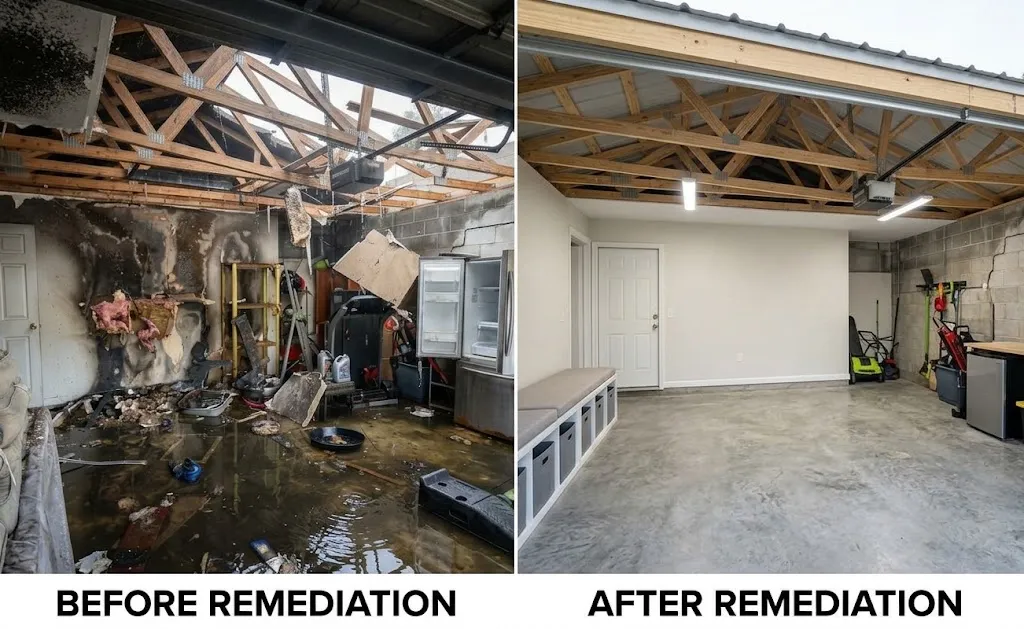
Common restoration damages are the most frequent types of property loss that require professional mitigation and repair, including water intrusion, flooding, mold growth, burst pipes, and fire or smoke damage.
Restoration is the process of returning a damaged structure to its pre-loss condition. It usually has two phases:
- Mitigation: Stopping the damage from getting worse. This includes emergency water extraction, board-up, tarping, structural drying, and sealing off affected areas.
- Reconstruction: Repairing or replacing materials that cannot be saved, such as drywall, insulation, flooring, and trim.
Fast mitigation protects your property and your insurance claim. Slow mitigation lets secondary damage take over.
Secondary damage is the real budget-killer. It includes mold growth, swollen subflooring, warped hardwood, rusted fasteners, and microbial contamination. It typically begins within 24 to 48 hours of a water event, according to guidance from the U.S. Environmental Protection Agency.
Why Fall Brings Common Restoration Damages to Stone Mountain and Metro Atlanta
Fall looks calm on the calendar. Underneath, it is one of the most active damage seasons in Georgia.
Here is why.
Hurricane Season Does Not End in September
The Atlantic hurricane season runs through November 30. Georgia has felt the effects of tropical remnants far from the coast, including flooding, saturated soil, and downed trees across the Atlanta area. The National Weather Service in Peachtree City issues the local forecasts and flood watches that cover Stone Mountain and DeKalb County.
Red Clay Soil Does Not Drain Quickly
Much of Metro Atlanta sits on dense clay soil. Clay absorbs water slowly and holds it. After several days of rain, the ground around your foundation stays saturated. That pushes hydrostatic pressure against basement walls and slab edges.
Leaves Clog Everything
Oak, pine, and maple debris collects in gutters and valleys. Clogged gutters overflow at the fascia, and water runs behind siding, into soffits, and down foundation walls.
Temperature Swings Stress Plumbing and HVAC
A 70 degree afternoon followed by a 30 degree night is hard on supply lines, exterior hose bibs, and attic ductwork. Condensation also spikes when warm, humid air meets cool surfaces.
Heating Season Begins
Furnaces, fireplaces, and space heaters come back online. So does the risk of fire, smoke, and soot loss.
Fall Risk Calendar for Stone Mountain and Metro Atlanta
| Month | Primary Risk | Common Restoration Damage |
| September | Tropical remnants, heavy rain | Roof leaks, basement seepage, flooding |
| October | Leaf drop, humidity swings | Clogged gutters, mold growth, crawl space moisture |
| November | First freezes, heating starts | Burst pipes, water heater failure, chimney and furnace fires |
Read other helpful resources: Water Damage Restoration Services in Stone Mountain
Common Restoration Damages #1: Roof Leaks and Gutter Overflow Water Damage
Roof and gutter failures top the list of common restoration damages in fall. They are also the easiest to miss.
How Fall Triggers Roof Leaks
Summer heat bakes shingles and loosens flashing. Then fall rain finds every gap. Wind-driven rain pushes water under lifted shingles. Debris dams form in valleys and divert water sideways.
Water enters the attic first. It soaks insulation, wets the roof deck, and eventually stains the ceiling below. By the time you see a brown ring on the drywall, the saturation has often been spreading for days.
Warning Signs to Check Today
- Brown or yellow ceiling stains
- Bubbling or peeling paint near the ceiling line
- Musty odor in upstairs rooms or closets
- Damp or compressed attic insulation
- Granules from shingles in the gutters
- Water marks around vents, skylights, or chimneys
What a Professional Restoration Team Does
A qualified mitigation crew does not just wipe the ceiling and leave. A proper response includes:
- Emergency tarping to stop further rain intrusion.
- Moisture mapping with thermal imaging and moisture meters to find wet insulation and framing.
- Controlled demolition of saturated drywall or insulation that cannot dry in place.
- Structural drying using air movers and dehumidifiers.
- Documentation with photos and moisture logs for the insurance adjuster.
Contractor Tip
Clean gutters and downspouts before the leaves finish falling, then again in early December. Extend downspouts at least several feet away from the foundation.
Common Restoration Damages #2: Basement and Crawl Space Flooding
Water in the basement is the second of the common restoration damages that surge in fall. It is also the most stressful.
If you are searching for help right now, our guide on water in basement, who to call near me explains the first steps in detail.
Why Georgia Basements and Crawl Spaces Flood in Fall
- Saturated clay soil forces groundwater against foundation walls.
- Failed or clogged French drains cannot relieve pressure.
- Sump pump failure during power outages or from worn floats.
- Poor grading sends surface water toward the house.
- Window well overflow during intense rain.
- Sewer backups when municipal lines are overwhelmed.
Many Stone Mountain area homes from the 1960s through 1990s include finished basements, daylight basements, or vented crawl spaces. Each one handles moisture differently, and each one can fail quietly.
Why Speed Matters
Standing water saturates drywall, carpet pad, framing, and stored belongings. The longer it sits, the more it wicks upward and the more likely microbial growth becomes.
According to FEMA’s FloodSmart program, even a small amount of floodwater can cause significant, costly damage to a home. That is why emergency water extraction should begin as soon as it is safe.
Safety First
Do not enter standing water if the electrical panel, outlets, or appliances may be energized. Turn off power at the main breaker only if you can reach it without stepping in water. When in doubt, call a professional.
Quick Answer: What Should I Do First?
- Stay out of the water if electricity is a concern.
- Stop the source if it is a plumbing leak.
- Call a restoration company for extraction.
- Photograph everything for insurance.
- Move valuables to dry areas.
Do not wait for the water to find the framing. Air Drop Water Restoration provides emergency water extraction, structural drying, and dehumidification across Stone Mountain and Metro Atlanta. Call +1 (678)-374-9247 now and let a restoration professional take control of the situation.
Common Restoration Damages #3: Mold Growth After Fall Moisture Intrusion
Mold is the most common secondary damage on this list. It follows almost every other item.
Why Mold Loves Georgia in Fall
Mold needs moisture, a food source, and the right temperature. Georgia supplies all three. Drywall paper, wood framing, and dust are ideal food. Humid air and slow-drying cavities provide the moisture.
The CDC notes that mold can cause health effects in some people, including nasal stuffiness, throat irritation, coughing, wheezing, and eye or skin irritation. People with asthma, allergies, or weakened immune systems may react more strongly.
Where Mold Hides
- Behind baseboards after a slow leak
- Under carpet pad in basements
- Inside wall cavities near plumbing
- On the underside of roof decking
- Around HVAC returns and condensate lines
- In crawl space joists and subflooring
Signs You May Have Mold
- A persistent musty odor that does not go away
- Visible spotting or discoloration on walls, ceilings, or trim
- Peeling paint or wallpaper
- Recurring allergy-like symptoms indoors
- Condensation on windows that never clears
Mold Remediation vs. Mold Removal
Homeowners often use these terms interchangeably. They are not the same.
- Mold removal suggests cleaning visible growth.
- Mold remediation addresses the moisture source, contains the area, removes contaminated materials, cleans surfaces, and verifies the structure is dry.
If you skip the moisture source, the mold returns. That is why professional mold remediation starts with a moisture investigation, not a spray bottle.
Read other helpful resources: 24/7 Mold Remediation Service in Atlanta
For official homeowner guidance, see the EPA’s mold cleanup in your home page.
Common Restoration Damages #4: Burst Pipes, Frozen Lines and Water Heater Failures
Georgia does not freeze often. When it does, homes are rarely ready.
That is exactly why burst pipes rank among the most expensive common restoration damages in late fall.
Why Pipes Fail in Metro Atlanta
- Uninsulated pipes in crawl spaces, garages, and exterior walls
- Hose bibs left connected to garden hoses
- Aging supply lines, fittings, and valves
- High water pressure that stresses joints
- Water heaters beyond their expected service life
- Washing machine hoses and ice maker lines
Even one failed fitting can release hundreds of gallons of water in a few hours, especially when the home is empty.
Signs of a Hidden Plumbing Leak
- Sudden spike in the water bill
- Sound of running water when nothing is on
- Warm spots on the floor
- Low water pressure
- Water meter that keeps moving with all fixtures off
Emergency Steps
- Shut off the main water valve immediately.
- Turn off the water heater if it is leaking.
- Open a low faucet to relieve pressure.
- Move electronics and furniture out of the wet area.
- Call a restoration team and a plumber right away.
If you need both repair and mitigation, read our guide to emergency leak repair in Stone Mountain.
Water Category Matters
Water from a supply line is typically Category 1, clean water. But if it sits, soaks building materials, or contacts contaminants, it can degrade to Category 2 or Category 3. That changes the cleaning protocol and the materials that can be saved.
Common Restoration Damages #5: Fire, Smoke and Soot Damage in Heating Season
Fall is also when homeowners start using their heat sources again. That includes fireplaces, wood stoves, gas furnaces, and portable space heaters.
The National Fire Protection Association (NFPA) identifies heating equipment as one of the leading causes of home fires. Its public education resources at nfpa.org outline safe heating practices.
Common Fall Fire Causes
- Dirty chimneys and creosote buildup
- Space heaters near curtains, bedding, or furniture
- Furnaces that were never serviced
- Dryer vents clogged with lint
- Candles and holiday decor
- Kitchen fires during holiday cooking
Fire Damage Is More Than Flames
Even a small fire can spread smoke, soot, and odor through the entire structure. Soot particles are acidic and can etch glass, tarnish metals, and discolor surfaces within hours.
Then there is the water. Fire hoses and sprinklers add thousands of gallons of water to the structure. That is why fire loss almost always becomes a water damage restoration job as well. This is the heart of flood and flame restoration.
Types of Smoke Residue
| Smoke Type | Source | Cleaning Challenge |
| Dry smoke | Fast-burning, high-heat fires | Powdery soot that smears if wiped |
| Wet smoke | Slow, smoldering fires | Sticky, smeary residue with strong odor |
| Protein residue | Kitchen fires | Nearly invisible film with severe odor |
| Fuel oil soot | Furnace puff-backs | Widespread, oily residue |
Each type needs a different cleaning method. Using the wrong one can set the stain permanently.
Read other helpful resources: Fire Damage Restoration in Atlanta and Smoke Cleaning Services
You do not have to diagnose it alone. Air Drop Water Restoration inspects water, mold, fire, and smoke damage across Stone Mountain and Metro Atlanta, and we help you with the insurance paperwork. Call +1 (678)-374-9247 for a fast, professional assessment.
Water Damage Categories and Classes: How Restoration Pros Measure Fall Damage
Restoration professionals use industry standards to decide how to respond. The most widely recognized standard is the ANSI/IICRC S500 from the Institute of Inspection, Cleaning and Restoration Certification.
The Three Water Categories
| Category | Description | Typical Fall Source |
| Category 1 | Clean water from a sanitary source | Supply line break, sink overflow |
| Category 2 | Gray water with significant contamination | Washing machine or dishwasher discharge |
| Category 3 | Black water, grossly contaminated | Sewer backup, rising floodwater |
The Four Water Damage Classes
| Class | Level of Evaporation Needed | Example |
| Class 1 | Least; limited to part of a room | Small leak into a section of drywall |
| Class 2 | Significant; entire room and carpet | Appliance leak wetting walls and floor |
| Class 3 | Greatest; water from above | Roof leak soaking ceiling, walls, insulation |
| Class 4 | Specialty drying; deeply held moisture | Hardwood, plaster, concrete, or stone |
Why This Matters to You
The category tells the crew how contaminated the water is. The class tells the crew how much drying capacity the job demands. Together they determine equipment, labor, safety protocols, and cost.
If a contractor skips this assessment, ask questions.
The Restoration Process for Common Restoration Damages: Step-by-Step
The restoration process for common restoration damages follows seven steps: emergency contact, inspection and assessment, water extraction, structural drying and dehumidification, cleaning and sanitizing, monitoring, and repair or reconstruction.
- Emergency contact and dispatch. You call. A coordinator collects details and sends a crew.
- Inspection and moisture mapping. Technicians use moisture meters and thermal imaging to find hidden wetness.
- Water extraction. Pumps and extractors remove standing water and saturated carpet pad.
- Structural drying. Air movers and low-grain refrigerant or desiccant dehumidifiers pull moisture out of materials.
- Cleaning and sanitizing. Antimicrobial treatments and HEPA air filtration address contaminants.
- Monitoring. Daily moisture readings confirm drying goals are reached.
- Repair. Drywall, insulation, flooring, paint, and trim are rebuilt.
How Long Does Drying Take?
Most structural drying takes about three to five days, but it depends on the class of water, material type, and humidity. Dense materials like hardwood and plaster take longer.
Georgia humidity is the wild card. That is why professional-grade dehumidification, not a box fan, makes the difference.
Read other helpful resources: Emergency Water Extraction Service
Insurance and Common Restoration Damages: What Georgia Homeowners Should Know
Insurance can feel like a maze. A few basics help.
Typically Covered
Many standard homeowners policies cover sudden and accidental water discharge, such as a burst pipe or a failed water heater. Fire and smoke damage is generally covered as well.
Typically Not Covered
- Flood damage from rising surface water or storm surge
- Long-term seepage or neglected maintenance
- Groundwater intrusion through foundation walls
- Sewer or drain backup unless an endorsement is added
Flood coverage usually requires a separate policy through the National Flood Insurance Program or a private carrier. The NFIP typically carries a 30-day waiting period, so you cannot buy it when a storm is already on the radar. Learn more at FloodSmart.gov.
Smart Claim Steps
- Call your carrier or agent promptly.
- Take photos and videos before anything is moved.
- Keep damaged items until the adjuster approves disposal.
- Save all receipts for emergency services.
- Get a written scope and moisture documentation from your restoration company.
Air Drop Water Restoration supports clients through the claims process with clear documentation. For policy questions, the Georgia Office of Insurance and Safety Fire Commissioner offers consumer guidance.
Fall Prevention Checklist: Stop Common Restoration Damages Before They Start
Prevention costs a fraction of restoration. Use this checklist.
Exterior Checklist
- Clean gutters and downspouts
- Extend downspouts away from the foundation
- Inspect shingles, flashing, and roof penetrations
- Regrade soil that slopes toward the house
- Disconnect garden hoses and shut off exterior spigots
- Trim branches that overhang the roof
Interior Checklist
- Test the sump pump by pouring water into the pit
- Inspect supply lines under sinks and behind appliances
- Replace rubber washing machine hoses with braided stainless hoses
- Flush and inspect the water heater
- Keep indoor humidity below the range recommended by the EPA
- Locate your main water shutoff valve and make sure everyone can find it
Fire Safety Checklist
- Schedule a chimney sweep
- Service the furnace
- Clean the dryer vent
- Test smoke and carbon monoxide alarms
- Keep space heaters at a safe distance from anything flammable
Expert Tips From a Restoration Contractor on Common Restoration Damages
After years in the field, the same lessons repeat.
- Act within 24 hours. The first day decides whether you are drying or demolishing.
- Never ignore a musty smell. Odor is evidence. Find the source.
- Do not run the HVAC on a wet structure. It can spread moisture and contaminants.
- Avoid household vacuums on water. It is a shock hazard and ruins the vacuum.
- Keep records. Photos, dates, and moisture logs strengthen claims.
- Ask about drying goals. A reputable company can tell you the target moisture content.
- Replace, do not hide. Painting over stains traps the problem.
Prefer an inspection to a guess. A moisture meter reading beats a visual check every time.
Common Restoration Damages: DIY Cleanup vs. Professional Restoration
| Factor | DIY Cleanup | Professional Restoration |
| Equipment | Shop vac, box fans | Industrial extractors, air movers, dehumidifiers |
| Moisture detection | Visual only | Meters, thermal imaging, mapping |
| Mold risk | High if drying is incomplete | Controlled with monitored drying |
| Insurance documentation | Limited | Photos, logs, itemized scope |
| Safety | Exposure to contaminants | PPE and containment protocols |
| Speed | Slow | Fast, 24/7 response |
A small spill is a DIY job. Anything that touches drywall, insulation, subfloor, or Category 2 or 3 water is not.
Stop guessing. Start drying, Moisture does not take weekends off, and neither do we. If your home has been hit by a fall storm, a pipe failure, or a heating-season fire, call Air Drop Water Restoration at +1 (678)-374-9247. We will assess, mitigate, and help you rebuild.
Common Restoration Damages Across Stone Mountain and Metro Atlanta: Areas We Serve
Air Drop Water Restoration serves homeowners and property managers throughout Stone Mountain and the greater Atlanta area, including:
- Stone Mountain, Tucker, Lithonia, and Conyers
- Decatur, Brookhaven, Dunwoody, and Sandy Springs
- Atlanta, East Point, College Park, and Union City
- Marietta, Smyrna, Kennesaw, Roswell, Alpharetta, and Johns Creek
- Lawrenceville, Duluth, Suwanee, Mableton, and Douglasville
- Covington, Stockbridge, McDonough, Peachtree City, Fayetteville, and Newnan
For official storm and emergency preparedness resources, see Georgia Emergency Management and Homeland Security Agency and Ready.gov.
Frequently Asked Questions About Common Restoration Damages
What are the most common restoration damages in fall?
The most common restoration damages in fall are roof and gutter leaks, basement or crawl space flooding, mold growth, burst or frozen pipes, and fire and smoke damage from heating equipment. Each is tied to Georgia’s fall rain, leaf debris, humidity swings, and the start of heating season.
Why does mold grow so fast after fall water damage?
Mold needs moisture, organic material, and moderate temperatures. Georgia’s humidity keeps building materials damp, and drywall and wood give mold plenty to feed on. Growth can begin within 24 to 48 hours of a water event, so rapid drying is critical.
How do I know if I have hidden water damage?
Look for musty odors, stains, peeling paint, warped flooring, and a rising water bill. Professionals use moisture meters and thermal imaging to find water inside walls and ceilings without tearing everything open.
Does homeowners insurance cover common restoration damages?
It depends on the cause. Sudden and accidental discharge, such as a burst pipe, and most fire damage are commonly covered. Flood, groundwater seepage, and sewer backup often require separate coverage. Review your policy and speak with your agent.
How soon should I call a restoration company?
Call as soon as it is safe, ideally within hours. Early extraction and drying reduce secondary damage, shrink the repair scope, and make claims smoother.
What is the difference between water damage restoration and mold remediation?
Water damage restoration removes water, dries the structure, and repairs materials. Mold remediation deals with fungal growth: containment, removal, cleaning, and verification. Many fall losses need both.
Can I stay in my home during restoration?
Often yes for small, isolated losses. For Category 3 water, widespread mold, or heavy smoke damage, temporary relocation may be safer. Your restoration team can advise after inspection.
How much do common restoration damages cost to fix?
Cost depends on the water category, affected square footage, materials, and time elapsed. A fast response usually costs far less than a delayed one. Air Drop Water Restoration provides clear scopes and supports your insurance documentation.
Is a burst pipe an emergency?
Yes. Shut off the main water valve, then call a restoration professional and a plumber. Even a small burst can release hundreds of gallons within hours.
Conclusion: Do Not Let Common Restoration Damages Win This Fall
The common restoration damages that strike in fall share one pattern. They start small, they hide, and they grow fast. Roof leaks, basement flooding, mold, burst pipes, and fire damage are all manageable when you catch them early and call experienced help.
Remember the essentials:
- Inspect your roof, gutters, and foundation now.
- Know where your water shutoff is.
- Act within 24 hours of any water event.
- Document everything for your insurance claim.
- Call a professional instead of gambling with moisture.
Air Drop Water Restoration is ready to protect your Stone Mountain or Metro Atlanta property with water damage restoration, mold remediation, fire and smoke cleanup, and emergency plumbing support.
Damage will not wait. Neither should you, Call Air Drop Water Restoration at +1 (678)-374-9247 right now. Our team is ready to respond, mitigate, and restore your home. Contact airdropatlanta.com to learn more.