 Skip to content
Black mold is one of the most feared household molds, and for good reason, it thrives on water-damaged materials and can affect indoor air quality. This guide explains what black mold actually is, how to identify it, the health risks it poses, and what Atlanta homeowners should do the moment they suspect it in their home.
Black mold is the common name for Stachybotrys chartarum, a dark greenish-black fungus that grows on water-damaged, cellulose-rich materials like drywall, ceiling tiles, wood framing, and insulation backing. If you’ve noticed dark, splotchy patches in a bathroom, basement, or around a window, you may be looking at black mold and in a humid city like Atlanta, that’s a more common discovery than most homeowners expect.
Table of Contents
I’ve spent over ten years responding to water damage and mold calls throughout the Atlanta metro, and one pattern shows up again and again: black mold rarely appears out of nowhere. It follows a leak, a flood, high indoor humidity, or poor ventilation, meaning that by the time you see it, there’s almost always a moisture problem hiding behind it.
This guide breaks down what black mold actually is, how to tell it apart from other household molds, the health effects it can cause, and the steps to take if you find it in your home.
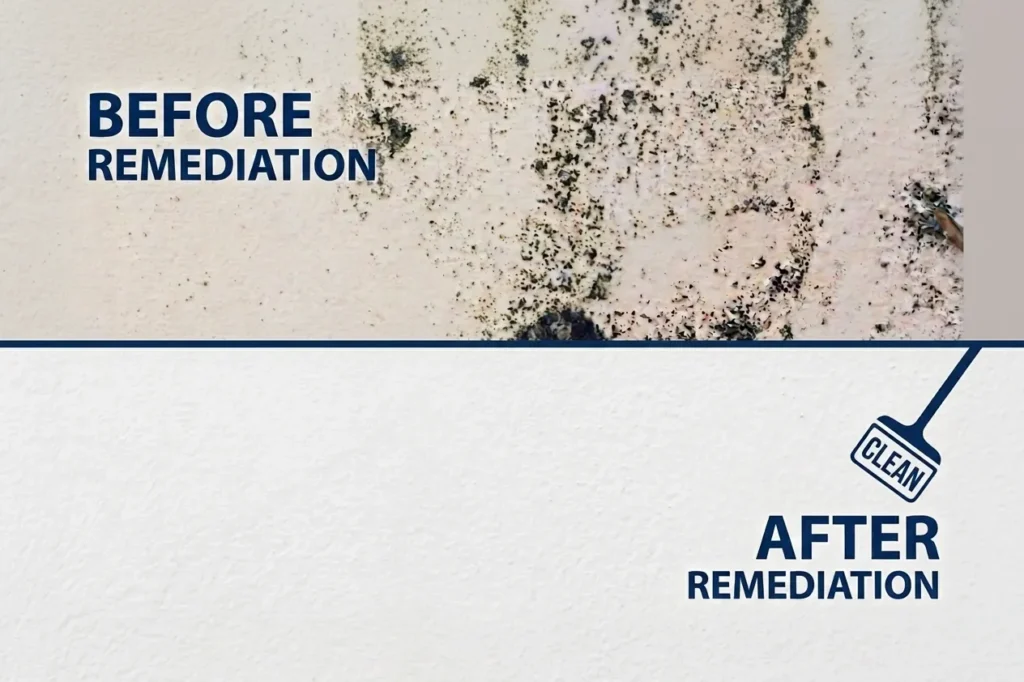
What Is Black Mold?
Black mold is a type of fungus that reproduces through airborne spores and requires three conditions to grow: moisture, warmth, and an organic food source. It’s most often found on materials that have been wet for 24–48 hours or longer, including:
- Water-stained drywall and ceiling tiles
- Wood framing and subflooring
- Insulation and drywall paper backing
- Grout and caulk in bathrooms
- Cardboard, paper, and fabric in damp basements
Not every dark spot in your home is Stachybotrys. Several common household molds can look similar to the untrained eye, which is why lab testing is sometimes used to confirm species when it matters for a health or insurance concern.
How to Identify Black Mold
| Characteristic | Black Mold (Stachybotrys) | Common Look-Alikes |
| Color | Dark green to black | Gray, olive, blue-green, white |
| Texture | Slimy or wet-looking when active; powdery when dry | Often fuzzy or powdery |
| Smell | Musty, earthy odor | Similar musty odor |
| Growth location | Areas with prolonged moisture exposure | Can appear on drier surfaces too |
| Growth pattern | Clustered, often in a “starburst” or streaked pattern | Varies |
Quick Answer: Black mold typically looks like dark green-to-black patches with a slimy or streaked texture when actively growing, often accompanied by a persistent musty odor.
Where Black Mold Commonly Hides in Atlanta Homes
- Bathrooms: around tubs, showers, and under sinks where humidity is constant
- Basements and crawlspaces: especially in homes without a vapor barrier
- Attics: after roof leaks or poor ventilation trap condensation
- Behind walls: near plumbing lines that have slow, hidden leaks
- HVAC systems: condensation buildup on coils and in ductwork
- Window sills: from condensation in humid months
Atlanta’s climate is a major contributing factor. With average relative humidity frequently exceeding 65%, homes without adequate dehumidification or ventilation create ideal breeding conditions for black mold even without an obvious leak.
Health Effects of Black Mold Exposure
The EPA notes that mold exposure can cause allergic reactions, asthma flare-ups, and irritation of the eyes, skin, nose, throat, and lungs, and that people with mold allergies, asthma, or compromised immune systems may experience more severe reactions.
Commonly reported symptoms include:
- Coughing, sneezing, and nasal congestion
- Sore throat and sinus pressure
- Watery or itchy eyes
- Skin rashes or irritation
- Fatigue or headaches
- Worsened asthma or allergy symptoms indoors
Expert Tip: If symptoms consistently improve when you leave the house and return when you’re back home, it’s a strong signal to have your indoor air and hidden moisture areas professionally inspected.
Worried you might have black mold? Air Drop Water Restoration offers professional mold inspections across the Atlanta metro. Schedule Your Inspection.
What to Do If You Find Black Mold
- Don’t disturb it. Scrubbing or spraying dry mold can release spores into the air, spreading contamination.
- Identify and stop the moisture source, if visible (leaking pipe, roof leak, poor ventilation).
- Ventilate the area if safe to do so, without using fans that could spread spores to other rooms.
- Photograph the affected area for insurance documentation.
- Avoid the space if anyone in the household has respiratory sensitivities.
- Call a certified restoration professional for inspection and, if needed, remediation.
For areas larger than roughly 10 square feet, or if mold is tied to a hidden moisture source, professional evaluation is strongly recommended over DIY handling.
Black Mold vs. Mildew: What’s the Difference?
| Feature | Black Mold | Mildew |
| Color | Dark green to black | White, gray, or light yellow |
| Texture | Slimy or streaked | Powdery or fluffy |
| Depth of growth | Can penetrate porous materials | Typically surface-level |
| Health risk | Higher, especially with prolonged exposure | Generally lower |
| Common locations | Water-damaged structural materials | Damp surfaces, shower tile, fabric |
Mildew is often manageable with regular household cleaning, while black mold penetrating porous building materials typically requires professional remediation.
Testing for Black Mold
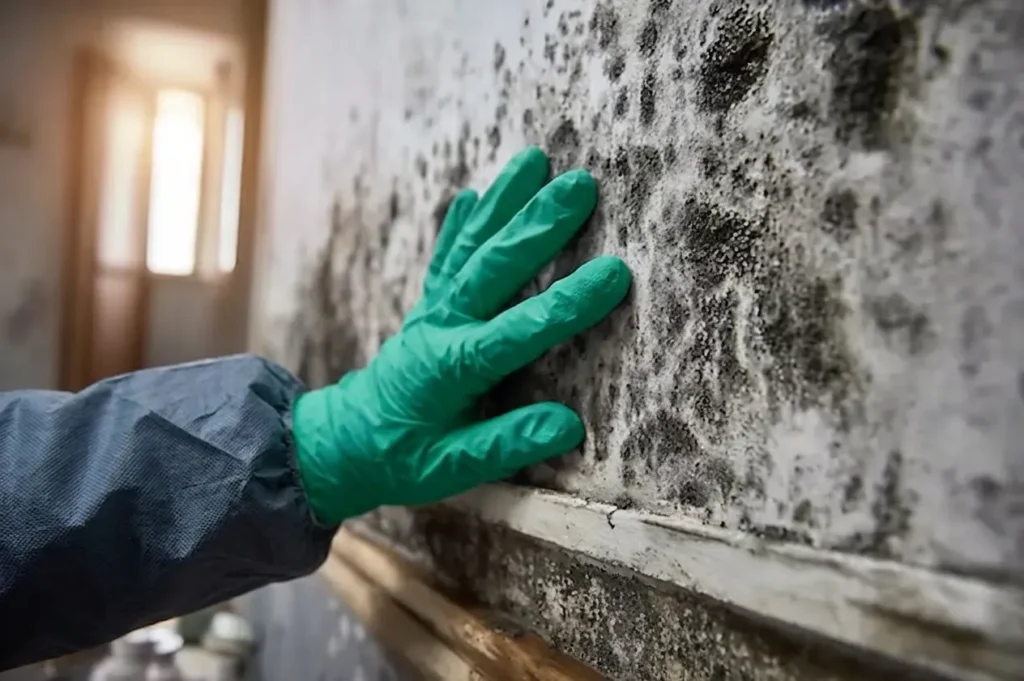
Homeowners sometimes ask whether they need lab testing before remediation. In most cases, visible mold growth doesn’t require testing before cleanup, the priority is removal and moisture correction. Testing becomes valuable when:
- Mold is suspected but not visible (musty odor with no clear source)
- There’s a health or legal need to confirm species and spore counts
- Post-remediation clearance verification is required
Our technicians can perform surface sampling and coordinate with independent labs when testing is warranted.
Not sure if it’s black mold or something less concerning? Our IICRC-certified team can identify it accurately and recommend the right next step. Contact Air Drop Water Restoration
Preventing Black Mold in Your Atlanta Home
- Maintain indoor humidity below 50%, especially in basements and crawlspaces
- Fix leaks, even minor ones, within 24–48 hours
- Ensure bathroom and kitchen fans vent outdoors, not into the attic
- Improve attic and crawlspace ventilation
- Clean and inspect gutters seasonally, particularly before Atlanta’s spring storm season
- Use mold-resistant drywall in renovation projects in high-humidity areas.
Local Considerations Across the Atlanta Metro
Homes throughout Roswell, Alpharetta, Johns Creek, Dunwoody, Brookhaven, Marietta, Kennesaw, and Smyrna share similar risk profiles: mature landscaping that traps moisture near foundations, crawlspace construction, and seasonal heavy rainfall. After storms, standing water and elevated humidity dramatically increase black mold risk within just a day or two, which is why our team prioritizes fast response for water damage calls across the metro. If your home has recently flooded, see our Water Damage Restoration Services and Emergency Water Extraction pages for immediate help.
People Also Ask
Is all black-colored mold toxic? Not necessarily, several molds appear dark or black but aren’t Stachybotrys chartarum. However, any significant mold growth should be treated seriously and evaluated professionally, since visual identification alone isn’t always reliable.
Can black mold make you sick? Yes, mold exposure is associated with allergic reactions, respiratory irritation, and worsened asthma symptoms, particularly in sensitive individuals, according to the EPA.
How fast does black mold spread in a house? Given the right moisture and temperature conditions, mold can begin colonizing surfaces within 24–48 hours and continue spreading as long as moisture is present.
Can I clean black mold myself? Small areas on non-porous surfaces can sometimes be cleaned with soap and water by a healthy adult using proper protection. Larger areas or porous materials should be handled by a professional.
Musty smell but no visible mold? It could be hiding behind a wall. Request a Professional Mold Inspection
Frequently Asked Questions About Black Mold Identification and Health Risks
What does black mold actually look like?
Black mold typically appears as dark green-to-black patches with a slimy or streaked texture when active, often with a musty odor, though it can dry to a powdery appearance over time.
Is black mold always dangerous?
Black mold exposure can cause allergic and respiratory symptoms in many people, with more severe reactions possible in those with asthma, allergies, or compromised immune systems.
How do I know if I have black mold or another type of mold?
Visual identification alone isn’t always reliable; a professional inspection with surface sampling can confirm the mold species when needed.
Where does black mold usually grow in a house?
Common areas include bathrooms, basements, crawlspaces, attics, behind walls near plumbing, and inside HVAC systems, anywhere moisture persists.
Can black mold grow without a visible leak?
Yes. Persistently high indoor humidity, poor ventilation, or condensation can support black mold growth even without an obvious water leak.
Does homeowners insurance cover black mold damage?
It depends on the cause. Mold resulting from a sudden covered event, like a burst pipe, is often covered; mold from long-term neglect typically is not.
How long does it take for black mold to become a health risk?
Health effects can begin even with lower-level, ongoing exposure, so any suspected mold growth is worth addressing promptly rather than waiting.
When should I call a professional instead of cleaning black mold myself?
Call a professional if the area is larger than about 10 square feet, involves porous materials, stems from a hidden moisture source, or if household members are experiencing symptoms.
Conclusion
Black mold is more than a cosmetic nuisance, it’s a signal that moisture has been present somewhere in your home long enough for a colony to establish itself, and it can meaningfully affect indoor air quality and health. In a humid, storm-prone city like Atlanta, knowing how to identify black mold, understand its risks, and respond appropriately can save homeowners from far more expensive remediation down the road.
If you’ve spotted suspicious dark growth, smelled a persistent musty odor, or want peace of mind after a recent leak anywhere from Atlanta to Dunwoody, Stone Mountain, or Peachtree City, don’t wait to find out what’s really going on behind your walls.
Air Drop Water Restoration provides 24/7 emergency response and certified mold inspections throughout the Atlanta metro. Call now or schedule your inspection , early detection is always less costly than remediation after the fact.