 Skip to content
Whether it’s a small hairline crack or a complete pipe rupture, repair broken pipe profesionally ans quickly can save Atlanta homeowners thousands of dollars in water damage. Calling a professional at the first sign of trouble can help prevent further damage and costly repairs. This guide covers the professional pipe repair process, potential costs, and practical prevention tips tailored to Georgia’s climate.
Over more than ten years responding to plumbing and water damage emergencies across the Atlanta metro, I’ve seen homeowners attempt everything from duct tape to rubber gloves and zip ties on broken pipes. Some of these buy a few hours; none of them are a lasting fix. This guide walks through exactly how to respond when you discover a broken pipe, legitimate temporary repair options, what the professional repair process looks like, and how to prevent it from happening again in Atlanta’s climate.
Table of Contents
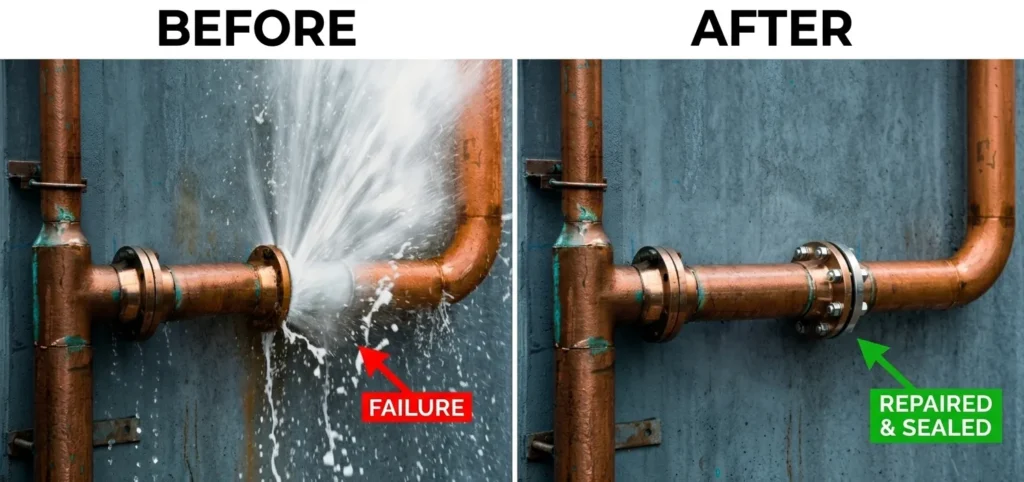
Repair Broken Pipe Tip 1: Shut Off the Water Immediately
Before attempting any repair, locate and shut off your home’s main water valve. This is the single most important step and should happen before you do anything else.
- In most Atlanta homes, the main shut-off valve is near the water meter, in a basement, a crawlspace access point, or along an exterior-facing wall
- If you can isolate just the affected fixture (like a shut-off valve under a sink), you may not need to cut water to the whole house
- Turn off electricity to the area if water is near outlets, switches, or fixtures
To repair a broken pipe safely, always shut off the water supply first, then reach out for a professional repair.
99% Repair Broken Pipe Tip 2: Broken Pipe Requires a Professional Repair (Not DIY)
- The pipe is broken inside a wall, ceiling, slab, or crawlspace that’s difficult to access
- The break is larger than a hairline crack or pinhole
- The pipe material is galvanized, polybutylene, or otherwise aging and prone to further failure
- Water pressure is causing the temporary fix to fail repeatedly
- You’re unsure of the exact location of the leak
- The repair involves gas lines (never DIY)
Attempting a permanent repair on inaccessible or significantly damaged pipe without proper tools and experience often results in a bigger leak or a repair that fails within days.
The Professional Broken Pipe Repair Process
Leak Detection and Location
For hidden breaks, plumbers use acoustic leak detection, moisture meters, or thermal imaging to pinpoint the exact location without unnecessary demolition.
Access and Assessment
Drywall, flooring, or crawlspace access is opened as needed to reach the damaged section, and the plumber assesses whether a spot repair or full section replacement is needed.
Permanent Pipe Repair
Depending on pipe material, repair methods include soldering copper joints, solvent-welding PVC/PEX fittings, or replacing a full section with compatible material.
Pressure Testing
The repaired section is pressure-tested to confirm the fix holds before closing up any opened walls or flooring.
Water Damage Assessment and Extraction
If water has already caused damage, extraction and moisture mapping begin to identify how far it traveled into surrounding materials.
Structural Drying
Air movers and dehumidifiers dry affected framing, subfloor, and drywall to prevent secondary damage like mold growth.
Reconstruction
Any drywall, flooring, or finishes removed for access are repaired and restored to match the original space.
Broken Pipe Repair Cost Breakdown
Costs vary based on pipe material, accessibility, and whether water damage restoration is also needed. Sudden pipe breaks are typically covered under homeowners insurance, while damage from long-term, undetected leaks is often excluded.
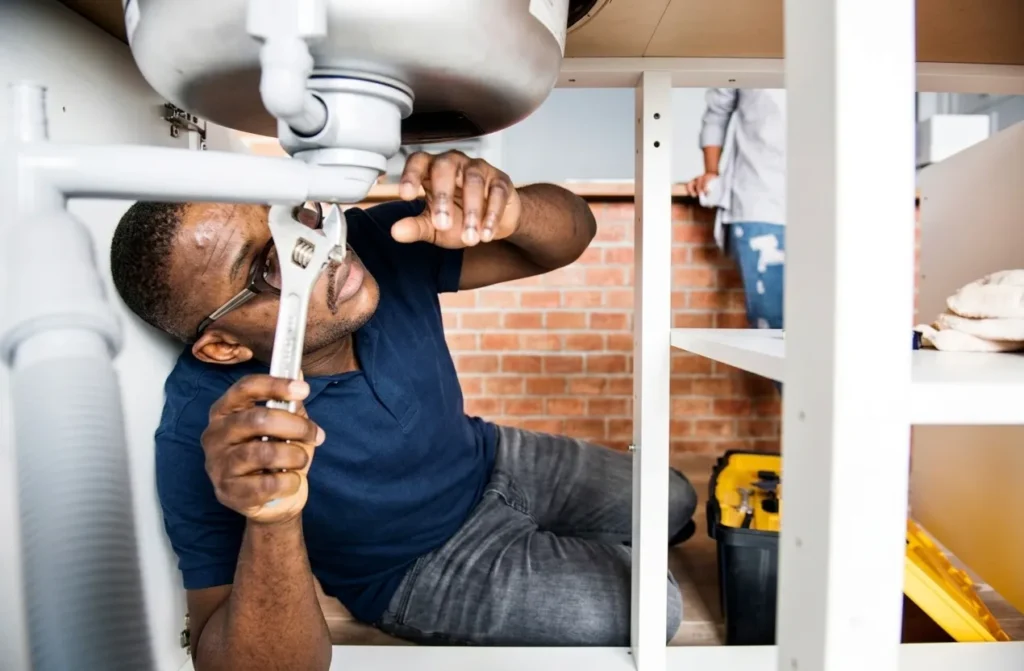
A quick fix now can mean a bigger repair later. Get it done right the first time. Schedule Professional Pipe Repair
Common Pipe Materials in Atlanta Homes and Their Repair Considerations
| Pipe Material | Common In | Repair Notes |
| Copper | Homes built 1960s–present | Repaired via soldering or push-fit connectors |
| Galvanized steel | Homes built pre-1960s | Prone to internal corrosion; often needs full replacement |
| Polybutylene | Homes built 1978–1995 | Known failure risk; full re-pipe often recommended |
| PEX | Modern construction and re-pipes | Flexible, repaired with crimp or push-fit fittings |
| PVC/CPVC | Drain lines, some supply lines | Repaired via solvent welding |
If your Atlanta home still has galvanized or polybutylene plumbing, a broken pipe is often a sign that others in the system are at similar risk of failure, and a broader plumbing inspection is worth considering.
Preventing Broken Pipes in the Future
- Insulate pipes in crawlspaces, attics, and exterior walls before Atlanta’s winter freeze events
- Keep interior temperatures above 55°F, even when traveling
- Install a pressure-reducing valve if household water pressure exceeds 80 psi
- Replace aging galvanized or polybutylene plumbing proactively
- Address minor corrosion or pinhole leaks before they worsen
- Schedule a whole-home plumbing inspection every few years, especially in homes over 30 years old
Local Considerations for Atlanta Homeowners
Broken pipe calls spike sharply during Atlanta’s occasional hard freezes and in older neighborhoods throughout Decatur, East Point, and inside the Perimeter where original plumbing may still be in place. Homes throughout Duluth, Suwanee, Peachtree City, and Fayetteville built during the polybutylene era (roughly 1978–1995) face a documented, well-known failure risk that often shows up as sudden pipe breaks decades later. The National Weather Service’s Atlanta forecast office issues freeze advisories that can help homeowners take preventive steps before a hard freeze hits.
If your broken pipe has already caused water damage, our Water Damage Restoration Services and Emergency Water Extraction pages cover the next steps in detail.
People Also Ask
Can I repair a broken pipe myself? No, accessible leaks can look little, attempt to be stopped with a DIY repair ccan cause homeowners lots more damage and complications, However, a permanent fix ,especially for pipes inside walls or larger breaks, should be handled by a licensed plumber.
What’s the average cost to repair a broken pipe? Costs typically range from for a simple, accessible repair to full section replacement of aging galvanized or polybutylene pipe.
Is a broken pipe an emergency? Yes, especially if actively leaking. Shutting off the water supply immediately and calling an emergency plumber helps limit water damage.
Not sure if your leak needs a temporary fix or a full repair? We’ll assess it fast and fix it right. Contact Air Drop Water Restoration
What’s the first step to repair a broken pipe?
Always shut off the water supply first, either at the affected fixture or the home’s main valve, and immidiately rteach out for a plumber near me. Call Air Drop Water Restoration for Repair Broken Pipe services in Atlanta Metro
Can I use a temporary fix instead of calling a plumber?
Temporary fixes like pipe clamps or epoxy putty can slow a leak short-term, but a licensed plumber should perform a permanent repair, particularly for pipes inside walls or larger breaks. Call Air Drop Water Restoration for Repair Broken Pipe services in Atlanta Metro
How much does it cost to repair a broken pipe in Atlanta?
Costs range from a liitle fee for simple, accessible repairs and larger amounts for full section replacement of aging plumbing materials. Call Air Drop Water Restoration for Repair Broken Pipe services in Atlanta Metro
How do I know if my broken pipe repair needs professional help?
If the break is inside a wall, ceiling, or slab, larger than a hairline crack, or involves aging galvanized or polybutylene pipe, professional repair is strongly recommended. Call Air Drop Water Restoration for Repair Broken Pipe services in Atlanta Metro
Will homeowners insurance cover repairing a broken pipe?
Sudden pipe breaks are typically covered under standard homeowners insurance policies, while damage from long-term, undetected leaks is often excluded. Call Air Drop Water Restoration for Repair Broken Pipe services in Atlanta Metro
What causes pipes to break in Atlanta specifically?
Freezing temperatures on uninsulated pipes, aging galvanized or polybutylene materials, high water pressure, and corrosion are the most common causes locally. Call Air Drop Water Restoration for Repair Broken Pipe services in Atlanta Metro
How long does a professional 1pipe repair take?
Accessible repairs can often be completed same-day, while repairs requiring wall or floor access, or full section replacement, may take one to several days. Call Air Drop Water Restoration for Repair Broken Pipe services in Atlanta Metro
What should I do after the pipe is repaired if there was water damage?
Water extraction and structural drying should begin as soon as possible after the repair to prevent mold growth, which can start within 24–48 hours of water exposure.
Conclusion
A lasting repair, especially for pipes hidden behind walls or made from aging materials common throughout the Atlanta metro, calls for a licensed professional who can also manage any water damage left behind.
Whether you’re dealing with a pinhole leak in Alpharetta or a full rupture in Marietta, the fastest path back to normal is a team that can repair the pipe and restore the damage in one coordinated response.
Air Drop Water Restoration offers 24/7 emergency broken pipe repair and complete water damage restoration across the Atlanta metro. Call now to get a licensed technician on the way.