 Skip to content
Searching for “Water remediation Stone Mountain Ga” becomes necessary the moment a water loss involves more than just moisture, it involves contamination. Whether that’s mold that’s already started colonizing a damp crawlspace, bacteria from a sewage backup, or mildew growing behind wallpaper that was never fully dried out, remediation is the specialized process of identifying, containing, and safely removing these hazards.
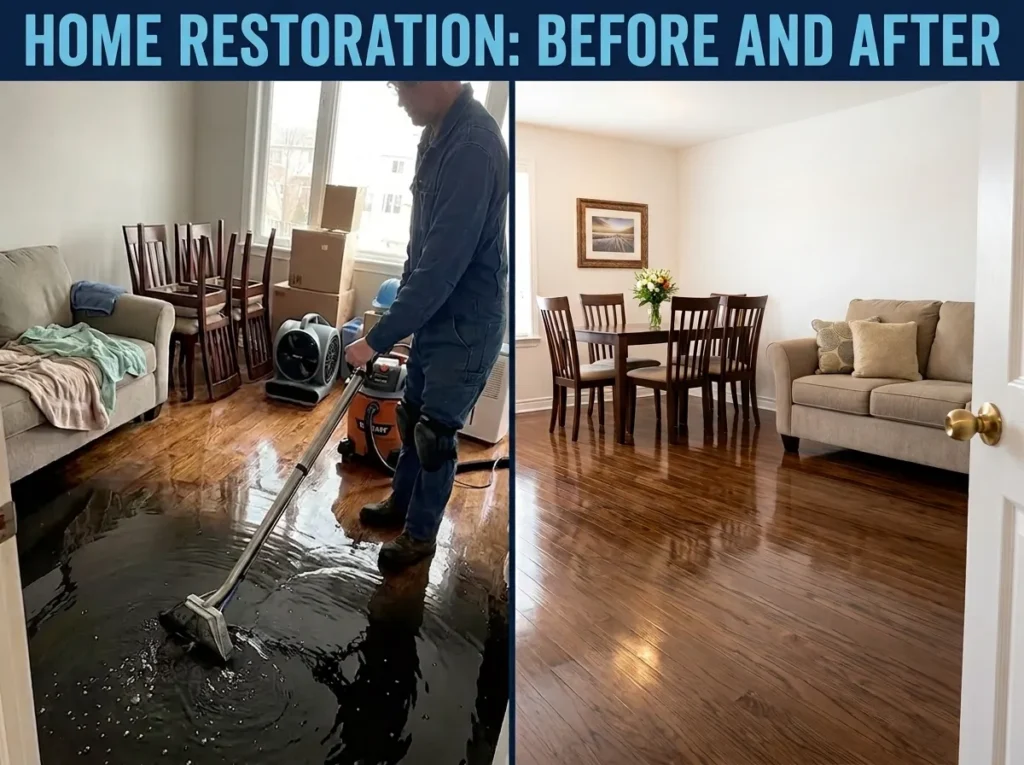
Water remediation goes a step beyond drying, it’s the process of identifying and removing contamination left behind by mold, sewage, or bacteria after a water loss. This guide explains what water remediation involves, when it’s needed versus standard mitigation, and why Georgia’s humid climate makes remediation an especially common follow-up to water damage in Stone Mountain homes. Learn the health risks of untreated contamination, the remediation process step by step, and how Air Drop Water Restoration protects both your property and your family’s health.
This guide explains exactly what water remediation involves, how it differs from mitigation and restoration, and why Georgia’s climate makes it one of the most requested services for homeowners across Stone Mountain and DeKalb County.
If you’re seeing visible mold, smelling a persistent musty odor, or dealing with sewage contamination, call Air Drop Water Restoration immediately at +1(678)-374-9247, these situations require certified handling, not DIY cleanup.
What Is Water Remediation?
Water remediation refers to the process of removing biological and chemical contaminants, most commonly mold, bacteria, and sewage-related pathogens, that develop after water damage. While mitigation focuses on stopping water from spreading and drying the structure, remediation specifically targets what’s grown or accumulated as a result of that moisture exposure.
Remediation work follows IICRC standards, specifically the S520 Standard for Professional Mold Remediation for mold-related work.
Mitigation vs. Remediation: Key Differences
| Factor | Mitigation | Remediation |
| Primary goal | Stop water from spreading; dry structure | Remove contamination (mold, bacteria, sewage) |
| Timing | Immediate, within hours | Often after mitigation, once contamination is identified |
| Techniques | Extraction, drying, dehumidification | Containment, HEPA filtration, antimicrobial application, material removal |
| PPE requirements | Standard | Often elevated (respirators, suits) depending on contamination level |
When Does a Water Loss Require Remediation in Stone Mountain?
Not every water incident requires remediation, but these situations almost always do:
- Sewage backups or Category 3 “black water” losses
- Water damage left untreated for more than 48-72 hours
- Visible mold growth on walls, ceilings, or flooring
- Persistent musty odors after a water event
- Flooding from external sources (storm water, groundwater)
- Long-term hidden leaks discovered after the fact (behind walls, under flooring)
The Water Remediation Process, Step by Step
1. Inspection and Contamination Assessment
Technicians assess the extent and type of contamination, sometimes with the help of a third-party indoor air quality specialist for larger mold jobs.
2. Containment
Physical barriers (poly sheeting, negative air pressure) are established to prevent spores or contaminants from spreading to unaffected areas of the home during the remediation process.
3. Air Filtration
HEPA-filtered air scrubbers run continuously during remediation to capture airborne spores and particulates, protecting indoor air quality throughout the process.
4. Removal of Contaminated Materials
Porous materials that cannot be safely cleaned, such as mold-affected drywall, insulation, or carpet padding, are removed and disposed of according to industry protocols.
5. Cleaning and Antimicrobial Treatment
Remaining surfaces are cleaned with EPA-registered antimicrobial and antifungal solutions.
6. Post-Remediation Verification
For mold jobs, a clearance test (often performed by an independent third party for objectivity) confirms spore counts have returned to normal levels before reconstruction begins.
7. Reconstruction
Once verified clean, affected areas are rebuilt, new drywall, insulation, flooring, and paint, restoring the space to pre-loss condition. Learn more about our Water Damage Restoration Services for the full rebuild process.
Mold and contamination won’t wait. Air Drop Water Restoration provides certified water remediation throughout Stone Mountain, Georgia. Call +1(678)-374-9247 now.
Health Risks of Untreated Water Contamination
Untreated mold and bacterial contamination aren’t just a property issue, they’re a health issue. According to the CDC and EPA, exposure to mold can trigger allergic reactions, respiratory irritation, and worsened asthma symptoms, particularly in children, the elderly, and those with existing respiratory conditions.
Sewage contamination poses even more immediate risks, including exposure to bacteria such as E. coli and various pathogens that can cause serious illness without proper protective handling.
Expert Tip
We frequently get calls from Stone Mountain homeowners who “cleaned up” a sewage backup themselves with household cleaners and towels, not realizing that Category 3 water requires specialized antimicrobial treatment and, in many cases, removal of porous materials that simply cannot be sanitized to a safe standard. If you’re dealing with sewage or blackwater, professional remediation isn’t optional, it’s a health and safety necessity.
Why Stone Mountain’s Climate Increases Remediation Needs
Georgia’s humid subtropical climate is a significant factor in why remediation follow-up is so common after water damage in the region:
- High ambient humidity slows natural drying, extending the window for mold colonization
- Warm year-round temperatures support faster mold growth cycles than colder climates
- Older housing stock in parts of Stone Mountain may have less effective moisture barriers and ventilation
- Crawlspaces and basements common in DeKalb County homes are particularly prone to persistent dampness
Georgia’s humidity gives mold a head start. Don’t let it win. Call Air Drop Water Restoration at +1(678)-374-9247 for expert water remediation in Stone Mountain.
Quick-Answer: Can I Remediate Mold Myself?
Small areas of surface mold (less than about 10 square feet, per EPA guidance) may sometimes be cleaned by homeowners using appropriate precautions. Anything larger, any mold resulting from contaminated (Category 2/3) water, or any mold affecting HVAC systems should be handled by certified professionals to prevent spore spread and ensure complete removal.
Water Remediation Checklist
- Identify and address the ongoing moisture source
- Contain the affected area to prevent spore or contaminant spread
- Use HEPA air filtration during all remediation work
- Remove non-salvageable porous materials
- Apply EPA-registered antimicrobial treatment
- Verify results with post-remediation testing
- Rebuild only after clearance is confirmed
People Also Ask
How long does water remediation take?
Mold remediation projects typically take 2-5 days depending on the extent of contamination, followed by reconstruction time if materials were removed.
Does homeowners insurance cover mold remediation?
Coverage varies significantly by policy. Mold resulting from a sudden, covered water loss is more likely to be covered than mold from long-term neglect. Air Drop Water Restoration helps document the connection to support your claim.
How can I tell if I need remediation versus just mitigation?
If you see visible mold, smell persistent musty odors, or the water source was contaminated (sewage, flooding), remediation is needed in addition to standard mitigation.
Frequently Asked Questions About Water Remediation Stone Mountain Ga
What’s included in water remediation services in Stone Mountain, Georgia?
Containment, HEPA air filtration, removal of contaminated materials, antimicrobial treatment, and post-remediation verification.
Is water remediation the same as mold remediation?
Mold remediation is a specific type of water remediation focused on mold contamination. Water remediation more broadly covers mold, bacteria, and sewage-related contaminants.
How much does water remediation cost in Stone Mountain?
Cost depends on the extent of contamination and materials requiring removal. Air Drop Water Restoration provides free on-site assessments and written estimates.
Is it safe to stay in my home during water remediation?
For contained, smaller-scale remediation, often yes. For larger mold or sewage remediation projects, temporary relocation may be recommended, especially for sensitive individuals.
Do you test for mold before and after remediation?
We coordinate testing and clearance verification, often involving independent third-party testing for objective results.
What happens to materials removed during remediation?
Contaminated materials are bagged, sealed, and disposed of according to industry and local disposal guidelines.
Can water remediation prevent future mold growth?
Yes, when combined with addressing the underlying moisture source and proper ventilation or humidity control going forward.
Does Air Drop Water Restoration handle both remediation and reconstruction?
Yes, we manage the full process from contamination removal through final rebuild, so Stone Mountain homeowners work with a single trusted team.
Protect your home and your family’s health. Call Air Drop Water Restoration now at +1(678)-374-9247 for certified water remediation in Stone Mountain, Georgia.
Related Services
[Image 3 — Suggested: Before/after of a remediated and rebuilt room. Alt text: “before and after mold remediation DeKalb County home.” Caption: “From contamination to fully restored living space.” File name: before-after-remediation-dekalb-county.jpg]
Conclusion
Water remediation in Stone Mountain, Georgia addresses what standard drying alone cannot: the mold, bacteria, and contamination that can develop when moisture lingers in Georgia’s humid climate. From proper containment and HEPA filtration to post-remediation clearance testing, this specialized process protects both your property’s structural integrity and your family’s health.
Air Drop Water Restoration brings certified expertise to every remediation project across Stone Mountain and DeKalb County, handling contamination safely and thoroughly from start to finish.
Contaminated water and mold require expert handling. Call Air Drop Water Restoration now at +1(678)-374-9247 for certified water remediation in Stone Mountain, Georgia.