 Skip to content
Water in basement who to call near me is a scary question, and the answer is simpler than you think.
Call in this order: safety first, then a 24/7 water damage restoration company, then your plumber if a pipe is involved, then your insurance carrier. Foundation or waterproofing contractors come after the space is dry.
Every minute counts. Water soaks into drywall, carpet pad, framing, and stored belongings. Within 24 to 48 hours, mold can start to take hold. Delay turns a mitigation job into a rebuild.
Here in Stone Mountain and across Metro Atlanta, heavy rain, saturated clay soil, aging plumbing, and failing sump pumps send water into basements every year. This guide gives you a clear action plan, plain-English advice, and a direct line to help.
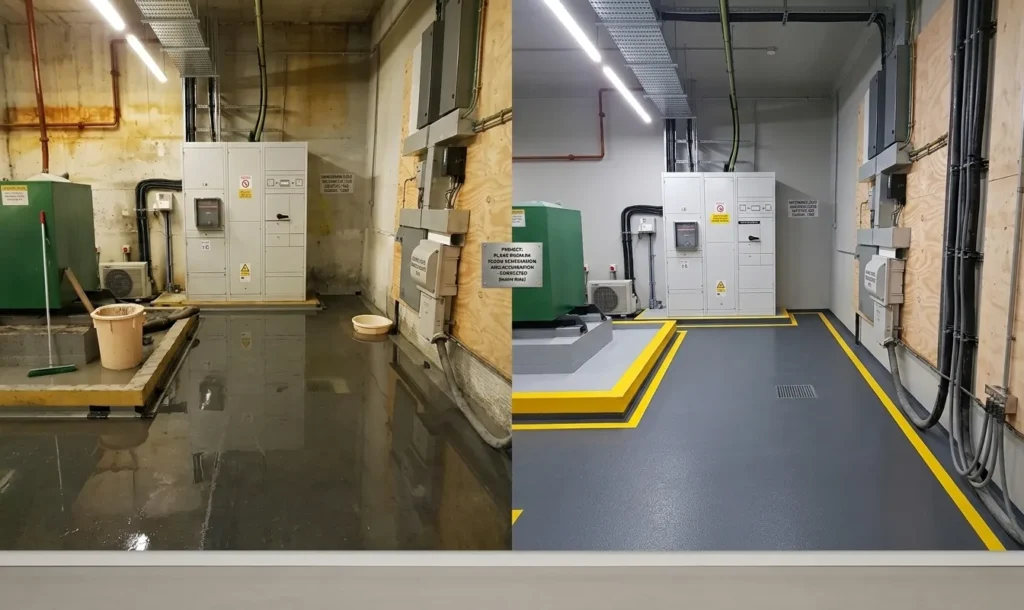
If your basement is wet right now, call Air Drop Water Restoration at +1 (678)-374-9247. Then keep reading while we get a crew moving.
Water in Basement Who to Call Near Me: The Quick Answer
If you have water in your basement, call in this order:
(1) emergency services or the utility if there is an electrical, gas, or sewage hazard,
(2) a 24/7 water damage restoration company,
(3) a plumber if the source is a broken pipe or fixture,
(4) your insurance carrier, and
(5) a waterproofing or foundation specialist once the space is dry.
Here is the same list in a quick-reference table.
| Situation | Who to Call First | Who to Call Next |
| Water near outlets, panel, or appliances | 911 or the electric utility | Restoration company |
| Smell of gas | 911 and the gas utility from outside | Restoration company |
| Burst pipe or failed water heater | Plumber and restoration company | Insurance carrier |
| Heavy rain seepage or flooding | Restoration company | Insurance, then waterproofing |
| Sewage backup | Restoration company with Category 3 capability | Plumber, then insurance |
| Sump pump failure | Restoration company | Plumber or sump specialist |
Read other helpful resources: Emergency Water Extraction Service in Atlanta.
Water in Basement Who to Call Near Me: Your First 15 Minutes
Before you pick up the phone, protect yourself. Standing water in a basement can be dangerous.
Step 1: Check for Electrical Hazards
Water and electricity are a deadly mix. If water is touching outlets, extension cords, the electrical panel, or appliances, do not step into it.
- Do not touch switches or devices while standing in water.
- Turn off power at the main breaker only if the panel is dry and you can reach it safely.
- If you cannot reach it safely, call 911 or your electric utility.
Step 2: Check for Gas Odors
If you smell gas, leave the home immediately. Call 911 and the gas company from outside.
Step 3: Stop the Source If You Can
- Shut off the main water valve for a broken pipe or fixture.
- Turn off the water heater if it is leaking.
- Stop the washing machine or dishwasher if it is the culprit.
Step 4: Document Before You Move Anything
Take photos and videos of the water line, damaged belongings, and the source. This helps your insurance claim.
Step 5: Call a Professional
Now make the call. A restoration company can begin emergency water extraction and structural drying, which is the work that stops the damage from spreading.
Do not wait for it to drain on its own. Air Drop Water Restoration provides emergency water extraction and structural drying across Stone Mountain and Metro Atlanta. Call +1 (678)-374-9247 and speak with a restoration professional today.
Water in Basement Who to Call Near Me: Restoration Company vs. Plumber vs. Waterproofing vs. Insurance
Many homeowners call the wrong person first. Each professional does something different.
What a Water Damage Restoration Company Does
A restoration company handles the water and the damage it causes. Services typically include:
- Emergency water extraction
- Moisture mapping and detection
- Structural drying and dehumidification
- Removal of unsalvageable materials
- Antimicrobial treatment
- Mold prevention and remediation
- Documentation for insurance
What a Plumber Does
A plumber finds and repairs the source when it is a pipe, fixture, valve, or water heater. Plumbers do not dry out your structure.
What a Waterproofing Contractor Does
A waterproofing or foundation specialist solves chronic water entry through drainage systems, sump pumps, wall sealing, grading, and foundation repair. They work after the space is dry.
What Your Insurance Carrier Does
The carrier reviews your policy, opens a claim, and sends an adjuster. They do not provide emergency services.
Side-by-Side Comparison
| Professional | Main Job | When They Arrive in the Process |
| Restoration company | Extract water, dry structure, prevent mold | Immediately |
| Plumber | Repair broken supply or drain line | Immediately if a pipe failed |
| Insurance carrier | Open claim, assess coverage | Same day, by phone |
| Waterproofing specialist | Fix recurring water entry | After drying |
Bottom line: if the question is water in basement who to call near me, the restoration company is almost always your first professional call.
Why Water Gets Into Basements in Stone Mountain and Metro Atlanta
Understanding the cause helps you choose the right fix. Here are the leading culprits in Georgia.
Heavy Rainfall and Saturated Clay Soil
Metro Atlanta sits on dense, slow-draining clay. After days of rain, the ground around your foundation holds water. That builds hydrostatic pressure and forces moisture through cracks, cove joints, and wall penetrations.
Gutter and Downspout Failures
Clogged gutters overflow near the foundation. Short downspouts dump water right beside the wall. Both increase seepage.
Sump Pump Failure
Sump pumps fail from power outages, stuck floats, clogged pits, worn motors, or lack of a battery backup. Storms often cause the outage that stops the pump when you need it most.
Plumbing Failures
Supply lines, water heaters, washing machine hoses, and drain lines can fail. Older homes in the Stone Mountain area may have aging pipes that are more prone to leaks.
Sewer Backups
Heavy rain can overwhelm municipal systems and push wastewater into floor drains. Tree roots can also block lateral lines. This is Category 3 water, and it requires specialized handling.
Poor Grading
If the yard slopes toward the house, surface runoff finds the foundation.
Window Well Overflow
Window wells fill during storms. If they lack drains, water spills in through the window.
The National Weather Service in Peachtree City issues the flood watches and warnings for DeKalb County and the Atlanta area. Check forecasts before big storms.
Water in Basement Who to Call Near Me After Heavy Rain, a Burst Pipe, or a Sewer Backup
The source changes the call plan. Here is how to handle each scenario.
After Heavy Rain or Storm Flooding
- Call a restoration company for extraction and drying.
- Call your insurance carrier. Ask whether flood coverage applies.
- Do not run the HVAC if floodwater reached the equipment.
- Schedule a waterproofing consult after the space is dry.
Standard homeowners insurance usually does not cover flood damage from rising surface water. A separate flood policy is needed. See FloodSmart.gov for details.
After a Burst Pipe or Water Heater Failure
- Shut off the main water valve.
- Call a plumber for repair and a restoration company for mitigation.
- Call your insurance carrier. Sudden and accidental discharge is commonly covered.
After a Sewer or Drain Backup
- Stay out of the water. It may contain bacteria and pathogens.
- Do not use plumbing fixtures.
- Call a restoration company that handles Category 3 water.
- Contact a plumber to clear the blockage.
- Check whether your policy includes a sewer backup endorsement.
For health guidance after flooding, see the CDC’s flood resources.
Read other helpful resources: Plumbing Services and Emergency Leak Repair.
Water in Basement Who to Call Near Me: Know Your Water Category
Not all water is equal. The industry standard, ANSI/IICRC S500, classifies water by contamination level.
| Category | What It Means | Example | Can Porous Materials Be Saved? |
| Category 1 | Clean water source | Broken supply line | Often, with fast drying |
| Category 2 | Gray water, significant contamination | Washing machine overflow | Sometimes, depends on time |
| Category 3 | Black water, grossly contaminated | Sewage, floodwater | Usually no; removal required |
Water can move down a category over time. Clean water that sits for days can become contaminated as bacteria multiply.
The IICRC publishes the standards that professional restorers follow. Ask any company you call whether they follow them.
What Emergency Water Extraction Looks Like in a Flooded Basement
If you have never lived through this, you may wonder what actually happens. Here is a typical flow.
- You call. A coordinator asks about the source, the depth, and safety concerns.
- A crew is dispatched. Technicians arrive with extraction pumps, wet vacuums, air movers, and dehumidifiers.
- Safety assessment. The crew checks electrical hazards, contamination, and structural concerns.
- Water extraction. Standing water is pumped and vacuumed from floors and carpet.
- Contents handling. Wet furniture and belongings are moved, blocked, or removed.
- Moisture mapping. Moisture meters and thermal imaging show wet drywall, framing, and subfloor.
- Controlled demolition. Saturated drywall, insulation, or carpet pad that cannot be saved is removed.
- Structural drying. Air movers and dehumidifiers run for several days with daily monitoring.
- Antimicrobial treatment. Surfaces are treated to reduce microbial growth.
- Repair. Once dry, the structure is rebuilt.
How Long Does It Take?
Extraction can happen within hours. Drying typically takes several days, depending on materials, water category, and Georgia humidity.
Why Not Just Use a Shop Vac and Fans?
Surface water is only part of the problem. Moisture hides in wall cavities, under flooring, and inside framing. Without meters and proper dehumidification, it stays behind and feeds mold.
What to Say When You Call About Water in Your Basement
When you search water in basement who to call near me, the call itself matters. Be ready with these details.
Checklist for the Phone Call
- Your address and nearest cross street
- When the water appeared
- Source of the water, if known
- Approximate depth and area covered
- Whether electricity or gas is a concern
- Whether the basement is finished or unfinished
- Whether sewage or odors are present
- Your insurance carrier and policy number, if you have it
Questions to Ask the Restoration Company
- Are you available 24/7?
- How quickly can a crew arrive?
- Do you follow IICRC standards?
- Do you provide moisture documentation for insurance?
- Can you handle Category 3 water if needed?
- Do you offer mold remediation if it becomes necessary?
- Will you provide a written scope of work?
Clear answers signal a professional operation.
How to Choose a Water Damage Restoration Company Near You
The phrase near me can lead to dozens of results. Not all are equal. Use this vetting checklist.
Look For
- 24/7 emergency availability
- Certified technicians and adherence to industry standards
- Proper equipment, including extractors, air movers, dehumidifiers, and moisture meters
- Insurance coordination and clear documentation
- Local presence in Stone Mountain and Metro Atlanta
- Transparent communication and written estimates
- Full-service capability: water, mold, fire, and plumbing
Watch Out For
- Pressure to sign before explaining the scope
- No moisture meters or drying logs
- Vague pricing or demands for full payment up front
- Out-of-area call centers that subcontract to unknown crews
- Claims that they can dry everything with fans alone
Why Homeowners Choose Air Drop Water Restoration
Air Drop Water Restoration provides water damage restoration, mold remediation, fire damage repair, and emergency plumbing services for Georgia homeowners and businesses. Our team emphasizes direct communication, thorough drying, and help with insurance claims.
Read other helpful resources: Water Damage Restoration Services .
Looking for a local team you can trust? Air Drop Water Restoration serves Stone Mountain, Atlanta, and surrounding communities with fast response, careful moisture control, and clear communication. Call +1 (678)-374-9247 and get a restoration professional on the line.
Water in Basement Who to Call Near Me: How Fast Does Mold Start?
Mold is the silent consequence of delayed drying.
According to EPA guidance, wet materials should be dried within 24 to 48 hours to prevent mold growth. In Georgia’s humid climate, that window is critical.
Mold Timeline After Basement Flooding
| Time Since Flooding | What Can Happen |
| 0 to 24 hours | Water wicks into drywall, carpet pad, and framing |
| 24 to 48 hours | Mold spores can begin to colonize damp surfaces |
| 48 to 72 hours | Visible growth and musty odor can develop |
| After one week | Mold can spread into wall cavities and insulation |
Signs of Mold in a Basement
- Musty or earthy smell
- Dark spots on walls, trim, or ceilings
- Peeling paint
- Efflorescence, which is a white mineral residue on masonry
- Allergy-like symptoms when you are in the basement
If you see these signs, you may need professional mold remediation. Read our overview of 24/7 Mold Remediation Service.
Insurance Considerations When You Have Water in the Basement
Coverage depends on the cause. Here is a simple guide.
Often Covered
- Sudden and accidental pipe bursts
- Failed water heaters
- Appliance malfunctions that release water suddenly
Often Not Covered
- Flood from surface water or storm runoff
- Groundwater seepage through walls or floors
- Sewer or drain backup without an endorsement
- Damage from long-term, neglected leaks
What To Do
- Call your carrier as soon as it is safe.
- Ask what is covered and what documentation is required.
- Photograph and video the damage.
- Save damaged items until the adjuster reviews them.
- Keep receipts for emergency mitigation.
The Georgia Office of Insurance and Safety Fire Commissioner offers consumer information. Your restoration company can provide moisture logs and a scope that help the adjuster.
Mistakes That Make Basement Water Damage Worse
Avoid these common errors.
- Waiting for the water to dry on its own. It will not. Moisture moves into materials.
- Entering standing water near electricity. This is a life safety risk.
- Using a household vacuum on water. It is a shock hazard.
- Running the furnace or HVAC on a wet system. It can spread contamination.
- Painting over stains. It hides the problem while mold grows.
- Throwing away items before documenting them. You may lose claim value.
- Hiring the first company that answers without asking questions.
- Ignoring the cause. If you dry the basement but never fix the source, the water returns.
Water in Basement Prevention Tips for Stone Mountain and Atlanta Homeowners
Once the emergency is over, prevent a repeat.
Exterior Prevention
- Clean gutters twice a year.
- Extend downspouts several feet from the foundation.
- Regrade soil so it slopes away from the house.
- Clear window wells and install covers.
- Repair cracks in the foundation and exterior walls.
Interior Prevention
- Test your sump pump regularly.
- Install a battery backup for the sump pump.
- Inspect supply lines, water heaters, and appliance hoses.
- Install water leak sensors in basements, laundry rooms, and near water heaters.
- Keep stored items off the floor on shelves or pallets.
- Use a dehumidifier to keep humidity in a healthy range.
Long-Term Solutions
A waterproofing specialist may recommend interior or exterior drainage, a sump system, wall sealing, or foundation repair. These fixes address chronic water entry once the structure is dry.
For storm readiness, review resources from Ready.gov and the Georgia Emergency Management and Homeland Security Agency.
Expert Tips From a Restoration Contractor
- Call early. Mitigation costs less than reconstruction.
- Ask for moisture documentation. Daily logs show drying progress.
- Look up, not just down. Water often migrates to ceilings and upper walls.
- Do not trust your eyes. Drywall can look dry and still hold moisture.
- Keep the humidity down. Georgia summers and falls make this essential.
- Save the evidence. Photos, dates, and receipts matter.
- Fix the source. Drying without repair is a temporary win.
If your basement is wet, humid, or smells musty, call Air Drop Water Restoration at +1 (678)-374-9247. We will find the moisture, remove it, and help protect your home.
Water in Basement Who to Call Near Me: Areas We Serve in Metro Atlanta
Air Drop Water Restoration provides emergency basement water extraction and drying throughout:
- Stone Mountain, Tucker, Lithonia, Conyers, and Covington
- Atlanta, Decatur, Brookhaven, Dunwoody, and Sandy Springs
- East Point, College Park, Union City, and Mableton
- Marietta, Smyrna, Kennesaw, Roswell, Alpharetta, and Johns Creek
- Lawrenceville, Duluth, and Suwanee
- Stockbridge, McDonough, Peachtree City, Fayetteville, Douglasville, and Newnan
Water in Basement Who to Call Near Me: Finished Basements, Unfinished Basements and Crawl Spaces
The type of space changes the response. Here is how.
Finished Basements
Finished basements hold drywall, insulation, carpet, trim, cabinetry, and often electronics. Water wicks into all of them. Drywall and carpet pad are usually the first materials to fail.
A restoration crew will typically extract the water, pull baseboards, drill weep holes or remove the lower section of drywall to dry the cavity, and set up air movers and dehumidifiers. Speed matters because wet insulation behind drywall can hold moisture for weeks.
Unfinished Basements
Concrete and block walls are more forgiving. But stored boxes, wood framing, furnaces, water heaters, and electrical panels can still be affected. Cardboard absorbs water fast and becomes a mold food source.
Even in an unfinished space, a professional should confirm that moisture is not creeping up wall framing or into the first-floor structure.
Crawl Spaces
Many Stone Mountain area homes have vented crawl spaces. Standing water can soak insulation, damage ductwork, and corrode fasteners. It also raises humidity under the entire home, which can lead to mold on floor joists and subfloor.
Crawl space moisture often goes unnoticed because nobody goes down there. If you smell a musty odor in your living space, the crawl space is a likely source.
Comparison Table
| Space Type | Most Vulnerable Materials | Typical Restoration Focus |
| Finished basement | Drywall, carpet pad, trim, insulation | Extraction, wall cavity drying, controlled demolition |
| Unfinished basement | Stored items, wood framing, mechanicals | Extraction, drying, sanitizing, mold prevention |
| Crawl space | Insulation, joists, subfloor, ductwork | Water removal, dehumidification, insulation replacement |
Water in Basement Who to Call Near Me: What Can Be Saved and What Must Go
Once the water is out, the next question is always about belongings. Here is a practical guide.
| Item | Often Salvageable? | Notes |
| Concrete floors and block walls | Yes | Clean and dry; check for efflorescence |
| Hardwood or laminate flooring | Sometimes | Depends on how long it stayed wet |
| Carpet | Sometimes | Category 1 water may be cleaned; Category 3 usually discarded |
| Carpet pad | Rarely | Typically replaced |
| Drywall | Sometimes | Often removed if saturated or contaminated |
| Solid wood furniture | Often | Can be dried and cleaned |
| Upholstered furniture | Sometimes | Category 3 water usually means disposal |
| Cardboard boxes and paper | Rarely | Absorb water and support mold |
| Electronics and appliances | Rarely | Do not power on until inspected |
| Photos and documents | Sometimes | Freeze them quickly and consult a specialist |
Handling Personal Items
- Wear gloves and boots if water is not clean.
- Move salvageable items to a dry, ventilated area.
- Separate items you want to keep from items to discard.
- Photograph everything before disposal.
- Never use a heat source to dry electronics.
Your restoration professional can tell you what is worth saving and what carries too much risk. When in doubt, ask before you throw anything away, because your adjuster may want to see it.
Our team assesses your basement, your materials, and your belongings, then gives you a clear plan. Call Air Drop Water Restoration at +1 (678)-374-9247 and get answers today.
Frequently Asked Questions: Water in Basement Who to Call Near Me
Water in basement who to call near me first?
Call a 24/7 water damage restoration company first, unless there is an electrical or gas hazard, in which case call 911 or the utility. Then call your plumber if a pipe is involved and your insurance carrier.
Water in basement who to call near me? Get emergency help from Air Drop Water Restoration. Call +1 (678)-374-9247 for the best service.
Should I call a plumber or a restoration company for water in my basement?
If a pipe or fixture is leaking, you need both. The plumber fixes the source. The restoration company extracts water, dries the structure, and prevents mold. If the water came from rain or groundwater, start with the restoration company.
Water in basement who to call near me? Get emergency help from Air Drop Water Restoration. Call +1 (678)-374-9247 for the best service.
Is it safe to go into a flooded basement?
Not always. Standing water can hide electrical hazards, contamination, or structural issues. If water touches outlets, the panel, or appliances, stay out and call a professional.
Water in basement who to call near me? Get emergency help from Air Drop Water Restoration. Call +1 (678)-374-9247 for the best service.
How quickly do I need to dry a wet basement?
Within 24 to 48 hours if possible. Beyond that, mold risk rises sharply. Professional extraction and dehumidification speed the process.
Water in basement who to call near me? Get emergency help from Air Drop Water Restoration. Call +1 (678)-374-9247 for the best service.
Does homeowners insurance cover water in the basement?
It depends on the cause. Sudden pipe bursts are commonly covered. Flood, groundwater seepage, and sewer backup often are not unless you have specific coverage. Check your policy and call your carrier.
How much does basement water damage restoration cost?
Costs depend on the water category, square footage, materials affected, and how fast mitigation begins. Early response usually reduces total cost. A reputable company provides a written scope and documentation.
Can I clean up basement water myself?
Small clean-water spills may be manageable. Anything that reaches drywall, insulation, subfloor, or involves gray or black water should be handled by professionals.
What if the water in my basement is sewage?
Stay out, avoid contact, and call a restoration company that handles Category 3 water immediately. Sewage contains harmful bacteria and requires specialized cleaning and disposal.
Will the water come back after it is cleaned up?
It can if the source is not fixed. Restoration removes the water and damage. A plumber or waterproofing contractor addresses the cause, such as a failed pipe, a bad sump pump, or poor drainage.
Do you serve areas outside Stone Mountain?
Yes. Air Drop Water Restoration serves Metro Atlanta and many nearby communities. Call +1 (678)-374-9247 to confirm service in your area.
Conclusion: Water in Basement Who to Call Near Me? Call Air Drop Water Restoration
Water in basement who to call near me is a question with a clear answer. Make safety your first call. Make a 24/7 restoration company your second. Bring in your plumber, your insurance carrier, and a waterproofing specialist as the situation requires.
Remember these essentials:
- Protect yourself from electrical, gas, and contamination hazards.
- Stop the source if you safely can.
- Document everything.
- Call a professional for extraction and structural drying within hours.
- Fix the cause so the water does not return.
Air Drop Water Restoration delivers fast, careful basement water damage restoration across Stone Mountain and Metro Atlanta.
Water in your basement right now? Call us, Call Air Drop Water Restoration at +1 (678)-374-9247 and get a professional crew on the way.