 Skip to content

Smoke damage near me Lawrenceville is a search that usually follows one of the most stressful events a homeowner can face, a fire in their own home, or close enough to it that smoke has infiltrated every room. Even after flames are extinguished, smoke damage keeps working against your property, staining surfaces, corroding metal, and embedding odor into fabric, drywall, and even wood framing.
Air Drop Water Restoration responds to smoke damage calls throughout Lawrenceville and Gwinnett County regularly, and this guide explains exactly what smoke damage involves, why it’s more complex than it looks, and how our 24/7 team restores homes after a fire, beyond just the visibly burned area.
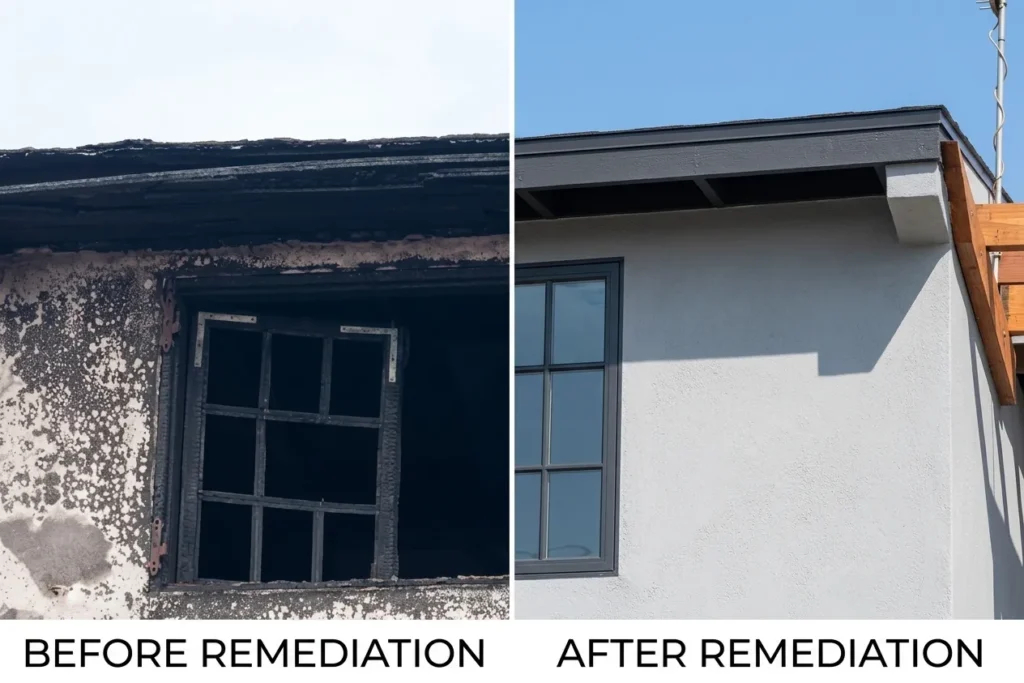
What Is Smoke Damage? A Clear Definition
Quick Answer: Smoke damage refers to the staining, odor, and chemical residue left behind after a fire, caused by airborne soot particles and combustion byproducts that settle on and penetrate surfaces throughout a structure, often extending far beyond the room where the fire actually occurred.
Smoke damage typically includes:
- Soot staining on walls, ceilings, and surfaces!
- Embedded odor in fabric, carpet, and porous materials
- Discoloration of paint, trim, and finishes
- Corrosion of metal fixtures and electronics
- Residue inside HVAC systems, which can recirculate odors throughout the home
Smoke doesn’t stay contained to the room where a fire started. It travels through HVAC ducts, gaps around doors, and even wall cavities, which is why professional assessment covers the entire structure, not just the burn area.
Why “Smoke Damage Near Me” Searches Are Common in Lawrenceville
Kitchen Fires Remain the Leading Cause
According to data compiled by the National Fire Protection Association (NFPA), cooking equipment is consistently the leading cause of residential fires and fire-related injuries in the United States, making kitchen-originated smoke damage one of the most common calls we receive.
Older Electrical Systems
Some homes throughout Lawrenceville and Gwinnett County have aging electrical systems that increase the risk of electrical fires, which often produce especially acrid, difficult-to-remove smoke odor.
Proximity Fires
Even when a fire doesn’t start inside your home, nearby structure fires or yard debris fires can push smoke damage into a property through open windows, vents, or simply airborne drift.
Heating Equipment
Space heaters and fireplace use during Georgia’s cooler months contribute to a seasonal uptick in smoke damage calls throughout the metro.
Types of Smoke Damage and Why They Matter for Cleanup
| Smoke Type | Source | Cleanup Characteristics |
| Wet Smoke | Low-heat, smoldering fires (plastics, rubber) | Sticky, smeary residue with strong odor; harder to clean |
| Dry Smoke | Fast-burning, high-heat fires (wood, paper) | Powdery residue, easier to clean but spreads widely |
| Protein Smoke | Kitchen fires involving food | Nearly invisible residue but extremely strong, persistent odor |
| Fuel Oil Smoke | Furnace puff-backs | Heavy residue requiring specialized cleaning |
Understanding the smoke type helps our technicians select the right cleaning approach, a one-size-fits-all method simply doesn’t work across these different residues.
The Smoke Damage Restoration Process: What to Expect
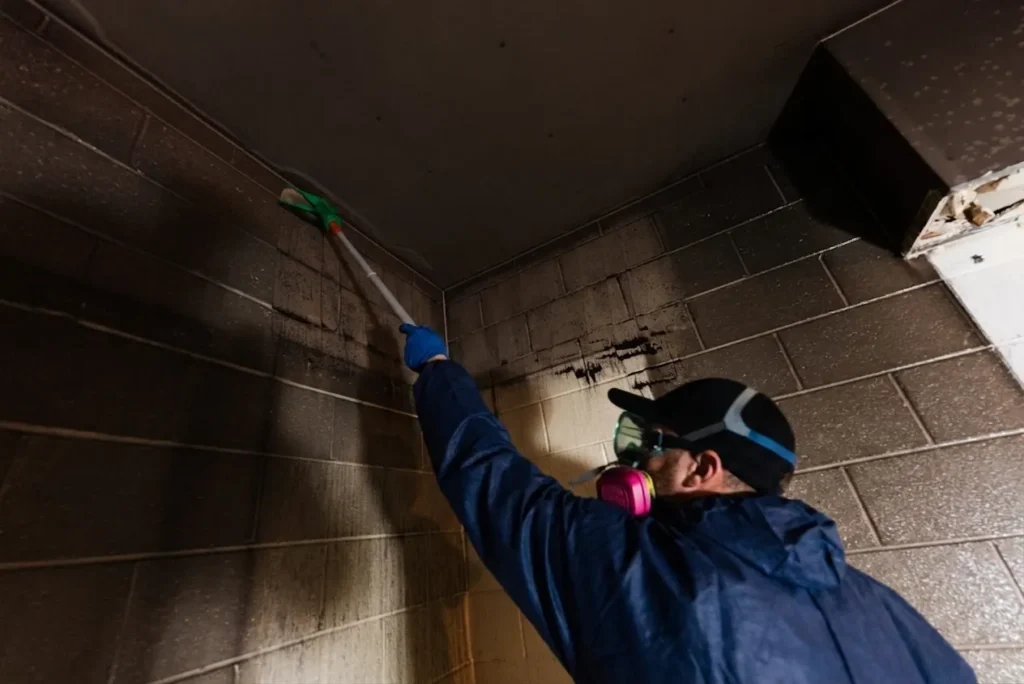
Step 1: Emergency Assessment
Technicians evaluate the extent of smoke damage throughout the structure, including areas not visibly affected but potentially impacted by airborne residue and odor.
Step 2: Safety and Structural Check
Before cleanup begins, the property is assessed for structural safety, especially if fire damage weakened any framing or electrical systems.
Step 3: Content Assessment
Furniture, electronics, and personal items are evaluated for cleaning versus replacement, with salvageable items removed for specialized off-site cleaning when appropriate.
Step 4: Soot and Residue Removal
Surfaces are cleaned using techniques matched to the smoke type, dry sponging for dry smoke residue, specialized solvents for wet smoke, and targeted cleaning for protein residue.
Step 5: HVAC System Cleaning
Ductwork and HVAC components are cleaned to prevent smoke odors from recirculating throughout the home after cleanup is otherwise complete.
Step 6: Odor Removal Treatment
Depending on severity, technicians may use thermal fogging, ozone treatment, or hydroxyl generators to neutralize embedded odors at the molecular level, not just mask it.
Step 7: Repair and Reconstruction
Damaged drywall, paint, and finishes are repaired or replaced to restore the home to its pre-fire condition.
Step 8: Final Walkthrough
A thorough final inspection, including odor verification, confirms the job meets both visual and air-quality standards.
Why Smoke Odor Lingers Even After Cleaning
Smoke odor persists because combustion particles are microscopic and can embed deep into:
- Porous materials like drywall, carpet, and upholstery
- Wall cavities and insulation
- HVAC ductwork and filters
- Wood surfaces, including framing and cabinetry.
- Personal belongings like clothing and books
Quick Answer: Air fresheners and standard cleaning only mask smoke odor temporarily because they don’t remove the embedded particles causing it, true odor removal requires specialized techniques like thermal fogging, ozone treatment, or hydroxyl generation that neutralize odor molecules directly.
Dealing With Smoke Damage in Lawrenceville Right Now?
The sooner cleanup begins, the better your chances of preventing permanent staining and lingering odor. Call Air Drop Water Restoration at +1 (678) 374-9247 for 24/7 smoke damage restoration throughout Lawrenceville and Gwinnett County.
Health Considerations With Smoke Damage
Smoke residue contains a mixture of particulates and chemical byproducts from combustion. The EPA notes that indoor air quality can be significantly affected following a fire, and lingering smoke particles can contribute to respiratory irritation, particularly for individuals with asthma or other sensitivities.
This is why professional cleanup, including HVAC system cleaning and proper odor treatment, matters beyond just aesthetics. It’s about restoring safe, breathable indoor air throughout your Lawrenceville home.
Checklist: What to Do Immediately After a House Fire
- Ensure everyone is safely out and the fire department has cleared the property
- Do not re-enter until officials confirm it’s safe
- Avoid touching soot-covered surfaces, which can grind residue in further
- Contact your insurance company to begin the claims process
- Call a professional smoke damage restoration company promptly
- Avoid running your HVAC system until it’s been professionally inspected and cleaned
- Document damage with photos before cleanup begins, if safely possible
Insurance Considerations for Smoke Damage in Lawrenceville, Georgia
Most homeowners insurance policies cover smoke damage resulting from a covered fire event, including:
- Cleaning and restoration of affected surfaces
- Odor removal treatment
- Repair or replacement of damaged materials
- Content cleaning or replacement for smoke-affected belongings
Air Drop Water Restoration works directly with insurance adjusters, documenting the full extent of smoke damage, including areas not immediately visible, to support a thorough and accurate claim.
Get a Smoke Damage Assessment for Your Lawrenceville Property
Even if the fire seemed minor, smoke damage often extends further than expected. Call Air Drop Water Restoration at +1 (678) 374-9247 to schedule a full assessment.
Expert Tips: What Homeowners Should Avoid After a Fire
- Don’t use household cleaners on soot, they can spread residue and set stains further into surfaces
- Don’t turn on ceiling fans or HVAC systems before professional cleaning, as this recirculates soot particles
- Don’t attempt to wash smoke-damaged fabrics with regular detergent, specialized cleaning is often required
- Don’t assume unaffected-looking rooms are odor-free, smoke travels further than it appears
- Don’t delay contacting a restoration company, soot becomes more difficult to remove the longer it sits, especially on painted surfaces
Expert Insight
“The mistake we see most often after a fire is homeowners trying to clean soot themselves with all-purpose cleaner. It feels productive, but it usually smears the residue and drives it deeper into the surface, making our job harder and the final result worse. Let a professional assess it first.” Air Drop Water Restoration Restoration Team
Read our Fire Damage Restoration page for more on our complete post-fire restoration process.
Why Choose Air Drop Water Restoration for Smoke Damage Near Me in Lawrenceville
- 24/7 emergency availability throughout Lawrenceville and Gwinnett County
- Smoke-type-specific cleaning methods for wet, dry, protein, and fuel oil residue
- Complete odor removal using thermal fogging, ozone, or hydroxyl treatment
- HVAC system cleaning to prevent recirculated odor
- Direct insurance coordination to support your fire damage claim
Read our Water Damage Restoration Services page as well, since many fire events involve water damage from firefighting efforts.
Serving Lawrenceville and All of Gwinnett County
Air Drop Water Restoration provides smoke damage restoration throughout Lawrenceville, Duluth, Suwanee, and the surrounding Metro Atlanta area, including Stone Mountain, Atlanta, Sandy Springs, Marietta, Roswell, Alpharetta, Johns Creek, Dunwoody, Brookhaven, Decatur, Smyrna, Kennesaw, East Point, College Park, Union City, Douglasville, Mableton, Tucker, Lithonia, Conyers, Covington, Stockbridge, McDonough, Peachtree City, and Fayetteville. Call +1 (678) 374-9247 now for immediate assistance.
People Also Ask
How much does smoke damage cleanup cost in Lawrenceville, Georgia?
Cost depends on the extent of the fire, smoke type, and areas affected throughout the home. Air Drop Water Restoration provides a clear estimate after an on-site assessment, and much of the cost is often covered by homeowners insurance.
How do I find smoke damage cleanup near me in Lawrenceville?
Look for a locally based, 24/7 available restoration company experienced in smoke-type-specific cleaning methods and complete odor removal, not just surface-level cleaning.
Can smoke odor ever be completely removed from a home?
In most cases, yes, with proper techniques like thermal fogging, ozone treatment, or hydroxyl generation combined with HVAC cleaning and, when necessary, replacement of severely affected porous materials.
How long does smoke damage restoration take?
Timelines vary based on severity, but most residential smoke damage restoration projects take anywhere from a few days to a few weeks, depending on the extent of cleaning and any needed reconstruction.
Is smoke damage covered by homeowners insurance in Georgia?
Smoke damage from a covered fire event is typically covered, including cleaning, odor removal, and repair costs, though policy specifics vary.
Frequently Asked Questions About Smoke Damage Near Me Lawrenceville
Does smoke damage affect areas of the home that weren’t near the fire?
Yes, often significantly. Smoke travels through HVAC systems, gaps around doors, and airflow patterns, which is why a full-property assessment is important even when the fire was contained to one room.
Can I clean smoke damage myself to save money?
Minor surface soot on hard, non-porous surfaces might be manageable with proper technique, but most residential smoke damage benefits from professional assessment to avoid spreading residue or missing hidden odor sources.
Does homeowners insurance cover smoke damage from a neighboring property’s fire?
This depends on your specific policy and the circumstances, but smoke damage originating from a nearby fire is often covered under your own homeowners policy. Check with your insurance provider for specifics.
How soon after a fire should smoke damage cleanup begin?
As soon as it’s safe to do so. Soot becomes progressively more difficult to remove the longer it sits, especially on painted or finished surfaces, making prompt action valuable.
Can smoke damage affect my home’s electronics and appliances?
Yes. Smoke residue can corrode metal components and circuitry over time, so affected electronics should be professionally assessed rather than assumed safe to use immediately.
Will my smoke-damaged belongings need to be replaced, or can they be cleaned?
Many items can be professionally cleaned and restored, though severity, material type, and proximity to the fire all factor into whether cleaning or replacement makes more sense.
Does Air Drop Water Restoration handle both the smoke cleanup and fire damage repair?
Yes, we manage the complete process, from initial cleanup and odor removal through structural repair and reconstruction, so Lawrenceville homeowners don’t need to coordinate multiple contractors.
How does protein smoke from a kitchen fire differ from other smoke damage?
Protein smoke residue is often nearly invisible but produces an extremely strong, persistent odor, requiring specialized cleaning techniques different from those used for visible soot residue.
Can smoke damage lead to mold if not addressed alongside water damage?
Yes. Since firefighting efforts often introduce water into a structure, addressing both smoke damage and any resulting water damage promptly helps prevent secondary mold growth.
Should I run fans to air out smoke odor before professional cleanup?
It’s generally better to wait, since running fans or HVAC systems before proper cleaning can spread soot particles further throughout the home rather than resolving the odor.
Does Air Drop Water Restoration offer emergency smoke damage cleanup on weekends in Lawrenceville?
Yes, our team is available 24 hours a day, 7 days a week, including weekends and holidays, for smoke damage restoration throughout Lawrenceville and Gwinnett County.
What’s the difference between smoke damage restoration and general fire damage restoration?
Smoke damage restoration focuses specifically on soot, residue, and odor removal, while fire damage restoration encompasses the full process, including structural repair from burn damage and water damage from firefighting efforts.
Conclusion: Trusted Smoke Damage Restoration Near Lawrenceville Homeowners Can Rely On
Smoke damage near me in Lawrenceville is more than a cleaning job, it’s a restoration process that requires understanding how smoke travels, what type of residue you’re dealing with, and how to remove odor at its source rather than simply masking it.
Air Drop Water Restoration has built our reputation throughout Lawrenceville and Gwinnett County on exactly that expertise: fast 24/7 response, smoke-type-specific cleaning, complete odor removal, and full restoration from first call to finished repair.
Dealing with smoke damage in your Lawrenceville home? Don’t wait for staining and odor to set in permanently. Call Air Drop Water Restoration at +1 (678) 374-9247 for 24/7 smoke damage restoration throughout Lawrenceville and the greater Gwinnett County area.