 Skip to content
Fire damage clean up is a precise, multi-stage process that goes far beyond scrubbing soot off a wall, it requires the right sequence of board-up, water extraction, soot removal, odor neutralization, and contents restoration to avoid causing further damage. This guide walks Atlanta homeowners through exactly what to do (and not do) after a fire, what professional fire damage clean up includes, and how to protect your insurance claim along the way. Written by the IICRC-certified team at Air Drop Water Restoration.
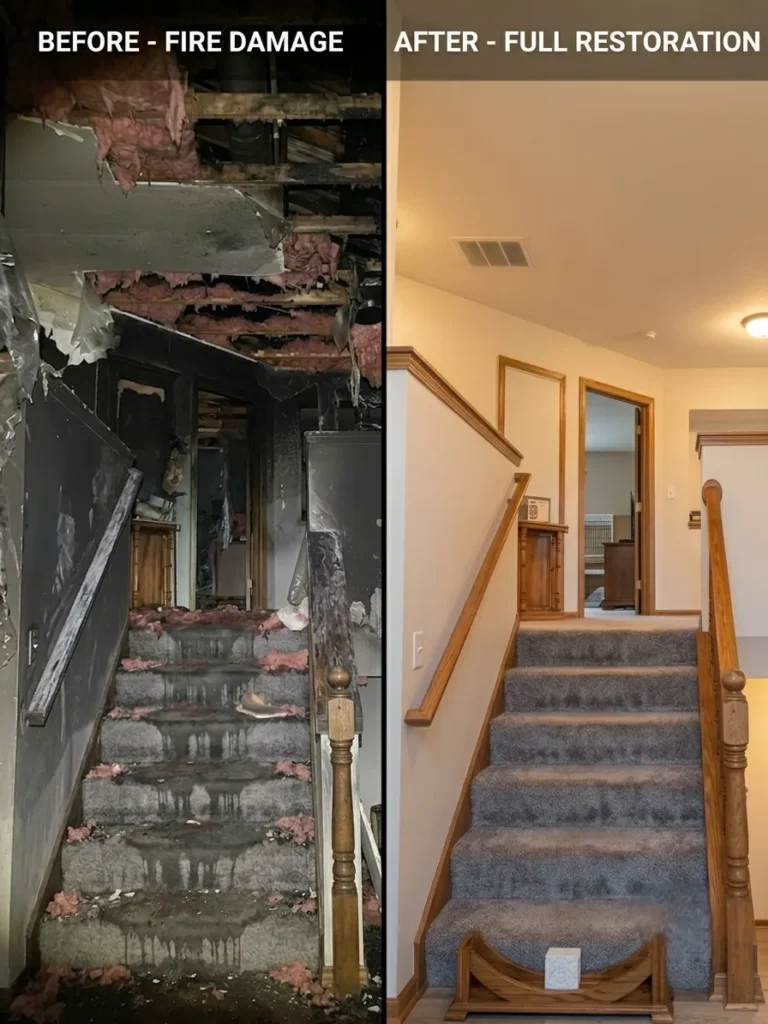
Table of Contents
The moments after a fire are disorienting, and knowing where to even start with fire damage clean up can feel impossible when you’re standing in a home that no longer looks or smells like your own. The instinct to grab a mop and start scrubbing is understandable, but it’s also one of the most common mistakes homeowners make, often grinding soot deeper into surfaces or spreading contamination to unaffected rooms. Fire damage clean up follows a specific, proven sequence, and skipping steps or doing them out of order can cost you both money and your insurance claim’s integrity.
As IICRC-certified restoration contractors who’ve guided Atlanta homeowners through fire damage clean up for over a decade, we’ve put together this guide to walk you through exactly what to do immediately after a fire, what professional clean up actually involves, and the mistakes to avoid.
What to Do (and Not Do) in the First 24 Hours After a Fire
Do:
- Wait for fire officials to declare the structure safe to enter
- Contact your insurance company to open a claim
- Photograph all visible damage before anything is moved or touched
- Contact a fire damage clean up company for emergency board-up and tarping
- Keep receipts for any temporary lodging or emergency expenses
Don’t:
- Attempt to clean soot with household cleaners, many react poorly with soot residue and can set stains permanently
- Turn on HVAC systems, which can spread soot particulate throughout the home
- Eat food that was exposed to heat, smoke, or firefighting chemicals
- Use electrical appliances or outlets that may have been exposed to water or heat damage
- Throw away damaged items before they’re documented for your insurance claim.
The Fire Damage Clean Up Process, Step by Step
Emergency Board-Up and Securing the Structure
Broken windows, damaged roofing, and compromised doors need to be secured immediately to prevent weather intrusion and unauthorized entry, this is typically the very first step in professional fire damage clean up.
Water Extraction and Structural Drying
Firefighting efforts routinely leave significant standing water behind. If this water isn’t extracted and the structure dried within 24–48 hours, mold growth can begin, compounding the damage. This step uses the same extraction and drying equipment applied in standard water damage restoration.
Debris Removal
Charred and structurally compromised materials, burned framing, ruined drywall, melted fixtures, are removed to allow safe access for the remaining clean up steps.
Soot and Smoke Residue Removal
Technicians identify the type of residue (dry smoke, wet smoke, protein, or fuel oil residue) and apply the appropriate cleaning method, dry chemical sponges for some residues, solvent-based cleaners for others. Using the wrong method can smear soot deeper into porous surfaces.
Deep Cleaning and Sanitizing
Walls, ceilings, flooring, and hard surfaces are cleaned and sanitized to remove residue, bacteria, and any contamination from firefighting water.
Odor Neutralization
Smoke odor molecules embed themselves in porous materials and HVAC systems. Professional fire damage clean up uses thermal fogging, ozone treatment, or hydroxyl generators to neutralize odor at the source rather than masking it with air fresheners.
Contents Cleaning and Restoration
Salvageable furniture, clothing, electronics, and documents are cataloged, cleaned off-site, and stored until the structure is ready.
Final Restoration and Repairs
Once clean up is complete, structural rebuilding, drywall, flooring, paint, cabinetry, restores the space to its pre-fire condition.
Types of Residue Encountered During Fire Damage Clean Up
| Residue Type | Cause | Cleaning Approach |
| Dry Smoke | Fast, high-heat fires (wood, paper) | Dry sponge cleaning, careful vacuuming |
| Wet Smoke | Slow, smoldering, low-oxygen fires (rubber, plastic) | Solvent-based cleaning, more labor-intensive |
| Protein Residue | Kitchen/cooking fires | Enzyme-based cleaners, strong odor treatment |
| Fuel/Oil Residue | Furnace or fuel-based fires | Heavy-duty solvent cleaning |
Why Fire Damage Clean Up Requires Professional Equipment
Household cleaning products aren’t designed to handle the acidic, oily nature of soot residue. Attempting DIY fire damage clean up often results in:
- Permanent staining from reacting cleaning agents with soot
- Spreading soot particulate to unaffected rooms via inadequate containment
- Missed hidden damage inside HVAC ducts, wall cavities, or subfloor
- Incomplete odor removal that resurfaces in humid weather
- Complications with insurance claims due to undocumented or improperly handled damage
Professional fire clean up crews use HEPA vacuums, ozone and hydroxyl generators, specialized soot-cleaning agents matched to residue type, and moisture meters to verify the structure is fully dry before reconstruction begins.
How Fire Damage Clean Up Connects to Water Damage
It’s easy to overlook, but fire clean up and water damage restoration are deeply connected. Between firefighting water and any water used during the fire itself, most fire-damaged structures also need extraction, dehumidification, and moisture monitoring. According to the IICRC S500 standard, unaddressed moisture can lead to measurable mold colonization within 24–48 hours, meaning a delayed or incomplete water response after a fire can create a second disaster on top of the first.
Read our Water Damage Restoration Services and Read our article Mold Remediation for more on how these processes work together.
Frequently Asked Questions on Fire Damage Clean Up
How soon should fire damage clean up begin after a fire?
As soon as fire officials confirm the structure is safe to enter, ideally within 24–48 hours, since delayed water extraction and soot cleaning significantly increase the risk of permanent staining and mold growth.
Can I do fire damage clean up myself?
Minor surface soot on non-porous materials can sometimes be cleaned carefully, but most fire damage clean up involves specialized equipment and cleaning agents that aren’t available to homeowners, and improper cleaning can cause permanent damage or spread contamination.
How long does professional fire damage clean up take?
Timelines vary by severity minor smoke damage clean up may take a few days, while extensive structural fire damage clean up and reconstruction can take several weeks
Will fire damage clean up remove the smoke smell completely?
Yes, when performed correctly with thermal fogging, ozone treatment, or hydroxyl generators combined with thorough surface and HVAC cleaning, odor removal is a core part of any legitimate fire damage clean up process.
What’s the first thing a fire damage clean up company does?
Emergency board-up and securing the structure against weather and unauthorized entry is typically the very first step, followed quickly by water extraction if firefighting water is present.
Does homeowners insurance cover fire damage clean up costs?
Fire damage is typically covered under standard Georgia homeowners insurance policies, including clean up, smoke damage repair, and often additional living expenses during displacement, though it’s important to confirm details with your specific policy.
Can furniture and clothing be saved after a fire, or does everything need replacing?
Many items can be professionally cleaned and restored depending on the level of heat and smoke exposure, a contents restoration specialist can assess what’s salvageable versus what needs replacement.
Is fire damage clean up the same as fire damage restoration?
Clean up refers to the removal of soot, smoke residue, and contaminated debris, while restoration includes clean up plus the structural rebuilding needed to return the property to its pre-fire condition, most companies handle both under one process.
Conclusion: Trust the Right Process for Fire Damage Clean Up
Fire clean up isn’t something to improvise, the sequence matters, the equipment matters, and doing it wrong can cost you both money and insurance coverage. Air Drop Water Restoration has guided Atlanta-area homeowners through the damage clean up process for over a decade, combining IICRC-certified soot removal, odor neutralization, and water mitigation into one coordinated response.
Just experienced a fire? Contact Air Drop Water Restoration now for 24/7 emergency clean up across Atlanta and the surrounding metro area.