 Skip to content

Fire and water damage in Norcross is a double disaster that hits your home twice. First comes the fire. Then comes the flood of firefighting water, sprinkler discharge or storm runoff.
You are standing in a soaked, smoky house. You are asking who to call and what to save first. That is a stressful place to be.
This article gives you a clear plan. You will learn how restoration professionals handle fire and water damage in Norcross, what the damage levels mean, and how to protect your insurance claim. Everything here comes from the field, not a textbook.
Air Drop Water Restoration is based in Stone Mountain and has served Metro Atlanta since 2012. We are IICRC-certified, licensed and insured. If your property is damaged right now, call +1 (678)-374-9247. The crew is ready 24/7.
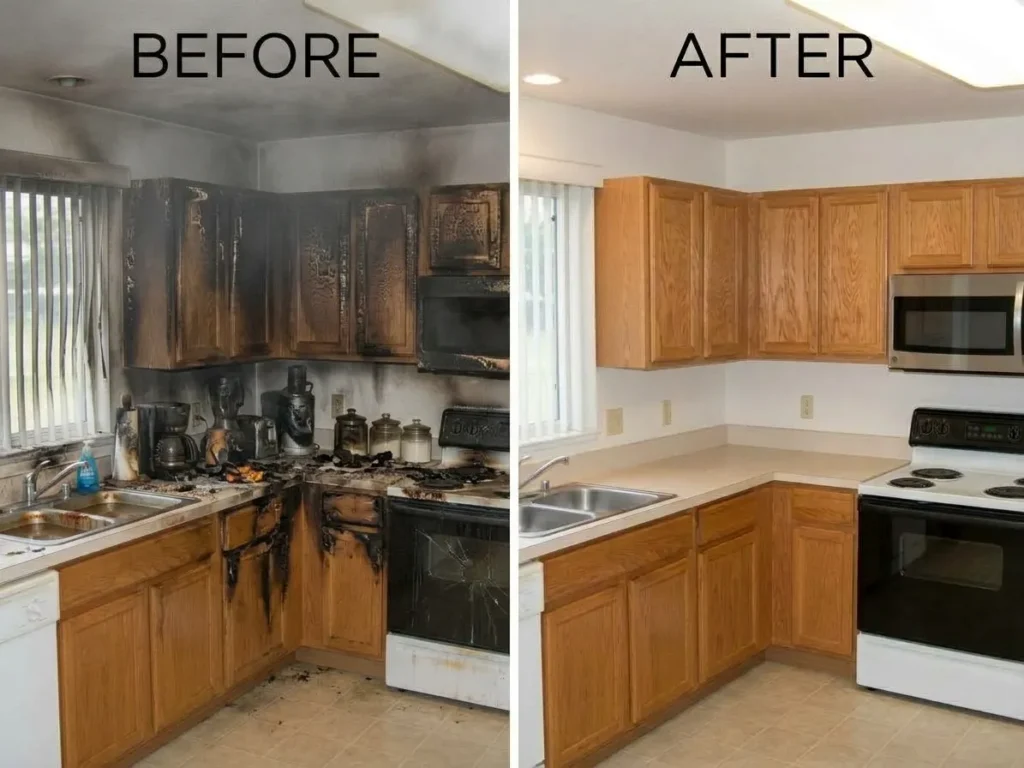
Do not wait for the smoke to clear. Call Air Drop Water Restoration at +1 (678)-374-9247 for 24/7 emergency dispatch to Norcross and all of Gwinnett County.
What Is Fire and Water Damage in Norcross? A Clear Definition
Fire and water damage in Norcross is the combined harm a property suffers from flames, heat, smoke, soot and the water used or released during and after a fire. It includes burned structure, saturated building materials, smoke residue, corrosive soot and hidden moisture that leads to mold.
In plain terms, there are two restoration jobs in one. Fire damage restoration repairs and cleans what burned or smoked. Water damage restoration removes the water and dries what got wet.
Both jobs must be handled together. If you treat only one, the other keeps destroying your home.
The Three Forces Behind Fire and Water Damage
- Heat and flame: burns, chars and weakens structural framing.
- Smoke and soot: coat surfaces, penetrate HVAC systems and leave stubborn odors.
- Water and moisture: soaks in drywall, insulation, subfloor and contents within minutes.
Where the Water Comes From
Water enters a fire-damaged Norcross property from several sources:
- Fire hose discharge from firefighters
- Activated fire sprinkler heads in apartments and commercial buildings
- Burst supply lines weakened by heat
- Roof openings that let Georgia rainstorms pour in
- Humidity trapped in a closed, damaged structure.
Why Fire and Water Damage in Norcross Almost Always Go Together
Firefighters have one job: Stop the fire. They use large volumes of water, and they should. Hose lines can deliver hundreds of gallons per minute.
That water goes somewhere. It runs through ceilings, down wall cavities and into subfloors. It soaks insulation. It lands on carpet, furniture and electronics.
Here is the problem. Once the fire is out, the water stays.
The Clock Starts at Extinguishment
Wet drywall begins to degrade quickly. The EPA advises that wet materials should be dried within 24 to 48 hours to help prevent mold growth. In Georgia’s humid climate, that window feels even tighter.
Smoking residue also reacts with moisture. Acidic soot can etch metal, stain grout and permanently discolor surfaces when left damp.
Why Waiting Makes It Worse
Every hour you wait adds cost:
- Water wicks higher into walls.
- Hardwood floors cup and buckle.
- Soot settles deeper into porous materials.
- Mold spores find moisture and food.
- Metal fixtures and appliances begin to corrode.
This is why a single certified company that handles both fire and water damage in Norcross saves time, money and confusion. Read more about how we do it in our Atlanta Water and Fire Restoration Service guide.
Fire and Water Damage in Norcross: Local Risk Factors Every Homeowner Should Know
Norcross sits in Gwinnett County, northeast of Atlanta. It blends historic bungalows near Thrasher Park with newer subdivisions, townhomes, apartment communities and the commercial buildings of Peachtree Corners and Technology Park.
Each building type has its own risk profile.
Georgia Weather and Storm Seasons
Metro Atlanta receives roughly 50 inches of rain a year, according to the National Weather Service Peachtree City office. Spring brings severe thunderstorms and tornado risk. Summer brings pop-up downpours and lightning. Late summer and fall can bring tropical remnants.
Lightning is a real fire starter. When it strikes, the fire damage is followed by rain pouring through any roof opening.
Winter hard freezes cause burst pipes. A burst pipe can trigger a second water loss in a home already recovering from a fire.
Common Fire Causes in Norcross Homes
- Kitchen cooking fires
- Electrical faults in older wiring
- Space heaters and holiday decorations in cooler months
- Dryer vent lint buildup
- Lightning strikes during storm season
- Candles and unattended smoking materials
Building Types and Their Risks
| Building Type | Typical Fire Risk | Typical Water Risk |
| Older bungalows and ranch homes | Aging wiring, original attic insulation | Old supply lines, roof leaks, crawl space moisture |
| Newer subdivisions | Open floor plans spread smoke fast | Sprinkler and HVAC condensate failures |
| Townhomes and condos | Shared walls spread fire and smoke | Water travels between units |
| Apartment communities | Cooking fires, shared attics | Sprinkler discharge floods multiple units |
| Commercial and office space | Electrical loads, equipment | Fire sprinkler activation, roof drain failures |
Stone Mountain neighbors, Tucker, Lilburn and Duluth residents face the same patterns. Our crew covers the full Gwinnett, DeKalb, Fulton and Rockdale service area.
Understanding the Levels of Fire and Water Damage in Norcross
Restoration pros do not guess. We classify damage using industry standards from the IICRC, the Institute of Inspection, Cleaning and Restoration Certification. The standards guide equipment, safety gear and drying goals.
Water Damage Categories (Contamination Level)
| Category | Source | Risk Level | Example After a Fire |
| Category 1 | Clean water | Low | Broken supply line, clean sprinkler water |
| Category 2 | Gray water | Moderate | Washing machine overflow, aged sprinkler discharge |
| Category 3 | Black water | High | Sewage, floodwater, water standing for days |
Firefighting water often starts as Category 1 but picks up soot, ash and debris as it travels. It frequently degrades toward Category 2 or 3, which changes how materials are treated.
Water Damage Classes (Evaporation Rate)
| Class | Description | Typical Scenario |
| Class 1 | Least water, low evaporation load | Small area, low-permeance materials |
| Class 2 | Entire room, carpet and cushion wet | Wet walls up to 24 inches |
| Class 3 | Water from above saturates walls, ceiling, insulation | Sprinkler discharge or roof leak after fire |
| Class 4 | Specialty drying, deeply bound water | Hardwood, plaster, concrete, masonry |
Fire Damage Levels
- Minor (Level 1): light smoke residue, no structural harm.
- Moderate (Level 2): soot on multiple rooms, localized char, odor penetration.
- Major (Level 3): structural char, widespread smoke, HVAC contamination.
- Severe (Level 4): compromised framing, roof loss, possible total loss.
Types of Soot
Different fires leave different residues. Using the wrong cleaning method smears soot and makes it worse.
- Dry smoke residue: powdery, from fast-burning, high-heat fires.
- Wet smoke residue: sticky and smeary, from slow, low-heat fires.
- Protein residue: nearly invisible, strong odor, from kitchen fires.
- Fuel or oil residue: thick and dark, from furnace puff-backs.
What to Do Immediately After Fire and Water Damage in Norcross
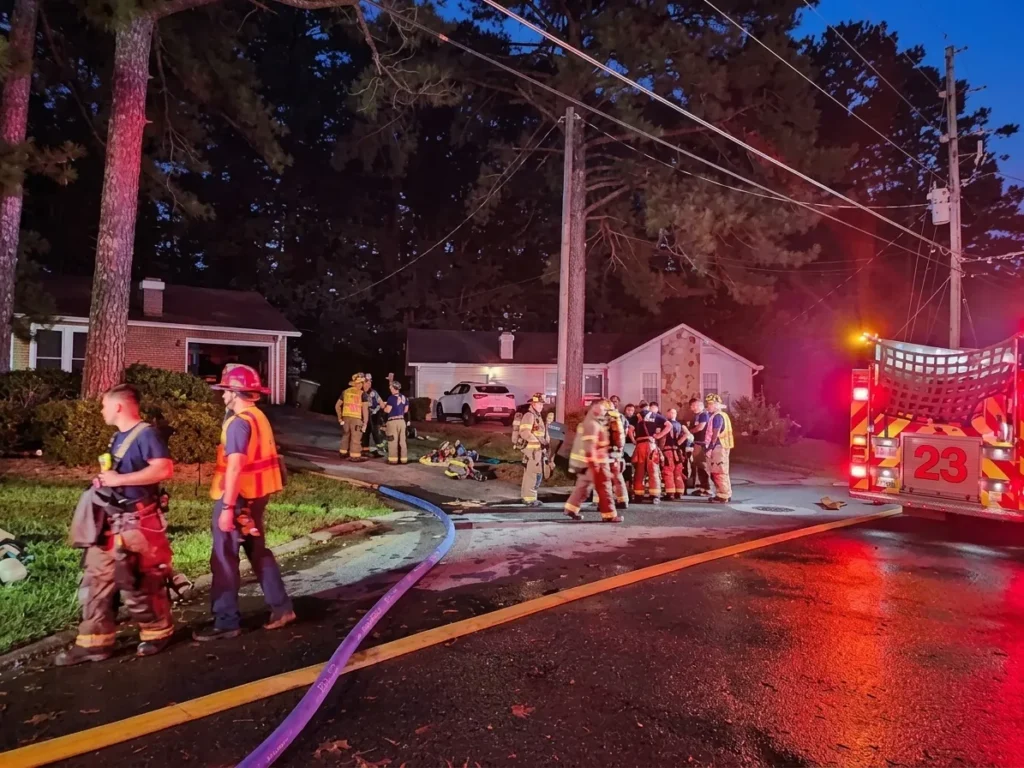
Fire and water damage in Norcross demands calm, ordered action. Follow these steps in sequence.
Step-by-Step Emergency Checklist
- Get everyone out and stay out until the fire department says the structure is safe.
- Call 911 if the fire is still active or anyone is hurt.
- Call your insurance company to open a claim. Ask about your emergency services coverage.
- Call Air Drop Water Restoration at +1 (678)-374-9247 for 24/7 emergency dispatch.
- Turn off electricity at the breaker only if it is safe and the area around the panel is dry.
- Shut off the main water valve if pipes are broken.
- Photograph and video everything before anything is moved.
- Remove valuables and documents only if the fire department has cleared you to enter.
- Open windows only if it is dry and safe. Never open them during a storm.
- Wait for the pros before cleaning anything.
What NOT to Do
- Do not turn on the HVAC. It spreads soot through the whole house.
- Do not wipe soot with a household sponge. It will smear.
- Do not stand on wet ceilings or sagging drywall.
- Do not use electronics that got wet or sooty.
- Do not throw away damaged items before your adjuster documents them.
- Do not use a regular vacuum on wet carpet or soot.
Quick Answer: What Should You Do First After a Fire with Water Damage?
Get everyone out safely, call 911 if needed, contact your insurer, and call a certified restoration company like Air Drop Water Restoration right away. Avoid touching soot or wet electrical areas. Document every loss with photos and video.
Air Drop answers 24/7. Call +1 (678)-374-9247 and we will start the emergency mitigation process while you deal with your insurance company.
The Fire and Water Damage Restoration Process in Norcross, Step by Step
Here is exactly how Air Drop handles fire and water damage in Norcross. It follows a proven sequence from emergency response to rebuild.
Step 1: Emergency Contact and Rapid Dispatch
You call. A live person answers. We gather the basics: what happened, where, whether anyone is safe, and whether utilities are off.
A crew heads to your Norcross property immediately.
Step 2: Inspection and Damage Assessment
Our certified technicians walk the structure. We use moisture meters, thermal imaging cameras and hygrometers to find wet areas you cannot see.
We map the loss. We classify the water category and class. We identify smoke and soot types.
Step 3: Safety Measures and Board-Up
Safety comes first. Services include:
- Emergency board-up of broken windows and doors
- Roof tarping to stop further rain intrusion
- Electrical hazard identification
- Containment barriers to isolate affected zones
Step 4: Water Extraction and Removal
Standing water goes first. We use truck-mounted and portable extraction units to remove water quickly.
Every gallon removed mechanically is a gallon that does not need to be evaporated. That saves drying time and cost.
Step 5: Structural Drying and Dehumidification
We place air movers and low-grain refrigerant (LGR) dehumidifiers based on the room’s cubic footage and water class. Specialty drying systems handle wall cavities and hardwood.
Technicians monitor moisture readings daily. Drying is not finished until materials reach dry standards, not when they feel dry.
Learn more about this phase on our water damage mitigation page.
Step 6: Soot, Smoke and Odor Removal
This is where fire restoration expertise matters.
- HEPA vacuuming of loose particulate
- Dry sponge and chemical sponge cleaning for soot
- Wet cleaning for appropriate surfaces
- Thermal fogging and hydroxyl or ozone treatment for odor
- HEPA air scrubbers to filter the air
- HVAC duct cleaning when contaminated
Step 7: Contents Cleaning and Pack-Out
Furniture, clothing, electronics and keepsakes can often be restored. We pack out contents, clean them off-site and store them safely. Then we bring them home.
Step 8: Demolition and Debris Removal
Materials that cannot be saved must go. That includes saturated insulation, charred drywall, burned framing and contaminated carpet pad.
Step 9: Cleaning, Sanitizing and Mold Prevention
We apply antimicrobial treatments to wet and sooty cavities. This reduces the chance of mold after the building dries.
Step 10: Reconstruction and Repairs
Air Drop works as a one-stop restoration company. That means drywall, paint, flooring, cabinetry and structural repairs can be managed under one project plan.
Smoke, Soot and Odor: The Hidden Side of Fire and Water Damage in Norcross
Fire damage does not stop where you see char. Smoke is made of microscopic particles. It travels through wall cavities, ductwork and attic space.
Why Smoke Odor Lingers
Smoke particles bond to porous materials like drywall, insulation, upholstery and wood. Moisture makes the bond stronger. That is why a wet fire loss smells worse than a dry one.
Air fresheners do not fix it. The source particles must be physically removed or chemically neutralized.
Health Considerations
Smoke residue can irritate eyes, lungs and skin. People with asthma or respiratory conditions are most sensitive. The CDC offers guidance on health effects of smoke exposure and cleanup safety.
Never sleep in a smoke-damaged home until it has been professionally cleaned.
Professional Odor Removal Methods
| Method | How It Works | Best For |
| Thermal fogging | Heated deodorizer penetrates the same pores smoke entered | Structural odor in walls and attic |
| Hydroxyl generators | Safely breaks down odor molecules while occupied areas are managed | Ongoing odor control |
| Ozone treatment | Oxidizes odor molecules in a sealed, unoccupied space | Heavy, set-in smoke odor |
| HEPA air scrubbing | Captures airborne particles | Particulate removal |
| Sealing | Encapsulates residual odor in framing | Charred but retained structure |
Mold Risk After Fire and Water Damage in Norcross
Mold does not wait for a good reason. It needs moisture, a food source and time.
After fire and water damage in Norcross, your wet drywall, paper-backed insulation and wood framing become a buffet. Georgia’s warm, humid climate speeds colonization.
How Fast Can Mold Grow?
The EPA states that mold can begin growing on wet materials within 24 to 48 hours. See the EPA mold guidance for details.
Signs of Mold After a Fire
- Musty odor that does not clear after drying
- Visible fuzzy or spotty growth on walls or ceilings
- Peeling paint or bubbling wallpaper
- Rising allergy or respiratory symptoms
- Discoloration near sprinkler or plumbing penetrations
If you find mold, do not disturb it. Our mold remediation team can test, contain and remove it safely.
Insurance and Fire and Water Damage in Norcross: What Georgia Homeowners Should Know
Insurance is where many homeowners feel lost. Here are the basics.
What Standard Homeowners Policies Usually Cover
- Sudden and accidental fire damage
- Smoke and soot damage
- Water damage from fire suppression
- Temporary living expenses (loss of use)
- Reasonable emergency mitigation to prevent further loss
What Often Is Not Covered
- Flood from rising surface water (requires separate flood insurance, such as a policy through FEMA’s National Flood Insurance Program)
- Long-term leaks and maintenance neglect
- Sewer or drain backup unless an endorsement exists
Review your policy so you know your deductible and coverage limits. The Georgia Office of Insurance and Safety Fire Commissioner provides consumer resources if you have questions.
How to Protect Your Claim
- Report the loss immediately.
- Photograph and video all damage before cleanup.
- Keep receipts for emergency services and temporary housing.
- Make an inventory of damaged contents.
- Mitigate further damage. Policies expect you to prevent additional loss.
- Keep all communication with your adjuster in writing when possible.
Air Drop works with homeowners and adjusters daily. We provide detailed moisture logs, photo documentation and itemized estimates to support your claim.
Quick Answer: Does Homeowners Insurance Cover Fire and Water Damage?
Most homeowners’ policies cover sudden fire damage and the water used to fight it. Floods from rising water and sewer backup typically need separate coverage. Always confirm with your insurer.
DIY vs. Professional Fire and Water Damage Restoration in Norcross
Some homeowners try to handle damage themselves. Here is why that often backfires.
| Factor | DIY or General Handyman | Air Drop Water Restoration |
| Moisture detection | Guesswork, hand feel | Moisture meters, thermal imaging |
| Drying equipment | Box fans, store-bought units | LGR dehumidifiers, air movers, specialty drying |
| Smoke and soot removal | Household cleaners that smear | HEPA, chemical sponge, fogging, hydroxyl |
| Safety | No PPE, unknown hazards | PPE, containment, hazard assessment |
| Insurance documentation | Limited | Moisture logs, photos, itemized estimates |
| Mold prevention | Often missed | Antimicrobial and clearance monitoring |
| Warranty | Rarely | One year warranty on our services |
Why Certified Matters
IICRC certification means technicians are trained in standards for water damage restoration and fire and smoke damage restoration. Air Drop holds IICRC certification as a Water Damage Restoration Technician and a Fire and Smoke Damage Restoration Technician.
Certification protects you. It means the job follows industry standards, not guesswork.
Get a free on-site assessment from IICRC-certified technicians. Call Air Drop Water Restoration at +1 (678)-374-9247 and protect your Norcross home today.
Expert Tips: Preventing Fire and Water Damage in Norcross
Prevention is cheaper than restoration. These contractor-tested tips reduce your risk.
Fire Prevention Tips
- Test smoke alarms monthly. Replace batteries yearly.
- Clean dryer vents at least once a year.
- Never leave cooking unattended.
- Keep space heaters three feet from anything flammable.
- Have an electrician inspect older wiring.
- Keep a fire extinguisher in the kitchen and garage.
Water Damage Prevention Tips
- Know where your main water shutoff is. Test it.
- Replace rubber washing machine hoses with braided steel lines.
- Inspect your water heater annually and replace it before it fails.
- Clean gutters before storm season.
- Insulate exposed pipes before the first hard freeze.
- Grade soil away from your foundation.
- Consider smart leak detectors under sinks and near water heaters.
Contractor Advice from the Field
We see the same mistake repeatedly. Homeowners run the HVAC after a fire to “air things out.” That pulls soot into every duct and room.
Turn it off. Call a professional.
Another common error: waiting for the adjuster before calling a mitigation company. You are generally expected to protect the property from further damage. Call us first. We can start mitigation immediately and coordinate with your adjuster.
Commercial Fire and Water Damage in Norcross: Protecting Your Business
Norcross has a strong business community, from Historic Downtown shops to offices and warehouses in Peachtree Corners and the surrounding industrial parks.
Downtime costs money. Every day your business is closed and is lost revenue.
What Commercial Properties Face
- Fire sprinkler activation flooding multiple suites
- Roof drain failures during Georgia thunderstorms
- Kitchen and restaurant grease fires
- Electrical equipment failures
- Multi-tenant water migration
How Air Drop Handles Commercial Losses
- 24/7 emergency response
- Scalable crews and equipment for large floor plates
- Business continuity planning to reduce downtime
- Documentation for commercial insurance carriers
- Coordinated reconstruction
See our commercial restoration services for more details.
Why Norcross Property Owners Choose Air Drop Water Restoration
Air Drop is a Stone Mountain-based, one-stop damage restoration company. We have served Metro Atlanta since 2012.
What Sets Us Apart
- 24/7 emergency response every day of the week
- IICRC-certified technicians
- Licensed and insured
- Direct service without intermediaries
- One year warranty on our services
- Water, fire, smoke, mold and plumbing handled by one team
- Insurance support with thorough documentation
- Transparent communication from first call to final walkthrough
Service Areas Near Norcross
Our crews serve Norcross and nearby communities including Peachtree Corners, Duluth, Lawrenceville, Suwanee, Tucker, Stone Mountain, Lithonia, Decatur, Dunwoody, Brookhaven, Sandy Springs, Roswell, Alpharetta and Johns Creek. Browse our full service area.
Fire and Water Damage in Norcross: Related Services You May Need
A major loss rarely involves only one problem. Air Drop also provides:
- Water Damage Restoration
- Mold Remediation, Testing and Removal
- Fire and Smoke Damage Restoration
- Sewage Damage Cleanup and Backup Cleanup
- Storm and Flood Damage Restoration
- Emergency Water Extraction
- Emergency Plumber Service
- Carpet and Contents Cleaning
External Link Opportunity: Link to the Gwinnett County fire and emergency services page for local fire safety resources, and to GEMA/HS for Georgia disaster preparedness.
Frequently Asked Questions About Fire and Water Damage in Norcross
How long does it take to restore fire and water damage in Norcross?
Small losses may take a few days of drying and cleaning. Larger fire and water damage in Norcross can take several weeks once reconstruction is included. Drying alone usually takes three to five days, depending on materials and class. Timelines depend on severity, materials and insurance approvals.
Is water damage after a fire dangerous?
Yes. Firefighting water can pick up soot, ash and chemicals, and wet materials invite mold. Wet electrical systems add a shock risk. Do not enter until cleared and let a certified restoration company assess it.
Can I stay in my home during fire and water damage restoration?
Usually not for moderate or major losses. Smoke odor, soot, drying equipment and construction make the property difficult to live in. Many policies provide loss-of-use coverage for temporary housing.
Will my belongings be salvageable after fire and water damage in Norcross?
Often yes. Hard goods, many textiles and some electronics can be cleaned with professional pack-out and specialized processes. Porous items with heavy saturation or protein residue may be a loss.
How much does fire and water damage restoration cost in Norcross?
Cost depends on square footage, water category, soot type, materials and how fast mitigation begins. Early response reduces cost significantly. Air Drop provides free on-site assessments so you understand scope before work begins.
Does insurance cover fire and water damage in Norcross?
Most standard homeowners policies cover sudden fire damage and the water used to extinguish it. Flood and sewer backup often need separate coverage. Check your policy and speak with your adjuster.
How do I get smoke smell out of my Norcross home after a fire?
Smoke odor must be removed at the source. Professionals use HEPA vacuuming, chemical cleaning, thermal fogging, hydroxyl or ozone treatment and duct cleaning. Household deodorizers only mask the problem.
How fast can mold grow after fire and water damage?
Mold can start growing within 24 to 48 hours on wet materials, per the EPA. Fast extraction and structural drying are the best defense.
Who do I call first after fire and water damage in Norcross?
Call 911 for active emergencies, then your insurer, then a certified restoration company. Air Drop Water Restoration is available 24/7 at +1 (678)-374-9247.
Can Air Drop handle both the fire cleanup and the reconstruction?
Yes. We provide mitigation, cleaning, odor control and rebuild services under one plan, which keeps your project organized and your timeline shorter.
Conclusion: Take Action on Fire and Water Damage in Norcross Today
Fire and water damage in Norcross is urgent, stressful and fast-moving. The fire may be out, but the damage is still spreading through wet drywall, soot-coated surfaces and hidden moisture.
The path forward is clear. Stay safe, document everything, call your insurer and bring in certified professionals immediately. Fast extraction, structural drying, soot removal and mold prevention protect your home and your health.
Air Drop Water Restoration has helped Metro Atlanta families and businesses recover since 2012. We are IICRC-certified, licensed, insured and available around the clock.
Fire and water damage in Norcross? Call now. Do not let the damage spread.
Call Air Drop Water Restoration at +1 (678)-374-9247 for 24/7 emergency response, free on-site assessments and a one year warranty on our services. Serving Norcross, Stone Mountain and all of Metro Atlanta.