 Skip to content

Black mold removal Atlanta GA homeowners need isn’t a job for a spray bottle and a weekend afternoon. Black mold, most notoriously the species Stachybotrys chartarum, grows in chronically damp, poorly ventilated spaces, and Georgia’s humid climate gives it exactly the conditions it needs to thrive.
If you’ve spotted dark, slimy patches on drywall, in a bathroom corner, or around a window frame, you’re likely dealing with a black mold problem that requires professional removal, not just surface cleaning. This guide from Air Drop Water Restoration explains what black mold actually is, why it’s such a common concern across Atlanta, the health risks involved, and exactly how our certified team safely removes it.
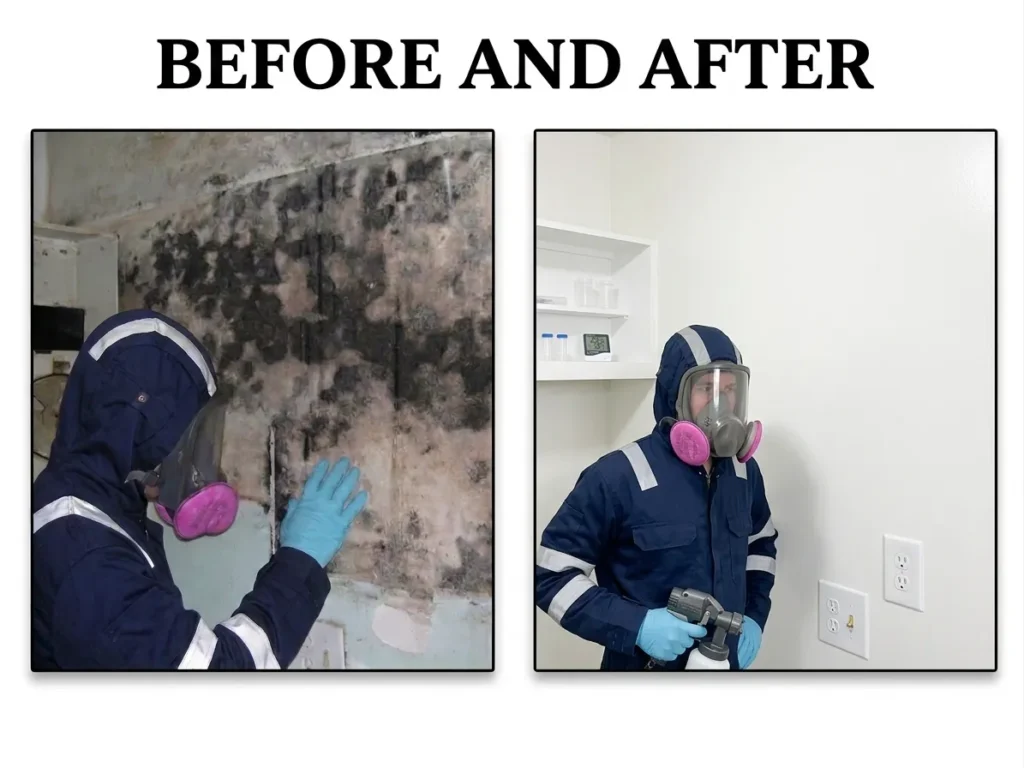
What Is Black Mold? A Clear Definition
Quick Answer: “Black mold” most commonly refers to Stachybotrys chartarum, a slow-growing, dark greenish-black mold species that thrives on materials with high cellulose content, like drywall, paper, and wood, after prolonged moisture exposure, and is associated with a range of health effects in sensitive individuals due to the mycotoxins some strains produce.
Not all dark-colored mold is Stachybotrys. Several mold species can appear black or dark green, which is why proper identification through inspection or testing matters before assuming the worst, or underestimating a genuine problem.
Why Black Mold Removal Atlanta GA Is Such a Frequent Need
Chronic Moisture, Not Just a Single Event
Black mold typically requires sustained moisture exposure, days or weeks, not hours, which is why it’s often found in areas with slow, hidden leaks or persistently high humidity rather than a single flood event.
Atlanta’s Humid Subtropical Climate
Atlanta’s climate, tracked by NOAA, maintains high relative humidity for much of the year, creating conditions that support black mold growth wherever moisture accumulates.
Common Trouble Spots in Atlanta Homes
- Bathrooms with poor ventilation
- Basements with foundation seepage
- Crawl spaces with inadequate moisture barriers
- Areas around leaking window frames or roof penetrations
- Behind appliances with slow supply line leaks
Aging Housing Stock
Many Atlanta-area homes have original plumbing, ventilation, and insulation systems that weren’t designed for today’s storm intensity or humidity levels, increasing chronic moisture exposure over time.
Health Risks Associated With Black Mold Exposure
According to the CDC, some individuals are more sensitive to mold exposure than others, and symptoms can range from mild to more serious depending on sensitivity and duration of exposure. Commonly reported symptoms include:
- Nasal and sinus congestion
- Coughing and throat irritation
- Eye and skin irritation
- Worsening asthma symptoms
- Headaches in sensitive individuals
The EPA notes that while reactions to mold vary widely from person to person, prompt cleanup of any water damage is the most effective way to prevent mold-related health concerns, including those linked to black mold specifically. Infants, elderly individuals, and those with respiratory conditions or compromised immune systems are generally considered more vulnerable to mold exposure.
This is why professional black mold removal, with proper containment and PPE, matters both for protecting your household during the process and for eliminating the source of ongoing exposure.
Featured Snippet: How to Tell If You Have Black Mold
| Sign | Description |
| Color and texture | Dark greenish-black, often slimy or damp-looking when actively growing; can become dry and powdery over time |
| Odor | Strong, persistent musty or earthy smell |
| Location | Areas with chronic moisture, bathrooms, basements, crawl spaces, around leaks |
| Growth pattern | Tends to grow in patches or streaks, often following moisture paths |
| Health signs | Household members experiencing unexplained respiratory or allergy symptoms at home |
If you notice several of these signs, professional inspection and testing, not DIY removal, is the recommended next step.
The Black Mold Removal Process: What Air Drop Water Restoration Does
Step 1: Inspection and Moisture Source Identification
Technicians inspect the affected area and identify the moisture source responsible for sustaining black mold growth, since removal without fixing the cause is only temporary.
Step 2: Containment Setup
Plastic sheeting and negative air pressure machines isolate the work area, preventing spores from spreading to unaffected parts of the home during removal, an essential step specifically for black mold due to its potential health concerns.
Step 3: Personal Protective Equipment (PPE)
Technicians wear appropriate respiratory protection, gloves, and protective clothing throughout the black mold removal process.
Step 4: HEPA Air Filtration
HEPA-filtered air scrubbers run continuously, capturing airborne spores disturbed during removal.
Step 5: Removal of Affected Materials
Drywall, insulation, and other porous materials with black mold growth are safely removed and disposed of, since these materials typically cannot be fully cleaned once colonized.
Step 6: Cleaning and Antimicrobial Treatment
Remaining structural surfaces are cleaned and treated with antimicrobial solutions to eliminate residual spores.
Step 7: Moisture Source Correction
The underlying cause, a leak, poor ventilation, or grading issue, is addressed to prevent black mold from returning.
Step 8: Post-Remediation Verification
A final inspection, often including clearance testing, confirms the area meets acceptable standards before containment is removed.
Found Black Mold in Your Atlanta Home?
Don’t attempt DIY removal on suspected black mold, call the professionals. Air Drop Water Restoration offers 24/7 black mold removal service throughout Atlanta at +1 (678) 374-9247.
Why DIY Black Mold Removal Is Risky
Attempting to remove black mold yourself carries several risks:
- Spreading spores: disturbing mold without containment can spread spores to previously unaffected areas
- Incomplete removal: porous materials like drywall often can’t be fully cleaned, only masked
- Health exposure: cleaning without proper PPE increases exposure risk for sensitive individuals
- Missed root cause: surface cleaning doesn’t address the moisture source, so mold typically returns
- Underestimating extent: visible mold is often just a fraction of what’s growing behind walls or under flooring
Quick Answer: The EPA recommends that mold-affected areas larger than about 10 square feet, or any situation involving extensive contamination, be handled by a trained professional rather than through DIY cleaning.
Featured Snippet: Black Mold Removal Checklist for Homeowners
- Do not disturb or attempt to clean visible black mold before professional assessment
- Close off the affected room if possible to limit spore spread
- Address any active moisture source (turn off water, place a container under a leak)
- Avoid running HVAC systems that may circulate spores throughout the home
- Contact a certified black mold removal company for inspection
- Request documentation of the moisture source and remediation plan
- Ask about post-remediation verification testing
Local Spotlight: Black Mold Removal Needs Across Metro Atlanta
Black mold removal Atlanta GA demand spans the entire metro, with certain patterns by area:
- In-town Atlanta and Decatur: Older homes with original plumbing and ventilation
- Sandy Springs, Dunwoody & Roswell: Higher concentration of finished basements
- Marietta, Smyrna & Kennesaw: Mix of older and newer construction with varying ventilation standards
- Stone Mountain, Tucker & Lithonia: Crawl space moisture issues common in this housing stock
- Alpharetta, Johns Creek, Duluth & Suwanee: Newer builds still exposed to roof and window leak-driven mold
Wherever you’re located across this footprint, our certified technicians bring the same containment standards and root-cause approach to every black mold removal project.
Schedule a Black Mold Inspection Today
Not sure if what you’re seeing is black mold or another species? A professional inspection provides clarity before you decide on next steps. Call Air Drop Water Restoration at +1 (678) 374-9247 to schedule an inspection in Atlanta.
Expert Tips: Preventing Black Mold from Returning
- Run a dehumidifier in bathrooms, basements, and crawl spaces to keep humidity below 50%
- Ensure bathroom exhaust fans vent outside the home, not into the attic
- Repair leaks immediately, even minor ones
- Improve ventilation in chronically damp areas
- Monitor previously affected areas for several months following remediation
- Clean gutters regularly to prevent water intrusion near the foundation
Expert Insight
“Black mold removal in Atlanta almost always traces back to a moisture problem that’s been ignored for weeks or months, a bathroom fan that doesn’t vent outside, a slow leak under a cabinet, a crawl space that never dries out. Removing the mold is only half the job. If we don’t fix what’s feeding it, it comes right back.” Air Drop Water Restoration Restoration Team
Read our Water Damage Restoration Services page to understand how addressing water damage quickly helps prevent black mold from developing in the first place.
Insurance and Black Mold Removal in Atlanta, Georgia
Insurance coverage for black mold removal in Georgia depends heavily on the cause:
- Often covered: Black mold resulting directly from a sudden, covered water damage event, when addressed promptly
- Often excluded: Black mold resulting from long-term neglect, chronic humidity, or poor maintenance
- Frequently capped: Many policies limit mold remediation coverage to a specific dollar amount, even when the underlying cause is covered
Air Drop Water Restoration documents every stage of black mold removal with photos, moisture readings, and reports, helping Atlanta homeowners present the strongest possible case to their insurance carrier.
Why Choose Air Drop Water Restoration for Black Mold Removal Atlanta GA
- 24/7 emergency availability throughout Atlanta and the metro
- Proper containment and PPE protocols for safe, thorough removal
- Root-cause correction addressing the moisture source, not just the visible mold
- IICRC-informed remediation standards
- Direct insurance coordination to support your claim
Read our 24/7 Mold Remediation Service page and Emergency Water Extraction Service page for related services throughout Atlanta.
Serving Atlanta and the Entire Metro Region
Air Drop Water Restoration provides black mold removal throughout Atlanta, Stone Mountain, Sandy Springs, Marietta, Roswell, Alpharetta, Johns Creek, Dunwoody, Brookhaven, Decatur, Smyrna, Kennesaw, East Point, College Park, Union City, Douglasville, Mableton, Tucker, Lithonia, Conyers, Covington, Stockbridge, McDonough, Lawrenceville, Duluth, Suwanee, Peachtree City, and Fayetteville. Call +1 (678) 374-9247 now for immediate assistance.
People Also Ask
How much does black mold removal cost in Atlanta, Georgia?
Cost depends on the extent of growth, affected materials, and whether the moisture source requires additional repair. Air Drop Water Restoration provides a clear estimate after an on-site inspection.
Is black mold in Atlanta homes dangerous?
Certain black mold species, including Stachybotrys chartarum, can produce mycotoxins associated with health effects in sensitive individuals, which is why professional inspection and removal are recommended rather than DIY handling.
How long does black mold removal take?
Most residential black mold removal projects take 3 to 7 days, depending on the extent of growth, containment needs, and whether structural repairs are required afterward.
Can black mold come back after removal?
Yes, if the underlying moisture source isn’t corrected. Proper black mold removal always includes identifying and fixing the cause, not just removing visible growth.
Does homeowners insurance cover black mold removal in Georgia?
Coverage typically applies when black mold results directly from a sudden, covered water damage event and is addressed promptly. Mold from long-term neglect is usually excluded, and many policies cap coverage regardless of cause.
Frequently Asked Questions About Black Mold Removal Atlanta GA
How is black mold different from other types of mold?
“Black mold” commonly refers to Stachybotrys chartarum, which requires more sustained moisture than many other mold species and is associated with specific mycotoxin production in some strains, though visual color alone can’t confirm the species without testing.
Can I identify black mold just by looking at it?
Not with certainty. Several mold species can appear dark-colored, so laboratory testing is the only reliable way to confirm whether you’re dealing with Stachybotrys or another species.
Is it safe to stay in my home during black mold removal?
Depending on the extent of the affected area and containment setup, some homeowners choose to relocate temporarily, particularly for larger removal projects. Your technician will advise based on your specific situation.
What areas of an Atlanta home are most at risk for black mold?
Bathrooms, basements, crawl spaces, and areas around chronic leaks or poor ventilation are the most common sites for black mold growth in Atlanta homes.
Does bleach kill black mold?
Bleach can kill surface mold on non-porous materials, but it does not effectively penetrate porous materials like drywall or wood, where mold roots can remain and regrow, which is why professional removal is recommended for significant black mold problems.
How can I prevent black mold in my Atlanta bathroom?
Ensure your exhaust fan vents outside the home, run it during and after showers, repair any leaks promptly, and consider a dehumidifier if humidity remains persistently high.
Do I need mold testing before black mold removal?
It’s often recommended, especially for extensive growth, to confirm the species and guide the appropriate removal approach, though visibly extensive growth may warrant proceeding directly to remediation.
Can black mold affect my home’s resale value in Atlanta?
Yes, undisclosed or unresolved mold issues can affect buyer confidence and negotiations. Professional removal with documentation can help protect your home’s value during a sale.
How do I know if black mold removal was done correctly?
Ask for documentation showing the moisture source was identified and corrected, along with post-remediation verification testing confirming spore levels have returned to normal.
Does Air Drop Water Restoration provide black mold removal for rental properties in Atlanta?
Yes, we work with both homeowners and landlords throughout Atlanta to address black mold issues in owner-occupied and rental properties.
What certifications should a black mold removal company have?
Look for technicians trained to IICRC mold remediation standards, which establish industry best practices for containment, removal, and verification. Learn more through the IICRC.
Does Air Drop Water Restoration offer emergency black mold removal on weekends in Atlanta?
Yes, our team is available 24 hours a day, 7 days a week, including weekends and holidays, for black mold removal throughout Atlanta and the metro.
Conclusion: Trusted Black Mold Removal Atlanta GA Homeowners Can Rely On
Black mold removal Atlanta GA homeowners need requires more than a bottle of bleach and a scrub brush. It requires proper containment, protective equipment, root-cause correction, and verification that the job was done right, all delivered by a team that understands Georgia’s climate and housing stock.
Air Drop Water Restoration has built our reputation throughout Atlanta and the surrounding metro on exactly that standard: safe, thorough black mold removal that protects both your health and your home.
Found black mold in your Atlanta home? Don’t risk DIY removal. Call Air Drop Water Restoration at +1 (678) 374-9247 for 24/7 certified black mold removal throughout Atlanta and the greater Metro Atlanta area.