 Skip to content
Smoke damage restoration is the process of removing soot, neutralizing odor, and repairing the damage smoke causes to a home’s surfaces, HVAC system, and belongings after a fire. This guide walks Atlanta homeowners through how professional smoke damage restoration works, what affects cost, and why fast response matters for both structure and health.
Smoke damage restoration is the professional process of removing soot residue, neutralizing smoke odor, and cleaning or repairing every surface, system, and belonging affected after a fire, even a small, contained one. If you’ve just experienced a fire in your Atlanta home, you already know the visible flame damage is often only part of the problem; smoke and soot can travel through an entire structure within minutes, settling into walls, HVAC systems, fabrics, and belongings far from the actual fire source.
Having managed fire and smoke restoration projects across the Atlanta metro for over a decade, I’ve seen homeowners underestimate smoke damage more than almost any other type of loss. Soot is acidic and corrosive, and the longer it sits, the more permanent the staining and odor become, especially on porous materials like drywall, carpet, and upholstery.
This guide explains exactly how professional smoke damage restoration works, what determines cost, and the steps Atlanta homeowners should take immediately after a fire.
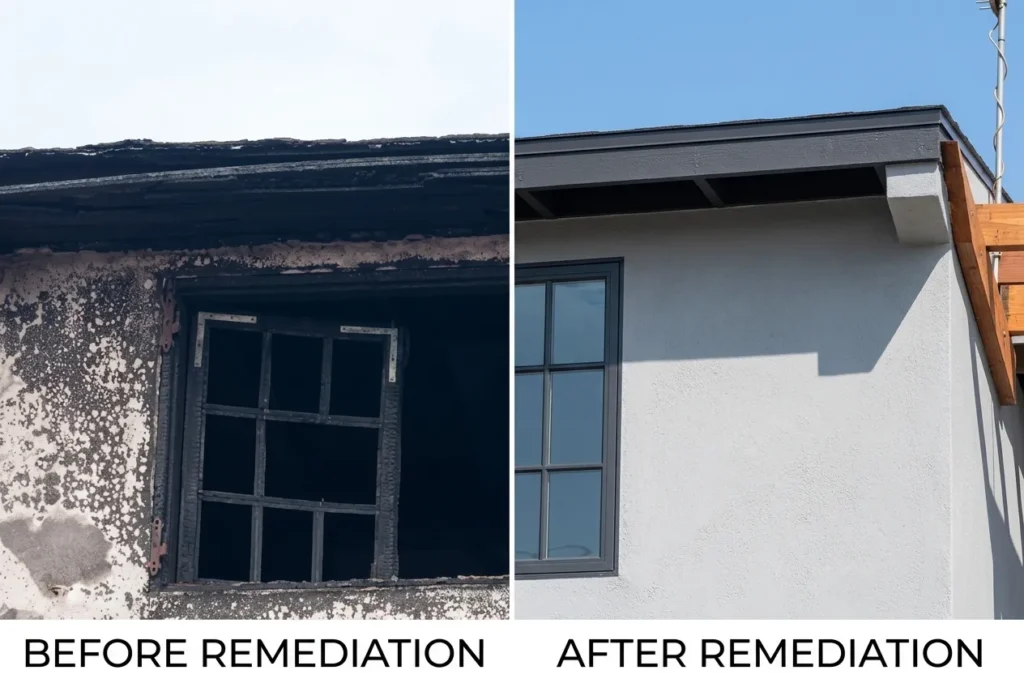
What Is Smoke Damage Restoration?
Smoke damage restoration goes beyond visible soot cleanup. It’s a structured process that addresses:
- Soot residue removal from walls, ceilings, and hard surfaces
- Odor neutralization at the molecular level, not just masking
- HVAC system cleaning to prevent smoke odor from recirculating
- Content cleaning and restoration for furniture, clothing, and belongings
- Structural assessment for materials that may need replacement
Types of Smoke and Soot Damage
| Smoke Type | Source | Characteristics | Cleanup Difficulty |
| Wet smoke | Low-heat, smoldering fires (upholstery, rubber) | Thick, sticky residue, strong odor | High |
| Dry smoke | Fast-burning, high-heat fires (wood, paper) | Powdery residue, easier to wipe | Moderate |
| Protein smoke | Kitchen fires involving food | Nearly invisible residue, extremely strong odor | High |
| Fuel/oil smoke | Furnace or heating system malfunction | Thick, dark, greasy residue | High |
Why Fast Response Matters for Smoke Damage
Quick Answer: Smoke damage restoration should begin within 24–48 hours of a fire being extinguished. Soot is acidic and continues etching into surfaces the longer it remains, and odor becomes significantly harder, and more expensive, to remove the longer it sets in.
- Within hours: Soot can begin discoloring plastics, finishes, and metal surfaces
- Within days: Acidic residue starts permanently etching glass, metal, and finished wood
- Within week: Odor becomes deeply embedded in drywall, insulation, and porous materials, often requiring more invasive remediation
The Smoke Damage Restoration Process
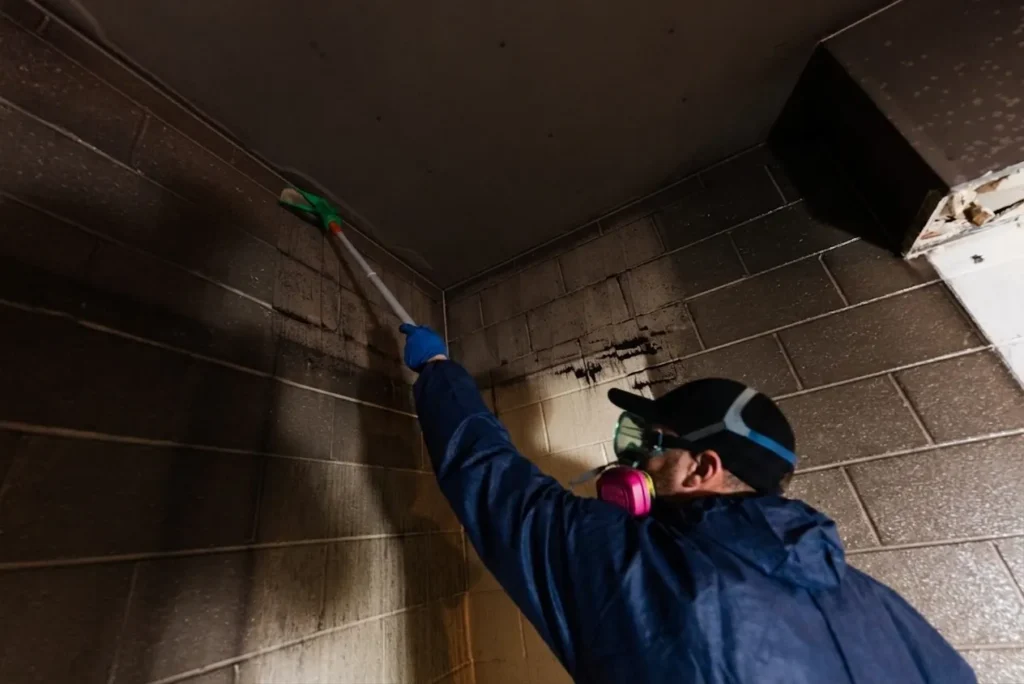
Emergency Assessment and Board-Up
Technicians assess the extent of fire, smoke, and often accompanying water damage from firefighting efforts, and secure the property with board-up or tarping services if needed.
Soot and Residue Removal
Using specialized dry-chemical sponges, HEPA vacuums, and appropriate cleaning agents matched to the soot type, technicians remove residue from walls, ceilings, and hard surfaces without grinding it further into the material.
HVAC and Duct Cleaning
Smoke particles travel through HVAC systems and recirculate throughout the home if not addressed. Professional duct cleaning prevents ongoing odor and residue redistribution.
Odor Neutralization
Techniques may include thermal fogging, ozone treatment, or hydroxyl generators to neutralize smoke odor at the molecular level rather than simply masking it with fragrance.
Content Cleaning and Pack-Out
Furniture, clothing, electronics, and personal belongings are inventoried, packed out, and cleaned using specialized techniques, including ultrasonic cleaning for delicate items, often at an off-site facility.
Structural Cleaning and Repair
Drywall, flooring, and other structural materials that absorbed smoke odor or sustained heat damage are cleaned, sealed, or replaced as needed.
Final Odor Verification and Reconstruction
A final walkthrough confirms odor elimination before reconstruction, painting, flooring, trim, restores the home to pre-loss condition.
Smoke Damage Restoration Cost in Atlanta
Most homeowners insurance policies cover fire and smoke damage restoration as part of standard fire coverage. Our team documents damage thoroughly and works directly with adjusters to help streamline the claims process.
Just experienced a fire in your Atlanta home? Air Drop Water Restoration responds 24/7 for emergency board-up and smoke damage assessment. Call Now for Immediate Help
DIY Smoke Cleanup vs. Professional Restoration
| Factor | DIY Cleanup | Professional Restoration |
| Soot removal technique | General cleaning products | Soot-type-specific chemical sponges and agents |
| Odor removal | Air fresheners (masking only) | Molecular-level neutralization (ozone, hydroxyl, thermal fogging) |
| HVAC system | Often overlooked | Professionally cleaned to stop recirculation |
| Health/safety | Risk of spreading soot, inhaling residue | PPE and containment protocols followed |
| Insurance documentation | Minimal | Full photo/report documentation for claims |
| Long-term result | Residue and odor often return | Comprehensive, verified elimination |
The American Red Cross and local fire departments generally advise homeowners not to attempt extensive smoke and soot cleanup themselves due to the acidic nature of residue and potential health hazards from inhaling fine particulates.
Health Considerations After Smoke Exposure
Soot particles are extremely fine and can be inhaled deep into the lungs. The EPA notes that smoke exposure can irritate the eyes and respiratory system and worsen conditions like asthma and heart disease.
Homeowners with children, elderly family members, or those with respiratory conditions should avoid extended time in smoke-affected areas until professional cleaning is complete.
What to Do Immediately After a Fire
- Ensure the fire department has cleared the property as safe to enter
- Contact your insurance company to begin the claims process
- Avoid touching soot-covered surfaces, which can grind residue in further
- Do not run your HVAC system, which can spread soot throughout the home
- Photograph all visible damage for documentation
- Call a certified fire and smoke damage restoration company promptly
- Avoid attempting to clean upholstery, carpet, or electronics yourself
Every hour matters after a fire. Soot damage becomes harder, and costlier, to remove the longer it sits. Schedule Emergency Smoke Damage Restoration.
Local Considerations for Atlanta Homeowners
Fires and resulting smoke damage affect homes throughout the metro, from Atlanta and Decatur to Marietta, Smyrna, Kennesaw, and Douglasville. Older homes throughout intown neighborhoods often have plaster walls and original wood trim that require specialized cleaning approaches compared to newer construction. Local fire departments and Georgia’s State Fire Marshal’s office offer additional guidance on post-fire safety and recovery steps.
If your fire involved firefighting water as well, be sure to review our Water Damage Restoration Services page, since combined fire-and-water losses require coordinated drying alongside smoke cleanup.
People Also Ask
How long does smoke damage restoration take? Minor smoke damage restoration can take a few days, while extensive whole-home fires with significant content loss can take several weeks to a few months, depending on reconstruction needs.
Can smoke smell be completely removed from a house? Yes, in most cases, using professional techniques like thermal fogging, ozone treatment, or hydroxyl generators that neutralize odor molecules rather than mask them, combined with cleaning or replacing affected porous materials.
Is smoke damage covered by homeowners insurance? Smoke and fire damage is typically covered under standard homeowners insurance policies, though coverage details vary by policy and cause of the fire.
Do I need to replace drywall after smoke damage? Not always, lightly affected drywall can often be cleaned and sealed, but drywall with deep odor penetration or heat damage may need replacement.
Dealing with lingering smoke odor even after a small fire? It won’t go away on its own. Get a Smoke Damage Assessment Today
Frequently Asked Questions About Smoke Damage Restoration Atlanta GA | Air Drop Water Restoration
What does professional smoke damage restoration include?
It includes soot removal, HVAC and duct cleaning, molecular-level odor neutralization, content cleaning, and structural repair or replacement as needed to return the home to pre-loss condition.
How much does smoke damage restoration cost in Atlanta?
Costs typically range from $1,000 for minor, single-room soot cleanup to $50,000+ for extensive whole-home fire and smoke damage, depending on scope and content loss.
Why does smoke odor spread throughout the whole house, not just near the fire?
Smoke particles travel through HVAC systems, wall cavities, and air currents, which is why odor and residue often show up in rooms far from the original fire source.
Can I clean smoke damage myself?
Minor, surface-level soot on non-porous surfaces can sometimes be wiped carefully, but extensive soot, odor, or HVAC contamination should be handled by professionals to avoid spreading residue further.
How soon should smoke damage restoration begin after a fire?
As soon as the property is cleared safe by the fire department, ideally within 24–48 hours, since soot becomes more corrosive and harder to remove the longer it sits.
Will smoke damage restoration also address water damage from firefighting efforts?
Yes, reputable restoration companies coordinate water extraction and structural drying alongside smoke cleanup when firefighting water was used.
Does homeowners insurance cover smoke damage restoration?
Most standard homeowners policies cover fire and smoke damage; a restoration company can help document damage thoroughly to support your claim.
Can smoke damage affect items in unaffected rooms?
Yes, because smoke particles travel through air currents and HVAC systems, belongings in rooms away from the fire can still absorb odor and fine soot residue.
Conclusion
Smoke damage restoration is a specialized process that goes far beyond wiping down soot-covered surfaces, it requires the right techniques for the specific type of smoke residue, thorough HVAC cleaning, and true odor neutralization to restore a home fully after a fire. The longer smoke and soot sit untreated, the more permanent and costly the damage becomes, which makes fast, professional response essential.
If your Atlanta-area home, whether in the city, Marietta, Smyrna, Douglasville, or anywhere across the metro, has experienced fire and smoke damage, don’t wait to start the recovery process.
Air Drop Water Restoration provides 24/7 emergency smoke and fire damage restoration throughout the Atlanta metro, from initial board-up through full reconstruction. Contact us now for immediate assistance.