 Skip to content
After the storm in Atlanta, the real work begins. This guide walks Atlanta homeowners through what happens in the hours and days after severe weather, from emergency tarping and water extraction to mold prevention and insurance documentation, and explains how a professional restoration team turns storm damage into a manageable recovery.
After the Storm in Atlanta, in most cases, it rolls through often, especially between March and September homeowners are left assessing downed limbs, water stains spreading across ceilings, and basements taking on water faster than a sump pump can handle. What happens in the hours and days that follow determines whether storm damage becomes a manageable repair or a much larger structural and mold problem. Air Drop Water Restoration has responded to storm damage across Atlanta, Stone Mountain, Lithonia, Conyers, and Covington for over a decade, and this guide breaks down exactly what that recovery process looks like.
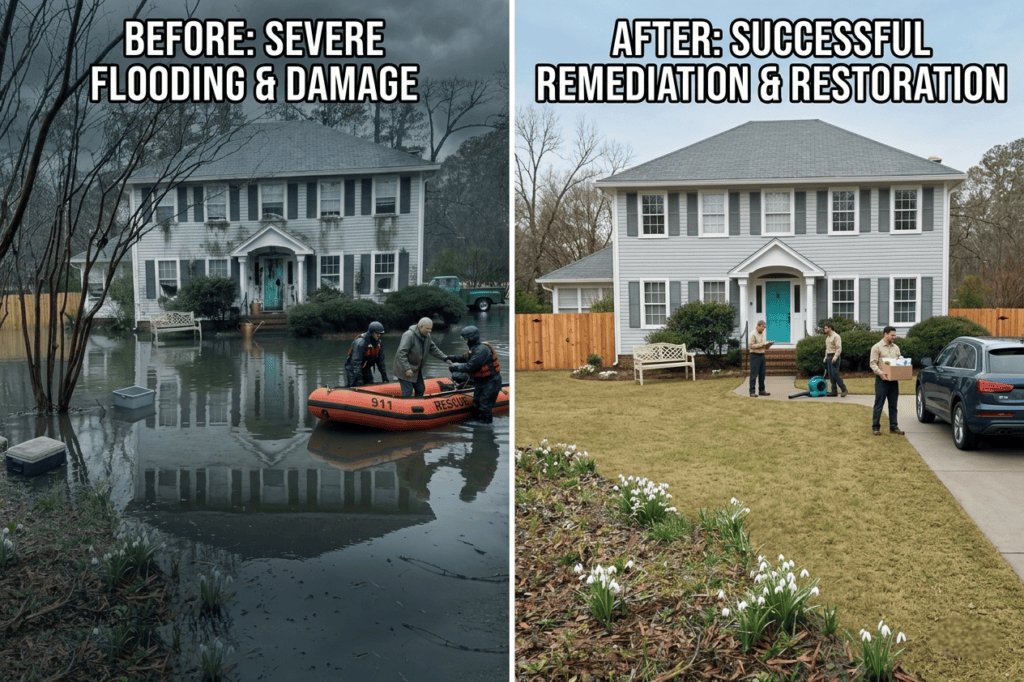
Why Atlanta’s Storm Season Hits So Hard
Georgia’s storm season typically runs from early spring through late summer, bringing severe thunderstorms, straight-line winds, hail, and occasional tornado activity across the metro. The National Weather Service tracks dozens of severe weather events across the Atlanta region each year, and metro Atlanta’s dense tree canopy, while a defining feature of the city, significantly increases the risk of limb and tree-related roof damage during high wind events.
Common Storm-Related Damage That Occurs After the Storm in Atlanta Metro
- Roof shingle loss or punctures from wind and hail
- Fallen tree limbs damaging roofs, gutters, and siding
- Basement and crawl space flooding from heavy rainfall
- Power outages leading to sump pump failure
- Window and siding damage from wind-driven debris
- Downed power lines creating secondary electrical hazards.
What to Do in the First 24 Hours After the Storm in Atlanta
- Prioritize safety first. Stay away from downed power lines and standing water that may be electrically charged.
- Document everything. Take photos and video of all visible damage before any cleanup begins, this is essential for your insurance claim.
- Prevent further damage. Use tarps to cover roof breaches if it’s safe to do so, or call a restoration company for emergency board-up and tarping service.
- Extract standing water immediately. Basements and crawl spaces should be pumped out as soon as it’s safe to prevent mold from taking hold within the 24–48 hour window.
- Contact your insurance company to open a claim and get a claim number for reference.
- Call a licensed restoration contractor rather than attempting large-scale cleanup alone.
Quick Answer: How Long Does Storm Damage Restoration Take?
Minor storm damage, such as gutter repair or small roof patches, can be resolved within a few days. Major structural damage involving roof replacement, extensive water extraction, or mold remediation typically takes 2–6 weeks, depending on the scope of repairs and material availability.
The Professional Storm Restoration Process
Emergency Response and Stabilization
Board-up, roof tarping, and temporary measures to stop ongoing damage.
Water Extraction
Industrial pumps and extraction equipment remove standing water from basements, crawl spaces, and living areas.
Structural Drying
Commercial dehumidifiers and air movers dry affected materials to prevent secondary mold growth.
Damage Assessment and Documentation
A full inspection identifies structural, roofing, and interior damage, documented for insurance purposes.
Mold Prevention Check
Given Georgia’s humidity, a moisture check within the following days helps catch any early mold risk before it establishes.
Repairs and Reconstruction
Roofing, drywall, flooring, and other affected materials are repaired or replaced to restore the home fully.
Storm Damage Restoration Timeline at a Glance
| Damage Type | Typical Timeline |
| Minor roof/gutter repair | 1 – 3 days |
| Basement/crawl space flood cleanup | 3 – 7 days |
| Structural drying (moderate) | 3 – 5 days |
| Full roof replacement | 1 – 2 weeks |
| Major reconstruction after severe damage | 4 – 6+ weeks |
Navigating Insurance Claims After a Georgia Storm
Most homeowners policies cover storm-related damage from wind, hail, and falling trees, but coverage details vary:
- Wind and hail damage to roofs is typically covered, though older roofs may be subject to depreciation (actual cash value vs. replacement cost).
- Flood damage from rising water is usually not covered under standard homeowners policies and requires separate flood insurance through the National Flood Insurance Program.
- Sewer backup caused by storm flooding often requires a specific endorsement to be covered.
- Tree removal is typically covered if the tree damaged a structure, but not if it simply fell in the yard without causing damage.
Storm damage doesn’t wait, and neither should you. Call Air Drop Water Restoration for 24/7 emergency storm response across metro Atlanta.
Storm-Prone Areas Across Metro Atlanta
While severe weather can affect the entire region, certain areas see recurring storm-related restoration needs due to tree density, topography, and aging infrastructure, including neighborhoods throughout Stone Mountain, Lithonia, Conyers, Covington, Douglasville, and Mableton. Homeowners in these areas benefit from having a trusted local restoration contact on hand before storm season arrives.
Image 3 Suggested Image: Restoration technician inspecting gutter damage after storm Suggested Alt Text: technician inspecting storm gutter damage Atlanta home Suggested Caption: A full exterior inspection after a storm catches damage that isn’t visible from the ground. Suggested File Name: gutter-damage-inspection-atlanta.jpg
Expert Tips to Prepare Before the Next Storm
- Trim tree limbs that overhang your roofline before storm season begins each spring.
- Clean gutters and downspouts regularly to prevent overflow during heavy rain.
- Test your sump pump and consider a battery backup in case of power loss during a storm.
- Keep an emergency contact list, including a trusted restoration company, saved before you need it.
- Photograph your home’s exterior and roof condition each spring for insurance documentation purposes.
Related Services
Read our Property Damage Cleanup Read our Water Damage Restoration Services Emergency Water Extraction Read our Mold Remediation Service, Fire Damage Restoration Commercial Restoration
Not sure if your storm damage is covered? Get a free inspection and insurance documentation from our Atlanta team.
Frequently Asked Questions About What To Do After the Storm in Atlanta.
What should I do first After the Storm in Atlanta?
Prioritize safety, avoid downed power lines and standing water, document all damage with photos, and contact a licensed restoration company to begin emergency stabilization and water extraction.
How quickly does mold develop after the storm flooding in Atlanta?
Mold can begin developing within 24 to 48 hours of sustained moisture exposure, which is why rapid water extraction and structural drying after a storm are critical, especially in Georgia’s humid climate.
Does homeowners insurance cover storm damage in Georgia?
Wind, hail, and fallen-tree damage to structures are typically covered under standard homeowners policies. Flood damage from rising water generally requires separate flood insurance.
How long does it take to recover from major storm damage?
Minor repairs may take a few days, while major structural damage involving roof replacement or extensive reconstruction can take four to six weeks or longer.
Can I stay in my home during storm damage restoration?
In many cases, yes, if the damage is contained to specific areas. Homes with significant structural, electrical, or mold hazards may require temporary relocation until repairs are complete. Call Air Drop Water Restoration for After the Storm in Atlanta, we offer full restoration service.
What’s the difference between storm damage and flood damage for insurance purposes?
Storm damage from wind, hail, or falling debris is typically covered by standard homeowners insurance, while flood damage from rising water requires a separate flood insurance policy. Call Air Drop Water Restoration for After the Storm in Atlanta, we offer full restoration service.
Should I remove fallen tree limbs from my roof myself?
No, this should be left to professionals, since removing limbs incorrectly can cause further structural damage or personal injury. Restoration crews handle this as part of emergency stabilization. Call Air Drop Water Restoration for After the Storm in Atlanta, we offer full restoration service.
How can Atlanta homeowners prepare before the next storm hits?
Trim overhanging branches, clean gutters regularly, test sump pumps, photograph your home’s condition each spring, and save a trusted restoration company’s contact information in advance. Call Air Drop Water Restoration for After the Storm in Atlanta, we offer full restoration service.
Conclusion
After the Storm in Atlanta, the speed and quality of your restoration response determines how much of the damage becomes permanent. Metro Atlanta’s combination of severe weather, dense tree cover, and humid climate makes fast, professional action essential, not optional. Air Drop Water Restoration has helped homeowners across the region recover from storm damage for over a decade, with the emergency response, documentation, and rebuilding expertise to bring your home back to life.
When the storm passes, we’re already on our way. Contact Air Drop Water Restoration for 24/7 storm damage restoration across metro Atlanta.