 Skip to content
Smoke damage clean up is often more complicated than it looks, soot residue is acidic, travels through HVAC systems, and can embed odor deep into porous materials if handled incorrectly. This guide explains how smoke and soot behave differently depending on the fire source, what a professional clean up process involves, and why DIY cleaning attempts often make odor removal harder. Air Drop Water Restoration, IICRC-certified and serving metro Atlanta since 2012, provides thorough smoke damage clean up alongside full fire and water damage restoration.
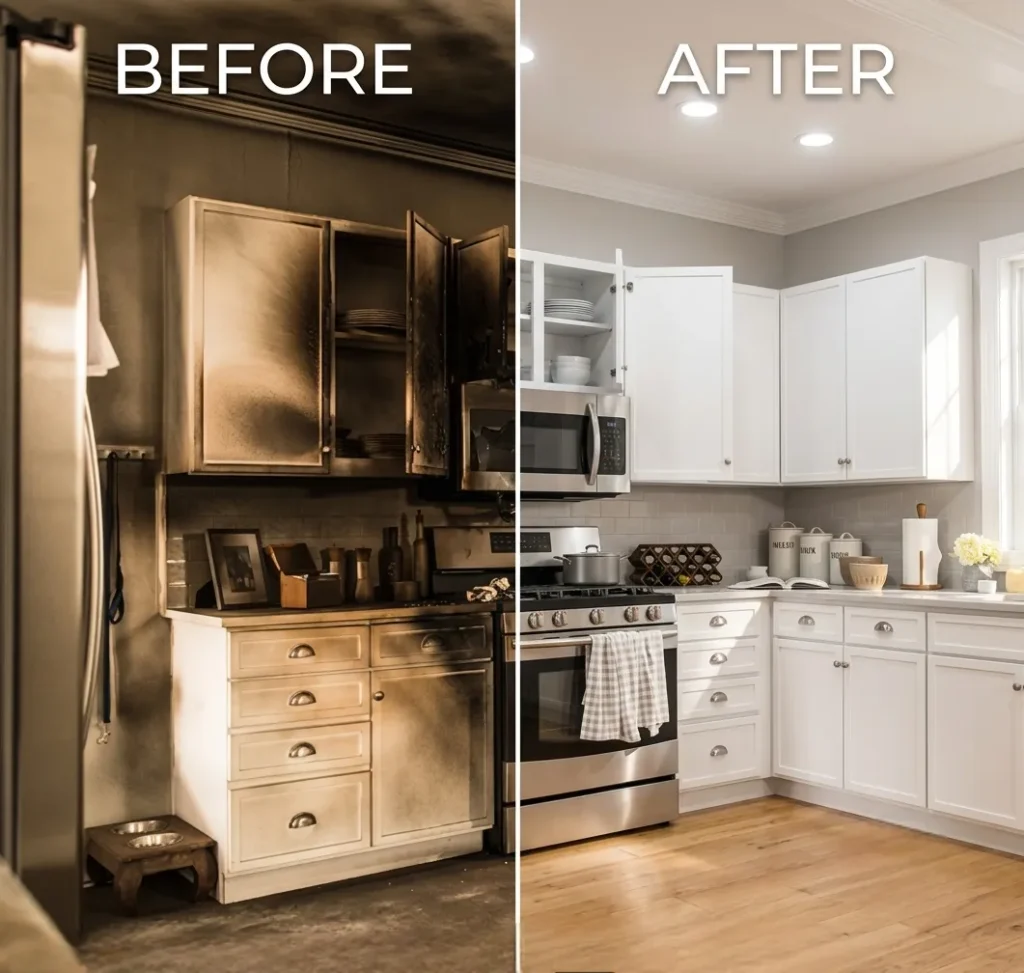
Table of Contents
Smoke Damage Clean Up: Atlanta’s Guide to Soot and Odor Removal
When people search for smoke damage clean up, they’re often dealing with more than a simple surface stain. Whether the smoke came from a kitchen fire, an electrical fault, a wildfire nearby, or a neighboring structure fire, soot residue is acidic, travels far beyond the original fire source through HVAC ductwork, and can permanently embed odor into drywall, fabric, and wood if it isn’t cleaned with the right techniques.
Across metro Atlanta, from historic bungalows in Grant Park to newer builds throughout Alpharetta and Peachtree City, smoke damage clean up requires identifying the type of soot involved, addressing HVAC contamination, and neutralizing odor at its source, not just masking it. Air Drop Water Restoration, an IICRC-certified restoration company serving Atlanta since 2012, approaches smoke damage clean up as a technical process, not a general cleaning job.
This guide covers how smoke behaves after a fire, what a professional clean up process actually involves, and why the wrong cleaning approach can make things worse.
Why Smoke Damage Clean Up Is More Complex Than It Looks
Smoke particles are microscopic and highly mobile. They travel through air currents and HVAC systems, settling on surfaces far from the original fire, sometimes throughout an entire structure. Soot residue is also acidic, meaning it continues to corrode metal surfaces, discolor grout, and degrade finishes the longer it sits untreated.
Why professional clean up matters:
- Soot chemically bonds with surfaces over time, making early professional response critical
- Different fire sources produce different soot compositions requiring different cleaning agents
- Odor molecules can penetrate deep into porous materials like drywall, carpet padding, and upholstery
- Incorrect cleaning attempts, like using household all-purpose cleaners, can smear soot and drive it deeper into surfaces.
What is involved in professional smoke damage clean up?
Professional smoke damage clean up includes soot identification, HEPA vacuuming, specialized cleaning agents matched to the soot type, HVAC system inspection and cleaning, and odor neutralization treatments like thermal fogging or hydroxyl generators.
Types of Smoke Residue
| Soot Type | Source | Cleaning Approach |
| Wet Smoke Residue | Smoldering, low-heat fires (foam, rubber, plastics) | Requires solvent-based cleaners; smears easily if handled incorrectly |
| Dry Smoke Residue | Fast, high-heat fires (wood, paper) | Powdery residue; dry sponges and HEPA vacuuming |
| Protein Residue | Kitchen and food-related fires | Nearly invisible but extremely pungent; requires enzyme-based treatment |
| Fuel Oil Soot | Furnace or heating system malfunctions | Oily film requiring specialized solvent cleaning |
Misidentifying the soot type is one of the most common reasons DIY smoke damage clean up attempts fail to fully resolve odor.
Expert Insight: “People often think if they can’t see soot anymore, it’s gone. But odor molecules can still be trapped in the subfloor or insulation. We test and treat systematically, not just where it looks dirty.” Air Drop Water Restoration fire and smoke team
Related Reading: Fire Damage Repair Services | Water Damage Restoration | Plumbing Service
Smoke smell lingering in your Atlanta home or business? Air Drop Water Restoration provides professional smoke damage clean up that addresses odor at its source, not just the surface. Call now for an assessment.
The Professional Smoke Damage Clean Up Process
- Assessment: Identify soot type, affected materials, and odor penetration depth
- HVAC Inspection: Check ductwork and system components for soot contamination
- Dry Cleaning: HEPA vacuuming and dry chemical sponges for dry residue
- Wet Cleaning: Solvent-based cleaning agents matched to wet or oily residue
- Surface Restoration: Cleaning or repainting walls, ceilings, and trim as needed
- HVAC Cleaning: Professional duct cleaning to remove trapped soot and prevent re-contamination
- Odor Neutralization: Thermal fogging, ozone treatment, or hydroxyl generators to eliminate embedded odor
- Final Inspection: Confirming both visible cleanliness and odor elimination
This staged approach ensures that smoke damage clean up addresses the full scope of contamination, not just the areas closest to the fire source.
Related Reading: Smoke and Fire Damage Restoration | Mold Remediation Services | Commercial Restoration Services
Don’t let smoke odor set into your Atlanta property permanently. Contact Air Drop Water Restoration for professional smoke damage clean up before residue has a chance to bond with surfaces.
Why DIY Smoke Damage Clean Up Often Backfires
Many homeowners attempt to clean visible soot themselves before calling a professional, but this often complicates the restoration process:
- Smearing: Wiping dry soot with a wet cloth can grind particles deeper into fabric and painted surfaces
- Incomplete odor removal: Surface cleaning products mask odor temporarily rather than neutralizing it at a molecular level
- Missed hidden contamination: DIY efforts rarely address HVAC ductwork, wall cavities, or subflooring where soot and odor often persist
- Damage to finishes: Using the wrong cleaning agent for a given soot type can permanently discolor or damage surfaces
Do’s and Don’ts of Smoke Damage Clean Up Process
Do: – Contact a professional restoration company before cleaning visible soot – Ventilate the space if it’s safe to do so – Keep soot-affected fabrics separate from unaffected items
Don’t: – Use household all-purpose cleaners on soot-covered surfaces – Run your HVAC system before it’s been inspected for soot contamination – Assume the smell will fade on its own over time
Smoke Damage and Your HVAC System
An HVAC system that circulated air during a fire can spread soot and odor throughout an entire property, even to rooms far from the original fire source. Running the system before inspection can worsen contamination by continuing to circulate soot particles.
Professional HVAC smoke remediation typically includes:
- Inspection of ductwork, coils, and filters for soot contamination
- Professional duct cleaning to remove trapped particles
- Filter replacement
- Odor treatment within the system itself, not just the living space.
Insurance and Smoke Damage Clean Up
Smoke damage clean up is typically covered under the same homeowners or commercial property insurance policy that covers the underlying fire damage. To support your claim:
- Keep photos of smoke and soot damage in every affected room, not just where the fire occurred
- Request a detailed scope-of-work distinguishing smoke damage clean up from structural fire repair
- Retain receipts for any professional HVAC inspection or duct cleaning performed
- Document any items that could not be fully restored due to smoke damage
Air Drop Water Restoration provides itemized documentation that separates smoke and soot remediation from structural repair work, helping ensure your insurance claim reflects the full scope of the loss.
Preventing Smoke Damage Spread
- Close interior doors when evacuating during a fire, if it’s safe to do so, to limit smoke spread between rooms
- Turn off HVAC systems immediately if a fire is detected, to prevent circulating smoke throughout the property
- Schedule regular HVAC maintenance to keep systems in good working order generally
- Install working smoke detectors in every level of the home, including basements.
Protect your Atlanta property from the compounding effects of smoke. Air Drop Water Restoration offers rapid response smoke damage clean up to limit odor penetration and surface damage.
Frequently Asked Questions About Smoke Damage Clean Up in Atlanta Ga
How soon after a fire should smoke damage clean up begin?
As soon as the property is cleared safe by fire officials. Soot becomes more difficult to remove and odor becomes more deeply embedded the longer it sits untreated.
Can I do smoke damage clean up myself?
Minor, very limited soot on non-porous surfaces may be manageable, but any significant smoke exposure typically requires professional identification of soot type and specialized cleaning agents to avoid smearing or incomplete odor removal.
How long does smoke damage clean up take?
A contained, limited-scope job may take a day or two, while whole-property smoke damage clean up, including HVAC remediation, can take several days to a week or more.
Does smoke damage clean up include odor removal?
Yes. A complete smoke damage clean up process includes odor neutralization treatments like thermal fogging or hydroxyl generators, not just visible soot removal.
Will my HVAC system need cleaning after a fire?
If your HVAC system was running during the fire or has any soot contamination, professional duct cleaning is typically necessary to prevent re-contaminating cleaned spaces.
Is smoke damage clean up covered by insurance?
It’s typically covered under the same policy as the underlying fire damage, though coverage specifics vary by policy. Detailed documentation supports the claims process.
Why does smoke smell linger even after visible soot is cleaned?
Odor molecules can penetrate porous materials like drywall, insulation, and subflooring, requiring specialized odor neutralization beyond surface cleaning to fully resolve.
What makes Air Drop Water Restoration’s smoke damage clean up different?
Air Drop Water Restoration identifies soot type before cleaning, addresses HVAC contamination, and uses odor neutralization technology to resolve smoke odor at its source, all as part of a documented process built for insurance claims.
Conclusion
Smoke damage clean up is a technical process that goes well beyond wiping down visible soot, it requires identifying residue type, addressing HVAC contamination, and neutralizing odor at a molecular level to fully resolve the problem. Metro Atlanta property owners who attempt DIY cleaning often find the odor returns or the damage worsens. Air Drop Water Restoration has provided professional smoke damage clean up across the Atlanta metro since 2012, working alongside our fire and water damage restoration teams to fully resolve every layer of post-fire damage.
Dealing with smoke damage at your Atlanta property? Call Air Drop Water Restoration now for professional smoke clean up and odor removal.